
How to Check a Non-Return Valve in Your Hydronic Heating System: 2026 Guide
What if the persistent banging in your walls and those stubbornly lukewarm radiators aren’t signs of a failing boiler, but simply a single, silent component refusing to do its job? It’s frustrating when you’ve invested in a premium hydronic system only to find your home’s comfort compromised by inconsistent heat and rising energy bills. You expect your living space to be a sanctuary of quiet efficiency, yet a faulty valve can quickly turn that premium experience into a source of unnecessary stress.
In this 2026 guide, we’ll show you exactly how to check non return valve health to determine if it’s the hidden cause of your system’s circulation issues. Whether you’re running a modern electric heat pump or traditional radiator panels, understanding this “traffic controller” is essential for maintaining peak performance. We’ll walk through simple diagnostic tests, explain the latest Australian plumbing standards, and help you identify when a professional service is required to restore the whisper-quiet, cost-effective warmth your Melbourne or Geelong home was designed for.
Key Takeaways
- Understand how a non-return valve acts as a traffic controller to prevent “ghost heating” and ensure water only flows to active zones.
- Identify common warning signs like vibrating pipes or radiators that stay warm when they should be off, which signal a potential valve failure.
- Learn the safe, step-by-step process to check non return valve functionality using a simple temperature “touch test” on your pipework.
- Discover why professional annual servicing is vital to clear sludge and prevent small valve issues from leading to expensive boiler replacements.
- Restore your hydronic system’s efficiency and silence by knowing when a valve can be cleaned and when it’s time for a professional replacement.
Understanding the Role of Non-Return Valves in Hydronic Systems
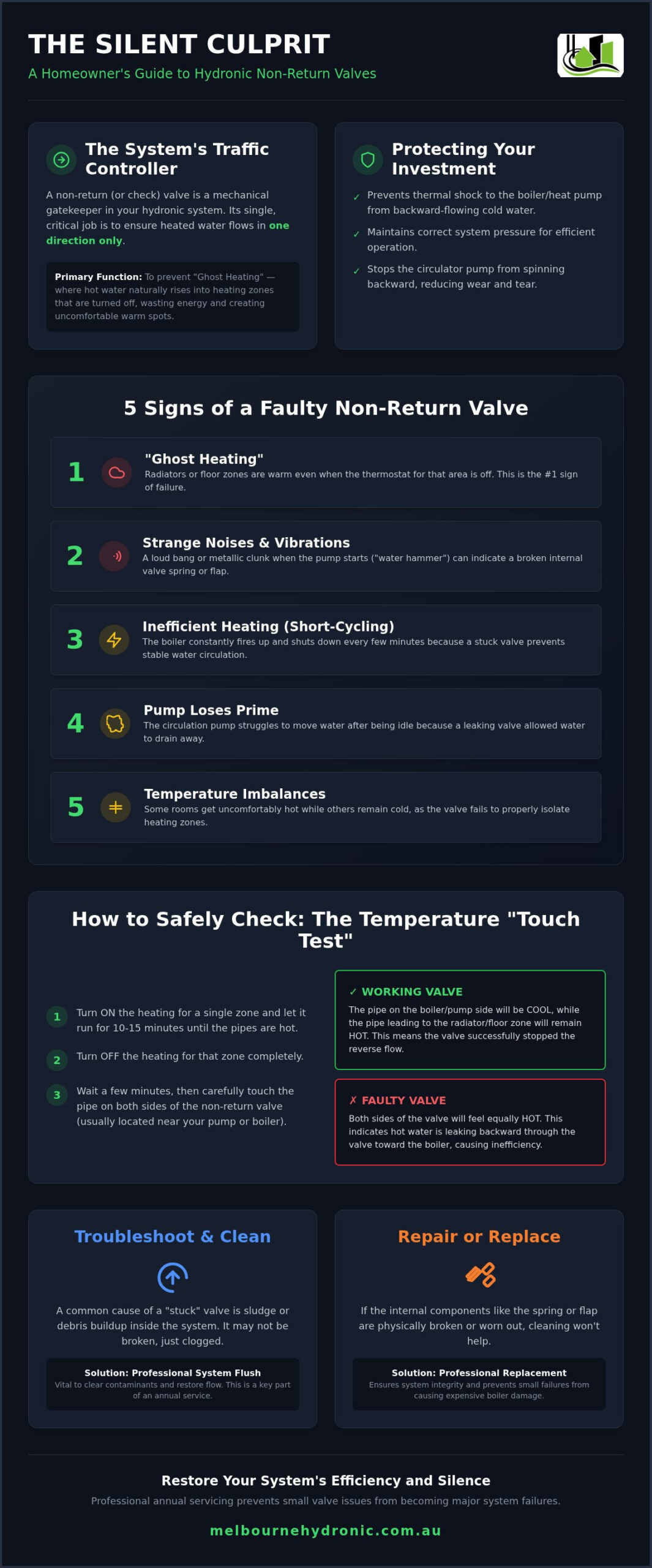
Precision is everything in a high-performance hydronic heating system. A non-return valve, often referred to as a check valve, acts as a mechanical gatekeeper that ensures water moves in only one direction through your pipework. Without this component, your system would struggle to maintain the specific temperature zones you’ve set for your home. You’ll typically find these valves installed near the circulator pump or the boiler outlet. If you suspect your system is losing efficiency, the first step is often to check non return valve orientation and function.
One of the most critical issues these valves prevent is “gravity circulation.” This occurs when hot water naturally rises into unused zones even when the pump for that area is switched off. It leads to wasted energy and makes certain rooms uncomfortably warm while others stay cool. A non-return valve is the primary mechanism for maintaining pressure and heat direction in a closed-loop system. By keeping the heated water where it belongs, these small components ensure your system operates with the technical precision required for a premium home environment.
How Check Valves Protect Your Boiler
Your boiler or heat pump is the heart of your home’s comfort. If cold water is allowed to flow backward into a hot heat exchanger, it can cause thermal shock. This often leads to microscopic cracks and eventual boiler failure. These valves also maintain the delicate pressure balance required for smooth operation. By stopping reverse flow, they prevent the circulator pump from spinning backward when it’s supposed to be idle. This simple protection significantly reduces mechanical wear and tear, extending the life of your most expensive heating components.
Common Types of Valves in Melbourne Homes
Most Melbourne and Geelong residences use one of two main designs. Swing check valves rely on a weighted flap and the force of gravity to close. While they’ve been a staple for decades, many modern installations now favour spring-loaded valves. These are preferred for high-efficiency setups because they close instantly regardless of the pipe’s orientation. This versatility is vital when integrating electric heat pumps into existing layouts. Knowing which type you have is the first step when you check non return valve performance during a routine inspection.
5 Signs Your System Has a Faulty Non-Return Valve
Recognising the early warning signs of a malfunctioning valve can save you from a complete system shutdown during a Melbourne winter. These components are crucial in heating boiler systems because they manage the complex flow of water. If you notice your home isn’t as comfortable as it once was, it’s time to check non return valve performance. Small issues often escalate into expensive boiler failures if left unaddressed.
Ghost heating is perhaps the most common symptom. This occurs when radiators or underfloor zones get warm despite the thermostat being turned off. Hot water “leaks” past the valve through natural convection. Specifically, ghost heating in upstairs radiators is the #1 indicator of a failed swing check valve. It wastes energy and ruins your climate control. You’re effectively paying to heat rooms you aren’t even using.
Identifying Strange Noises and Vibrations
If you hear a loud banging when the pump engages, you’re likely experiencing water hammer. While air in the pipes causes a gurgling sound, a sharp metallic clunk often signals a broken internal spring or a loose flap. This vibration doesn’t just disturb your peace. It puts immense pressure on joints. Over time, this repeated stress can lead to pipework leaks behind your walls. Small noises often hide big problems. It’s a simple part, but its failure has a loud impact.
Inefficient heating also shows up as “short-cycling.” This is when your boiler fires up and shuts down every few minutes. A stuck valve prevents the system from reaching its steady state. This constant cycling can significantly increase your energy bills during peak winter months in Geelong. If the pump struggles to move water after being off for a while, it may have lost its prime due to a leaking valve allowing water to drain away.
Temperature Imbalances Across Zones
In homes with multiple hydronic heating panels, a stuck valve can cause one room to stay hot while others remain cold. The failure allows backflow to mix with the main supply. This dilutes the hot water and lowers the overall flow temperature. Your boiler works harder, but you feel less heat. If your zones feel inconsistent, it’s wise to check non return valve integrity before the next cold snap hits. Our team can help ensure your system stays efficient with professional system servicing and maintenance.
Step-by-Step: How to Check a Non-Return Valve Safely
Safety is your first priority when inspecting any pressurised heating component. Before you attempt to check non return valve performance, you must turn off the power to both the boiler and the circulator pump. Working on a live system isn’t just dangerous; it can also lead to misleading diagnostic results as the pump’s force might mask subtle mechanical failures. Once the system is powered down, perform a thorough visual inspection. Look for any signs of external leaks or green verdigris corrosion around the valve body, as these often indicate that the internal seals have perished.
A simple yet effective diagnostic tool is a long-handled screwdriver. Place the tip against the valve body and your ear against the handle while the system is running. This acts as a manual stethoscope. You should hear a distinct “click” when the pump starts and the valve opens. A silent valve or a constant, frantic rattling sound suggests the internal flap or spring is stuck or broken. This mechanical feedback is a reliable way to confirm if the valve is responding to flow changes.
The Temperature Differential Test
For a more precise diagnostic, you can perform a temperature test while the system is active. You should compare the temperature of the pipe 15cm before and after the valve during a heating cycle. If the valve is functioning correctly, there should be a sharp temperature drop on the downstream side when that specific heating zone is turned off. If both sides of the pipe feel equally hot, heat is “bleeding” past the seal. While you can use your hand to feel for basic differences, using an infrared thermometer provides a more accurate DIY reading for your 2026 maintenance log. If the downstream pipe stays cold even when the pump is running, the valve is likely stuck in the closed position, completely blocking your heat supply.
Manual Override and Inspection Limits
Some modern valves installed in Melbourne homes feature a manual “lock-open” lever. This is useful for testing, but it’s only a diagnostic tool. If your system only works when this lever is engaged, the internal spring has failed. You should never attempt to disassemble or unscrew a valve while the system is under pressure. Doing so can lead to scalding water discharges and significant property damage. If your visual and temperature checks suggest a failure, the DIY phase is over. At this point, it’s time to book a professional hydronic heating service melbourne to ensure a safe and compliant replacement. Expert intervention prevents small leaks from becoming major floods.
Troubleshooting vs. Replacing: Making the Right Call
Once you’ve performed your diagnostics, the next logical step is deciding whether a simple fix will suffice or if a full replacement is necessary. Many homeowners ask if they can simply clean a stuck valve. While removing surface debris or limescale is technically possible, it’s rarely a long-term solution for modern spring-loaded components. If you check non return valve health and find it’s sticking, a “tapping” trick might temporarily unstick the internal flap. However, this is merely a diagnostic confirmation, not a repair. A valve that sticks once will inevitably stick again, usually at the most inconvenient time during a cold snap.
The decision often comes down to a simple cost-benefit analysis. A high-quality non-return valve is a relatively inexpensive part, often costing less than A$100. Comparing this to the potential A$2000 cost of a major boiler repair makes replacement the obvious choice for long-term security. If the valve is failing due to system-wide debris, a professional power flushing service may be required to clear the pipework and protect your new components from immediate contamination.
The Impact of System Sludge
Magnetite, a fine black iron oxide sludge, is the primary enemy of hydronic components in Melbourne. This metallic debris is attracted to the internal metal parts of your valves, preventing them from seating correctly or causing them to seize entirely. A failed valve is frequently just a symptom of poor water quality within the system. To prevent a repeat failure, we recommend installing a high-quality magnetic filter during your next service. This adds a layer of protection that keeps the water clean and ensures your new valves operate with the technical precision they were designed for.
When Replacement is Non-Negotiable
There are several scenarios where a replacement is the only safe path forward. If you’ve identified broken internal springs, eroded rubber seals, or visible external corrosion, the valve’s structural integrity is compromised. For homes in Geelong and Melbourne, we always suggest upgrading to premium brass-bodied valves that are better suited to local water conditions. Modern “silent” check valves are also a fantastic upgrade. They eliminate the clunking sounds associated with older swing designs, restoring the whisper-quiet comfort of your home. If your system is showing signs of age, book a comprehensive maintenance check to ensure every valve is performing at its peak.
Professional Hydronic Maintenance in Melbourne and Geelong
While the diagnostic steps we’ve outlined allow you to check non return valve health on your own, they are no substitute for a professional technical audit. In the unique climate of Victoria, where temperatures can swing wildly in a single afternoon, your hydronic system needs to be perfectly calibrated. Annual servicing is the only reliable way to catch minor valve fatigue before it turns into a mid-winter emergency. Our approach at Melbourne Hydronic Heating focuses on comprehensive system health. We don’t just look for broken parts; we ensure the entire loop is optimised for the highest possible energy efficiency.
We serve the wider region, providing expert care for everything from compact CBD apartments to sprawling family homes in Geelong. Expert calibration does more than just fix a noisy valve. It extends the operational life of your radiator panels and underfloor heating by maintaining the correct pressure and flow rates. This technical precision is what separates a standard house from a premium, climate-controlled environment. With over 30 years of experience, we understand the specific challenges that local water quality and weather patterns pose to your heating investment.
The Value of a Specialist Technician
Many homeowners assume a general plumber can handle their system maintenance. However, hydronic heating is a specialised field that requires specific diagnostic tools. We use ultrasonic flow meters and thermal imaging cameras to see exactly how water is moving behind your walls. This allows us to identify subtle flow restrictions that a standard visual check would miss. We also ensure your system meets the latest 2026 energy efficiency standards. In Victoria, any plumbing work valued at A$750 or more requires a licensed professional to issue a VBA Compliance Certificate. Choosing a specialist ensures your home remains safe, compliant, and whisper-quiet.
Book Your 2026 System Service
A standard maintenance visit from our team includes a full inspection of all non-return valves, circulator pumps, and boiler seals. We proactively check non return valve seating to prevent the “ghost heating” and water hammer issues that often lead to expensive component failure. By booking a service before the peak winter rush, you avoid the stress of emergency breakdowns when technicians are in high demand. If your system is showing signs of age or you’ve noticed a spike in your energy bills, it’s time for a professional assessment. Reach out to our team today to discuss your system’s needs and ensure your home remains a sanctuary of warmth all year round.
Securing Your Home’s Comfort for the Years Ahead
Maintaining a premium hydronic system requires attention to the small details that keep heat flowing exactly where it belongs. By learning how to check non return valve performance, you’ve taken the first step toward eliminating frustrating “ghost heating” and noisy pipework. These simple components are the gatekeepers of your energy efficiency, ensuring your electric heat pump or gas boiler doesn’t work harder than it needs to. Understanding these signs early prevents minor mechanical fatigue from escalating into a total system failure.
While DIY diagnostics provide valuable insight, the technical precision of a specialist is unmatched for achieving long-term reliability and peak performance. Our team brings over 30 years of industry experience as Melbourne and Geelong local specialists, providing expert hydronic fault finding to keep your system running at its best. We understand the specific climate challenges of Victoria and the importance of a properly balanced loop. Don’t let a minor valve issue turn into a major winter breakdown or an expensive boiler replacement. Book Your Hydronic System Service with Melbourne’s Experts today to restore your home’s sanctuary of warmth. Consistent, efficient heat is just one professional check away.
Frequently Asked Questions
Can a faulty non-return valve cause my boiler to overheat?
Yes, a valve stuck in the closed position can lead to overheating. When the valve fails to open, heated water cannot circulate through your radiators or floor coils. This causes heat to build up rapidly within the heat exchanger. While modern boilers have safety sensors to shut down the system, the repeated thermal stress can damage internal components. If you check non return valve function and find no flow, immediate professional attention is required.
How much does it cost to replace a non-return valve in Melbourne?
The cost of replacing a valve in Melbourne or Geelong depends on the specific part required and the complexity of your system’s layout. Factors include whether the system needs a partial drain-down or if a power flush is necessary to remove sludge that caused the initial failure. We provide fixed-rate maintenance and repair fees for these components. It’s a small investment that prevents much more expensive boiler or pump replacements later.
Why is my hydronic heating making a banging noise when it turns off?
This noise is usually a sign of water hammer or a loose internal component. When the pump stops, the water’s momentum can cause a faulty valve flap to slam shut violently. In other cases, a broken spring allows the flap to vibrate against the valve seat. These mechanical shocks can eventually loosen joints and cause leaks. Identifying these sounds early is a key part of any comprehensive system health check we perform during a service.
Is a check valve the same thing as a non-return valve?
Yes, these terms are used interchangeably within the industry. A check valve is the technical name for any device that permits fluid to flow in only one direction. In the Australian hydronic market, “non-return valve” is the more common term used by technicians and in building regulations. Both perform the same vital role of preventing backflow and ensuring your heat pump or boiler operates with the technical precision required for a premium home environment.
Can I install a non-return valve myself?
We don’t recommend installing these valves yourself. Hydronic systems are high-pressure, closed-loop environments that require specialised tools to drain and refill correctly. In Victoria, any plumbing work valued at A$750 or more must be performed by a licensed professional who can issue a VBA Compliance Certificate. Attempting a DIY fix risks introducing airlocks or causing significant water damage to your home’s interior, which can be far more costly than a professional installation.
How long do non-return valves typically last in a hydronic system?
Most high-quality brass valves last between 10 and 15 years. However, their lifespan is heavily influenced by the water quality in your system. If there’s a high concentration of magnetite or black sludge, the internal seals can erode much faster. Performing a regular check non return valve audit during your annual service helps identify wear before it leads to a complete failure of your radiator panels or underfloor heating infrastructure.
Will a stuck valve increase my gas or electricity bill?
A stuck valve will definitely increase your energy consumption. If the valve is stuck open, you’ll experience “ghost heating,” where hot water escapes into unused zones. This forces your system to run longer to maintain the temperature in your active rooms. If it’s partially blocked, your pump has to work harder to push water through the restriction. Both scenarios lead to higher gas or electricity bills and unnecessary mechanical wear on your boiler.