

Hydronic Heating Power Flush Melbourne: The 2026 Homeowner’s Guide
What if your radiators aren’t actually broken, but are simply suffocating under years of accumulated internal sludge? Many Melbourne homeowners are currently facing skyrocketing energy bills while their living rooms remain stubbornly chilly. It’s frustrating to hear your boiler clanging like a kettle, especially when you’re worried about a total system failure during a freezing Victorian winter. A professional hydronic heating power flush melbourne service is the essential reset button that clears out magnetite and debris, restoring the silent, even warmth your family deserves.
We understand that protecting your home comfort is a priority, especially as Victoria moves toward an all-electric future. This 2026 guide explains how a deep chemical power flush eliminates cold spots and helps reduce monthly energy consumption. You’ll discover how this critical maintenance protects your current boiler and prepares your pipework for the 300% to 400% efficiency of a modern heat pump. We will walk you through the process of reviving your legacy system, ensuring every room stays perfectly heated while you position your home to take full advantage of current Victorian energy rebates.
Key Takeaways
- Identify the science behind magnetite and how this corrosive black sludge creates internal blockages that compromise your home’s comfort.
- Recognise the five early warning signals, like cold spots or kettle-like noises, that suggest your system is consuming excessive energy to stay warm.
- Understand why a professional hydronic heating power flush melbourne is a mandatory step before transitioning to a high-efficiency electric heat pump.
- Learn how a high-velocity, low-pressure deep clean safely restores heat to every room without risking damage to older copper or poly pipework.
- Discover the post-flush maintenance routines, including annual inhibitor checks, that prevent sludge from returning and protect your long-term investment.
What is Hydronic Power Flushing? Solving the Sludge Problem
A power flush isn’t a simple rinse of your pipes. It’s a high-velocity, low-pressure deep clean designed to purge the entire heating circuit. While a standard annual check-up focuses on the boiler’s safety and gas pressure, a hydronic heating power flush melbourne targets the internal health of your radiators and pipework. We use specialized pumps and chemicals to dislodge years of debris. This process restores the flow without putting unnecessary stress on your system’s joints or seals. It’s a restorative procedure that returns your home’s climate control to its original factory performance.
The Science of System Sludge: Magnetite Explained
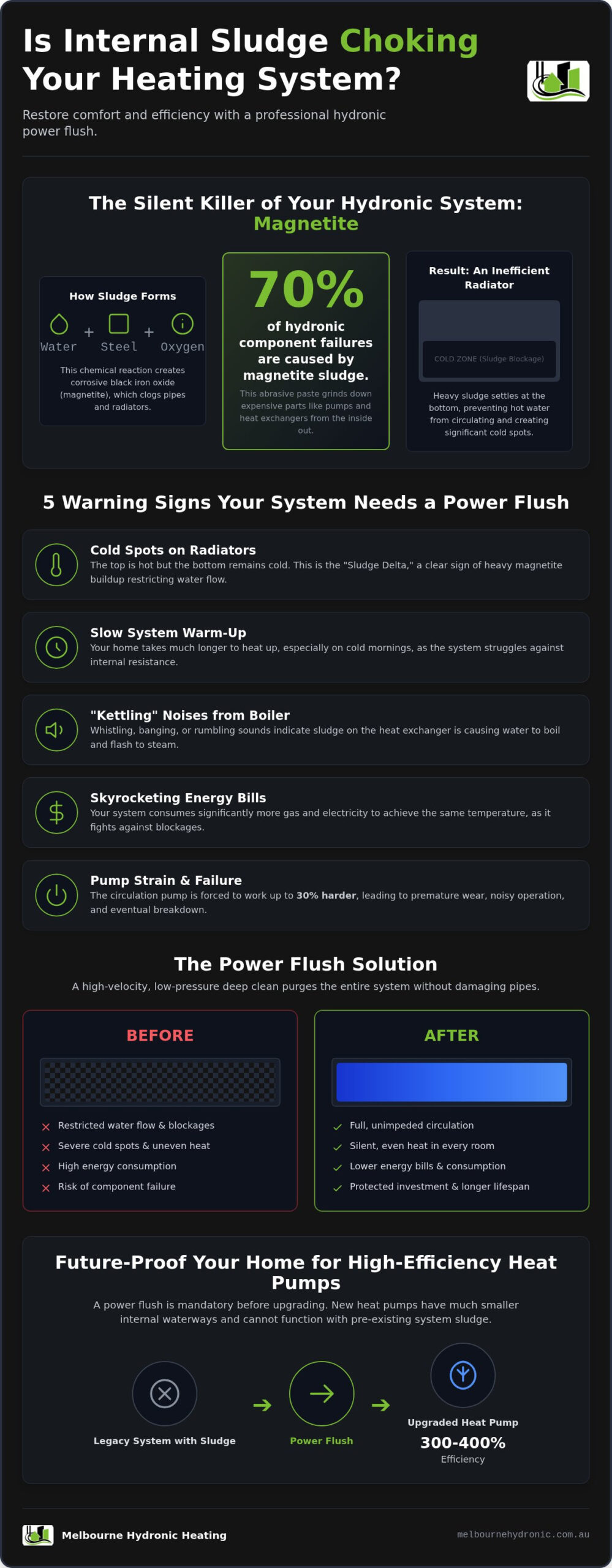
Within a closed-loop Hydronic heating system, a constant chemical battle is fought. When water, steel radiators, and oxygen interact, they create iron oxide, more commonly known as magnetite. This black, metallic sludge is significantly heavier than water. Because it’s magnetic, it doesn’t just settle; it actively attracts itself to the moving parts of your pump and the narrow channels of your heat exchanger. Magnetite is the primary cause of 70% of hydronic component failures in Victoria. It acts like a thick, abrasive paste that slowly grinds down your system’s most expensive parts from the inside out.
Melbourne’s Hydronic Heritage and Modern Challenges
Melbourne’s established suburbs like Camberwell, Hawthorn, and Kew feature many systems that have served families for over 20 years. These legacy installations often carry decades of accumulated debris. Victorian water conditions and the natural aging of older steel panels mean that sludge buildup is almost inevitable without regular chemical intervention. Older gas boilers often mask these issues. They have the raw power to keep pushing through the sludge, but they do so at the cost of your gas bill. You might not realize there’s a problem until your radiators are half-cold and your energy costs have spiked significantly.
It’s vital to distinguish between a routine check-up and a full flush. A standard annual service ensures the boiler is burning safely and efficiently. However, it doesn’t address the “arteries” of your home. A dedicated hydronic heating power flush melbourne is the difference between checking an engine’s oil and performing a complete fuel system overhaul. By the time we finish, the water running through your radiators is as clear as it was on the day of installation, ensuring every kilowatt of energy is used to heat your home rather than fighting against internal blockages.
5 Warning Signs Your Melbourne Home Needs a Power Flush
Ignoring subtle changes in your system’s performance often leads to expensive mid-winter breakdowns. These early warning signals are your system’s way of asking for help before a total shutdown occurs. When sludge accumulates, your circulation pump is forced to work up to 30% harder just to move water through the restricted pipework. This extra strain doesn’t just increase your electricity bill; it significantly shortens the lifespan of your equipment. Recognizing these signs early can save you from a costly emergency replacement during a Melbourne cold snap.
One of the most obvious indicators is “kettling”. If your boiler sounds like a boiling tea kettle, it’s likely that magnetite has settled on the heat exchanger. This creates localized hotspots where water flashes into steam, causing that characteristic whistling or banging. Similarly, if you notice a “slow warm-up” during Geelong’s frostier mornings, your system is struggling against internal resistance. A professional hydronic heating power flush melbourne service is often the only way to clear these blockages and restore immediate heat to your home.
The Radiator Touch Test: A Homeowner’s Diagnostic
You can perform a simple diagnostic check yourself. Turn your heating on and wait twenty minutes for the system to reach operating temperature. Carefully run your hand across the radiator panels. If the top of the radiator is hot but the bottom-centre is stone cold, you’ve identified the “Sludge Delta”. While cold spots at the very top usually mean you have trapped air that needs bleeding, a cold base indicates heavy magnetite buildup that requires a professional flush. If your system shows these signs, booking a comprehensive hydronic heating service is the first step toward a full diagnosis.
Unusual Noises and Boiler Short-Cycling
Listen for unusual banging or whirring noises from your plant room. These sounds often indicate that debris is interfering with the pump’s impeller. You might also notice your boiler turning on and off rapidly, a process known as short-cycling. This happens because the restricted flow causes the boiler to reach its target temperature too quickly, forcing it to shut down before the house is actually warm. Left untreated, this cycle puts immense stress on the heat exchanger, eventually leading to cracks and total failure.
Don’t wait for the system to stop entirely. A hydronic heating power flush melbourne can often reverse these symptoms, protecting your investment and ensuring your home remains a sanctuary of warmth throughout the Victorian winter. Addressing these issues now prevents the sludge from hardening, making the eventual cleaning process much more effective and less time-consuming.
The Professional Power Flushing Process: What to Expect
Many homeowners in Melbourne and Geelong worry that a deep clean might damage their aging copper or poly pipework. This fear is understandable, but professional power flushing is a non-invasive procedure designed specifically for delicate older systems. Unlike high-pressure cleaning that could stress joints, a hydronic heating power flush melbourne relies on high flow volume rather than brute force. For a standard 8-10 radiator home, the entire process typically takes between five and seven hours. It’s a methodical process that leaves your system clean and ready for the peak of the Victorian winter without risking your home’s structural integrity.
High-Velocity, Low-Pressure Technology
The secret to a successful flush lies in the flow rate rather than the pressure. We use specialized machinery that moves water at a high velocity to sweep away heavy magnetite, while maintaining low pressure to protect the integrity of your pipework. By reversing the flow every few minutes, the machine “agitates” the debris, lifting stubborn sludge from the bottom of radiator panels where it naturally settles. We isolate each radiator or zone individually during the process. This ensures the full force of the machine is focused on one area at a time, providing a deep clean that a simple drain-down or standard service cannot achieve.
Chemical Treatment and System Rebalancing
We begin the procedure by introducing professional-grade mobilising agents. These chemicals break down hardened limescale and sludge into a suspension that can be easily flushed out. Once the water runs clear, we apply pH-neutralising chemicals to ensure no acidic residues remain. This step is vital for protecting your boiler’s internal heat exchanger from long-term corrosion. After the cleaning phase, rebalancing the system is critical for your comfort. We adjust the valves on every radiator to ensure heat is distributed evenly across the house, preventing rooms closest to the boiler from stealing all the warmth.
To protect your investment for the long term, we install a high-quality magnetic filter as the final step. This device acts as a continuous safety net, capturing any new magnetite before it can settle in your radiators. Finally, we dose the system with high-performance corrosion inhibitors. These chemicals create a protective film on the internal surfaces of your radiators, stopping the chemical reaction between water and steel that creates sludge. This comprehensive approach ensures your hydronic heating power flush melbourne provides lasting results, keeping your monthly energy consumption low and your home comfort high.
Why a Power Flush is Mandatory Before a Heat Pump Upgrade
The 2026 trend in Melbourne and Geelong is clear: homeowners are rapidly transitioning to electric heat pumps to future-proof their homes against rising gas costs. However, you shouldn’t connect a high-tech heat pump to a legacy pipework system without a deep clean. Legacy gas boilers are somewhat “forgiving” of sludge because they operate at very high temperatures and have wider internal channels. In contrast, modern heat pumps are highly intolerant of internal debris. A hydronic heating power flush melbourne is no longer just a recommendation; it’s a mandatory prerequisite for a successful installation. If you skip this step, you risk catastrophic failure of the heat pump’s sensitive internal components within the first year of operation.
Efficiency is the primary driver for the switch to electric, but sludge is the enemy of performance. Heat pumps rely on precise flow rates to maintain their 300% to 400% efficiency ratings. Even a minor restriction in the “arteries” of your home can cause the unit to work significantly harder, erasing the energy savings you expected. Most importantly, failing to provide a clean system often leads to immediate warranty voidance. Manufacturers require proof of a professional hydronic heating power flush melbourne to ensure their equipment isn’t being damaged by pre-existing magnetite from your old radiators.
Low-Temperature Efficiency and Magnetite
Heat pumps operate at lower water temperatures, typically between 45°C and 55°C, compared to the 70°C+ of an old gas boiler. At these lower temperatures, flow is king. The system needs to move a larger volume of water to deliver the same amount of heat to your rooms. If your pipes are narrowed by even 1mm of magnetite, the heat transfer efficiency drops dramatically. You’re effectively asking a marathon runner to breathe through a straw. A professional flush ensures your $15k+ investment performs at its peak from day one, protecting the delicate heat exchangers from abrasive particles that can cause pinhole leaks.
The Magnetic Filter: Your System’s Kidney
We always recommend installing a permanent magnetic filter as the final step of the flushing process. Think of this device as your system’s kidney. It sits in the return pipework and uses powerful magnets to capture any future debris before it can reach the heat pump’s sensitive sensors or the pump impeller. It’s a simple but vital piece of insurance for your new technology. Homeowners can easily check and clean the filter during their annual maintenance, ensuring the water remains crystal clear for decades to come. This proactive approach prevents the gradual buildup of sludge that could otherwise compromise your system’s long-term health.
If you’re planning an upgrade, ensure your home is ready by booking a heat pump readiness assessment to evaluate your current system health and pipework condition.
Maintaining Your Hydronic Health: Post-Flush Best Practices
Once your system is clear, the goal is to keep it that way. A professional hydronic heating power flush melbourne provides a clean slate, but ongoing care prevents the return of corrosive magnetite. We recommend a regular annual hydronic heating service to ensure your system remains efficient. This proactive approach helps you monitor your thermostat’s responsiveness. If you notice certain rooms taking longer to reach temperature, it’s often an early sign that flow is being restricted again.
Every autumn, before the Victorian chill sets in, homeowners should follow this simple checklist to maintain system integrity:
- Check System Pressure: Ensure your gauge is within the manufacturer’s recommended range, usually between 1.0 and 1.5 bar.
- Bleed Radiators: Release any trapped air that can cause cold spots at the top of panels and promote internal corrosion.
- Visual Inspection: Look for weeping valves or damp patches around connections that suggest oxygen is entering the system.
- Thermostat Test: Cycle your heating through all zones to ensure every motorized valve is opening correctly.
Inhibitor Levels and pH Testing
The chemical shield inside your pipes is your primary defense against corrosion. Over time, these inhibitors break down or become diluted, especially if you’ve topped up the system water frequently. Our technicians perform a precise water test during every standard service to check pH levels and inhibitor concentration. We typically suggest a chemical top-up every 2-3 years to maintain this protection. If the water has become acidic, it’s a clear sign of oxygen ingress, which we must address before it triggers a new cycle of sludge formation.
The Value of a Specialist: 30 Years in Melbourne
General plumbers often lack the specialized high-velocity pumps and chemical knowledge required for complex hydronic loops. Choosing a team that understands the nuances of hydronic radiator panels and underfloor coils is essential for your system’s longevity. With over 30 years of experience across Melbourne and Geelong, we’ve seen how delicate older systems can be. We don’t just flush your pipes; we protect your entire home comfort investment with engineering precision.
Don’t leave your winter comfort to chance. You can book your 2026 system health check with Melbourne Hydronic Heating today to ensure your home is ready for the years ahead. A small investment in maintenance today prevents the need for another hydronic heating power flush melbourne in the near future.
Secure Your Home’s Warmth for the Future
A high-performance heating system is the heart of a comfortable Victorian home. By choosing a professional hydronic heating power flush melbourne, you aren’t just fixing cold radiators; you’re performing a vital system reset. This process removes the corrosive magnetite that drives up energy bills and threatens the longevity of your boiler. Whether you’re maintaining a classic radiator setup or preparing for a modern heat pump transition, clear pipes are the foundation of efficiency and silent operation.
We’ve spent over 30 years serving families across Melbourne and Geelong. As local specialists in magnetite removal and heat pump technology, we understand the specific challenges of our local climate and aging infrastructure. Protecting your investment now ensures you’ll enjoy a premium living environment while keeping monthly costs under control. Don’t wait for a total system failure to address the sludge lurking in your pipes.
Restore your heating efficiency and book a professional Power Flush with Melbourne Hydronic Heating today. It’s the simplest way to guarantee your home remains a sanctuary of warmth through 2026 and beyond.
Frequently Asked Questions
How much does a hydronic power flush cost in Melbourne?
The investment for a power flush depends on the number of radiator panels and the complexity of your pipework layout. A larger double-storey home in Melbourne will naturally require more time and materials than a smaller unit. Factors like the severity of magnetite buildup also influence the final scope. We provide fixed-rate maintenance fees for our initial troubleshooting visits to help you understand your system’s needs before work begins.
Will a power flush fix my noisy boiler or “kettling” sounds?
Yes, a professional flush is the most effective solution for kettling noises. These sounds occur when sludge creates hotspots on the internal heat exchanger, causing water to flash-boil. By purging this debris, the water flows smoothly across the heated surfaces again. This eliminates clanging and whistling sounds while significantly reducing the mechanical stress on your boiler’s most expensive components, ensuring a quieter and more peaceful home environment.
Can a power flush cause leaks in my old hydronic pipes?
A professional flush is designed to be safe for older systems by using high-velocity flow instead of high pressure. It won’t damage healthy pipes or joints. However, if your system has severe internal corrosion, the cleaning process might remove the sludge that was temporarily “plugging” a pinhole leak. Our technicians monitor the system closely throughout the process to ensure the structural integrity of your copper or poly pipework remains intact.
How long does a professional power flush take to complete?
Expect a standard 8-10 radiator home in Melbourne or Geelong to take between five and seven hours to complete thoroughly. This duration allows our team to isolate each zone and radiator individually for a deep clean. Larger properties or systems with extreme magnetite blockages may require a full day of work. We take the time to ensure the water runs crystal clear and the system is perfectly rebalanced.
Do I really need a power flush before installing an electric heat pump?
Yes, performing a hydronic heating power flush melbourne is a mandatory prerequisite for any heat pump upgrade. Modern heat pumps have much tighter internal tolerances than old gas boilers. Any remaining sludge will quickly clog sensitive sensors and heat exchangers, leading to a massive drop in efficiency. Most manufacturers also make a professional flush a mandatory condition for their multi-year product warranties to protect the equipment.
How often should a hydronic system be power flushed?
We generally recommend a full power flush every five to ten years for most Victorian homes. The exact frequency depends on how well the system has been maintained with corrosion inhibitors. If you’ve had to top up your water pressure frequently, you’ve likely introduced fresh oxygen that accelerates sludge formation. Regular annual servicing includes a water quality test to determine if your system requires a deep clean sooner.
What is the difference between a system flush and a power flush?
A standard system flush is a simple gravity drain and refill, which only removes loose debris. In contrast, a hydronic heating power flush melbourne uses a specialized machine to circulate chemicals at high velocity. This agitation dislodges the heavy, “sticky” magnetite that settles at the bottom of radiators. A power flush is a restorative procedure, whereas a basic flush is merely a preventative step that doesn’t address blockages.
Can I perform a hydronic power flush myself?
It’s not recommended to attempt this yourself. Professional power flushing requires specialized high-velocity, low-pressure machinery that isn’t available at standard hardware stores. You also need to handle industrial-strength mobilising agents and pH-neutralising chemicals safely. Incorrectly flushing a system can lead to airlocks, chemical damage to the boiler’s heat exchanger, or even environmental issues if the sludge isn’t disposed of according to local Victorian regulations.