Rad Heating: Guide to Hydronic Radiators in Melbourne 2026
What if winter warmth didn’t come with noisy fans or air blowing dust around your home? Rad heating offers a different approach: hydronic radiator panels circulate heated water to warm rooms through radiant heat and natural air movement, rather than forced air. For Melbourne households thinking about cold spots, airborne dust or rising energy bills, that difference may make everyday comfort feel quieter and more even.
Modern hydronic heating can provide quiet warmth, but the result depends on good system design, suitable controls and the heat source. Pairing radiator panels with an electric heat pump may reduce running costs compared with relying on a gas boiler, though energy use varies with the home and how the system is operated. Radiator panels are one part of a heating system, so choose them to suit the room and the system’s operating conditions.
This guide explains how rad heating works, how it compares with ducted heating and what to consider when choosing radiator panels or a heat pump for a Melbourne home. You’ll also find practical points to discuss before installation and advice on ongoing system care. Melbourne Hydronic Heating designs, supplies and installs hydronic heating systems, including radiator panels and heat pump solutions, for homes and commercial properties in Melbourne and Geelong.
Key Takeaways
- Rad heating circulates water warmed by a boiler or heat pump to deliver room-by-room warmth without ducted airflow.
- When comparing steel panel and cast iron radiators, consider heat output, response time, available space and the character of your home.
- Plan installation around room-by-room heat loss, radiator positions and practical pipe routes, including areas near cold windows.
- Radiator panels do not use fans to circulate air, which may suit people sensitive to airborne dust, but they do not remove allergens from a home.
- Arrange system servicing and ask a heating professional whether water treatment or power flushing is appropriate for your system.
What is Rad Heating? Understanding Hydronic Radiators
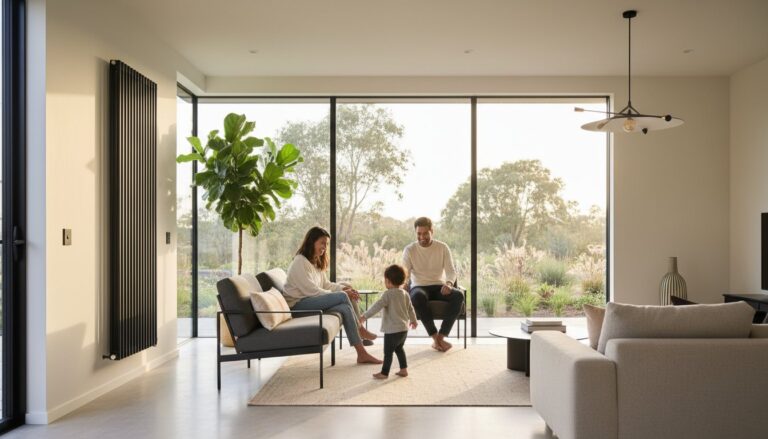
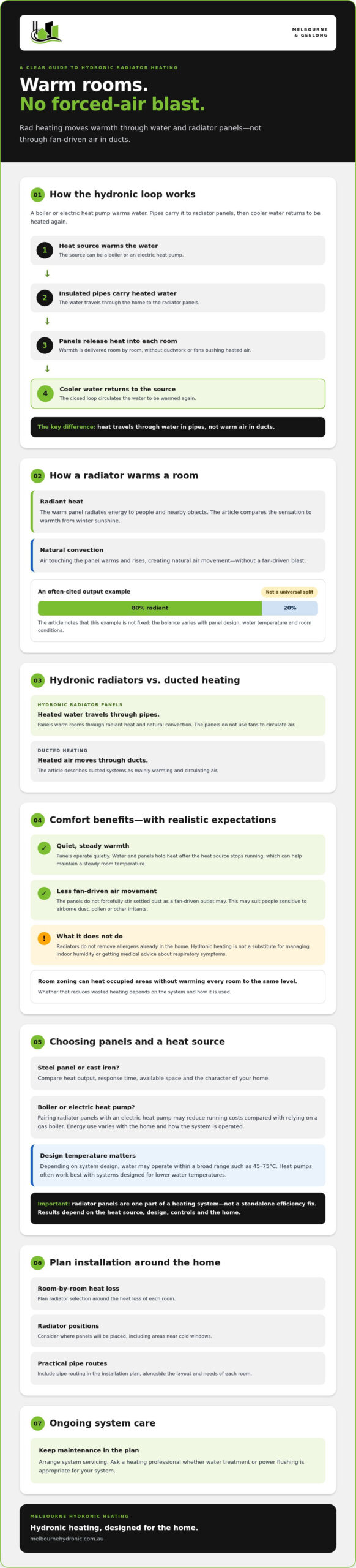
Rad heating is shorthand for radiator heating. In a hydronic system, a boiler or electric heat pump warms water and circulates it through pipes to radiator panels around the home. The panels transfer heat into each room without needing ductwork or fans to push heated air around. A heating radiator warms a room through both radiant heat and natural convection, as described in this overview of the heating radiator.
Water can carry and store more heat than the same volume of air, making it an effective way to move warmth from a central heat source to several rooms. That does not automatically make every hydronic system more efficient. Performance also depends on the heat source, system design, controls and the home itself. Modern radiator panels can suit contemporary interiors, while programmable controls let households schedule heating around their routines. Because the panels have no air-moving fans, they operate quietly.
The Hydronic Loop: How Water Moves Warmth
The heat source warms water to the temperature needed by the system. Depending on its design, a hydronic system may operate within a broad range such as 45–75°C; heat pumps often work best with systems designed for lower water temperatures. Insulated pipes carry heated water to the panels, where it releases heat into the rooms. Cooler water then returns to the heat source to be warmed again. This circulating arrangement is known as a closed-loop hydronic heating system.
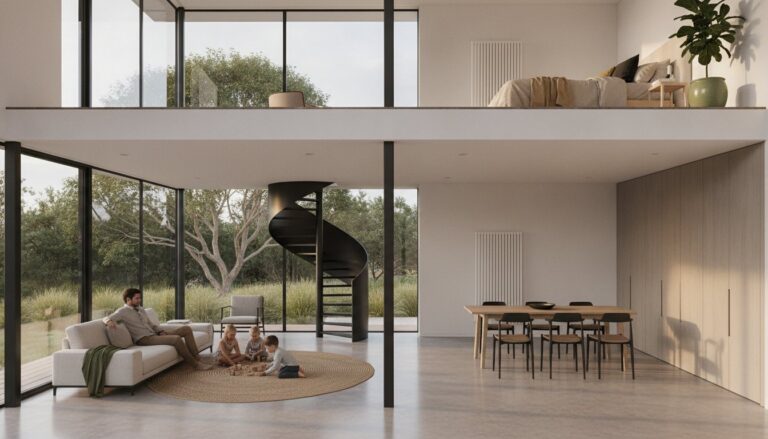
The loop is the key difference from ducted heating: warmth travels through water in pipes, not through air in ducts. Radiator panels deliver heat to individual rooms, while a central boiler or heat pump supplies the energy.
Radiant vs. Convective Heat: Why It Feels Different
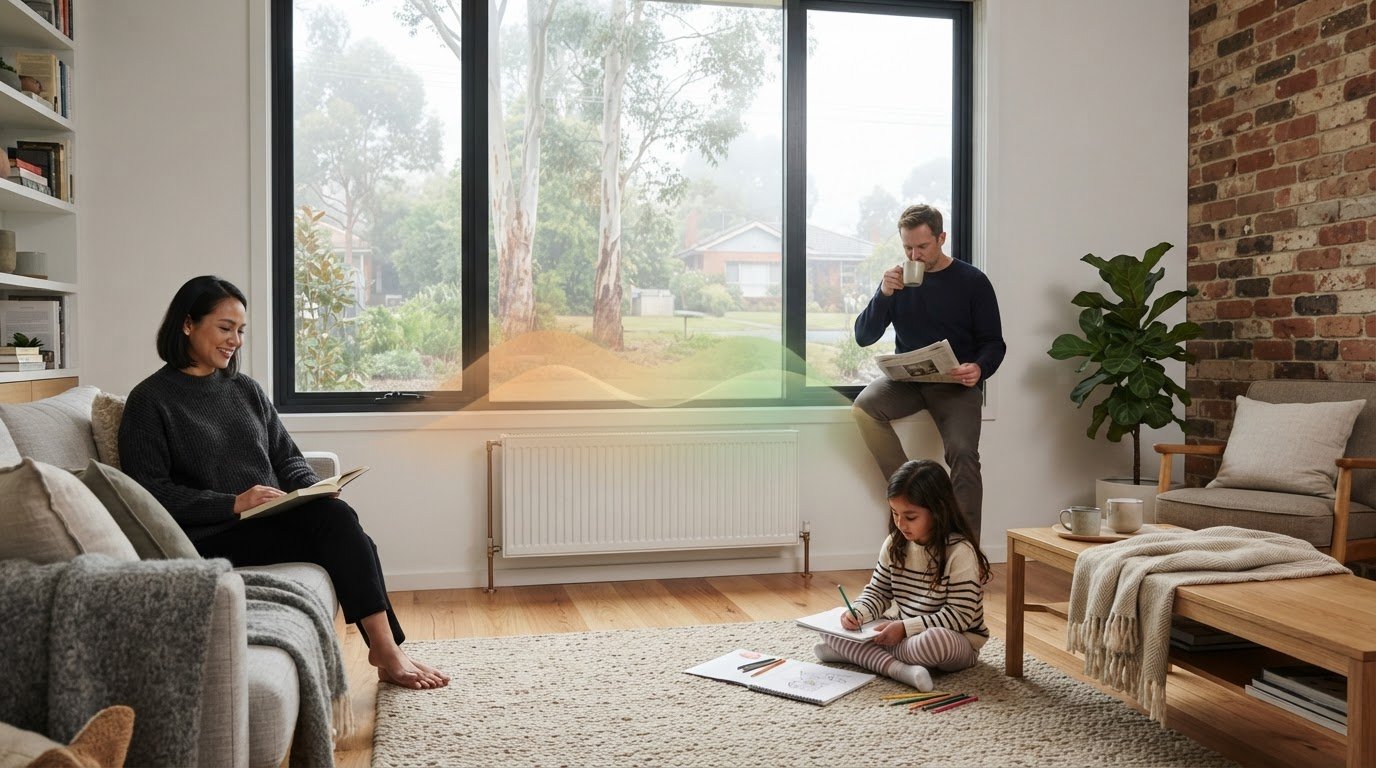
Ducted systems mainly warm and circulate air. A radiator transfers heat in two ways. Its warm surface radiates energy to people and nearby objects, while air touching the panel warms and rises, creating convection. Radiant warmth can feel like standing in winter sunshine because you feel heat directly, rather than relying only on warm air.
You may see radiator output described as “80% radiant and 20% convective,” but that is not a universal split. The balance varies with panel design, water temperature and room conditions. The practical point is that radiators combine direct radiant warmth with natural air movement, without a fan-driven blast of air.
The Health and Efficiency Benefits of Radiator Panels
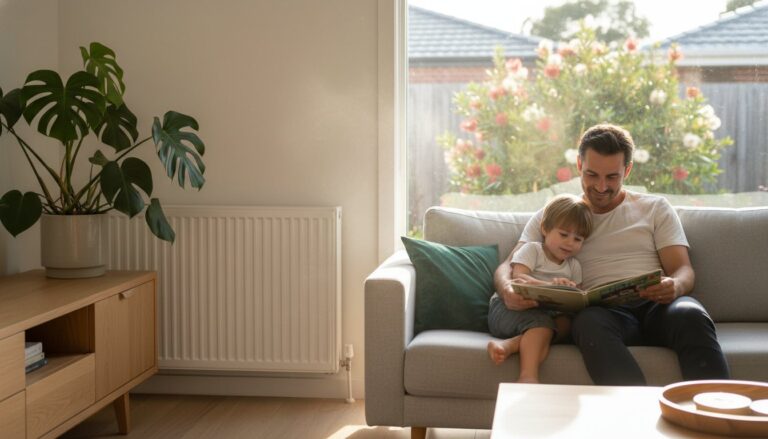
Radiator panels provide warmth without fans blowing air through rooms. That may make rad heating more comfortable for people sensitive to airborne dust, pollen or other irritants. It does not remove allergens already in the home, and a hydronic system still needs regular care. The Australian government guide to heating also describes hydronic heating as a system that does not circulate dust in the way forced-air heating can.
Radiators do not actively add moisture to indoor air, but they also do not rely on the constant movement of heated air that some occupants find drying. Comfort depends on the home and its conditions. Hydronic heating is not a substitute for managing indoor humidity or seeking medical advice about respiratory symptoms.
A Calmer Option for Allergy-Sensitive Homes
Without a fan at the radiator, the panel does not forcefully stir up settled dust in the way a fan-driven heating outlet may. This may be helpful in bedrooms, studies and other rooms where quiet, steady warmth is a priority. Hydronic radiators also have no flame at the room-side panel, so they avoid local combustion or dust-on-hot-surface odours that can occur with some gas wall heaters.
If asthma or allergies are a concern, discuss heating choices with your healthcare professional and consider how each system affects air movement in your home.
Efficiency, Zoning and Everyday Comfort
Water and radiator panels hold heat after the heat source stops running, which can help maintain a steady room temperature. That does not guarantee fewer on-off cycles. Cycling depends on system design, controls, heat loss and the heat source. Radiator panels need to be selected as part of a system designed for the home, rather than treated as a standalone efficiency fix.
Room zoning can let you heat occupied areas without warming every room to the same level. In a larger home, that may reduce wasted heating if the system is designed and controlled for separate zones. Running costs are not automatically lower than those of an electric split system. They vary with equipment efficiency, electricity tariffs, insulation, weather and how you use the home. Ask for a like-for-like comparison based on your household’s needs instead of assuming one system will always cost less.
For homes in Melbourne or Geelong, a specialist in hydronic radiator heating can help assess whether panels and zoning suit the layout and comfort priorities.
Choosing Your Rad Heating Hardware: Types and Sources
The right radiator depends on more than appearance. Room heat loss, available wall space, the heat source and water temperature all affect how well a panel performs. In a Melbourne heritage home, you might prioritise a traditional look. In a compact renovation, a slim or vertical design could make better use of limited wall space.
- Steel panels have a slim profile and respond relatively quickly to changes in heating demand. They can suit modern homes and systems designed around lower water temperatures, provided the panels are sized for the room.
- Cast iron radiators have high thermal mass, so they take longer to warm up and cool down. Their substantial, traditional appearance can complement heritage interiors, but their weight, placement and compatibility need to be considered during system design.
- Designer and vertical radiators can make use of narrow wall sections while adding a distinct visual finish. Check that the chosen model can provide the heat output the space needs.
Choosing a Heat Source
Gas boilers are a familiar option in existing homes, including systems originally designed for higher water temperatures. Electric heat pumps offer a different approach and can work efficiently with lower-temperature water, but radiator size and system design may need to be reviewed to deliver enough warmth. Do not assume an existing radiator setup will suit a heat pump without an assessment. Read more about heat pump hydronic heating and how the heat source shapes the system. The Australian Government guide to heating provides further background on comparing home heating options.
Arrangements that combine a boiler and heat pump may be possible, but they require suitable equipment, controls and a carefully planned design. They are not automatically the right fit for every home. A heating specialist can assess the existing system and explain the trade-offs before you choose.
Comfort Details: Bathrooms, Glazing and Finishes
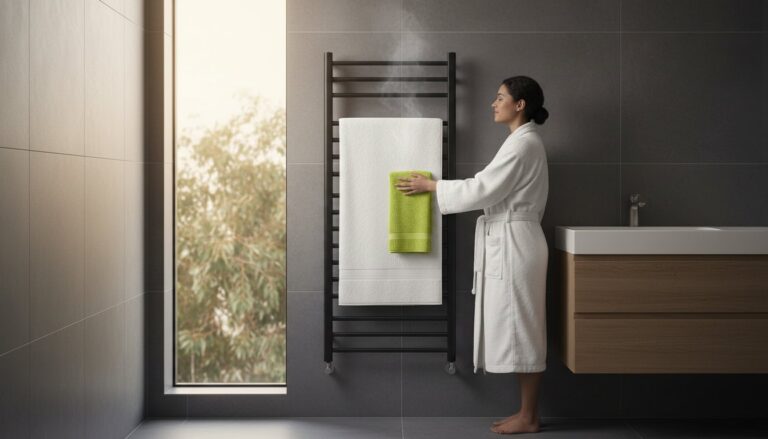
Hydronic towel rails bring warmth to the bathroom and help towels dry between uses. They can support everyday comfort, but they do not replace effective ventilation or guarantee mould prevention. Trench heating places a heat emitter in a floor-level recess beneath a grille. It may be considered near large glazed areas where wall space is limited, subject to the room’s heat requirements and floor layout.
Valves and thermostats also affect the finished look and day-to-day control. Choose finishes that suit the interior and controls that make it practical to adjust room temperatures. For advice on radiator panels, towel rails and heat pump integration in Melbourne or Geelong, explore Melbourne Hydronic Heating.
Planning Your Rad Heating Installation in Melbourne
A successful rad heating installation starts with the home, not the radiator catalogue. Melbourne’s winter conditions, insulation, glazing, room size and ceiling height all affect how much heat each space needs. A room-by-room heat loss calculation helps determine suitable panel sizes and supports accurate system design. It is more useful than relying on a rough estimate based on floor area alone.
- Calculate heat loss: Account for each room’s construction, windows and exposure to outdoor conditions.
- Plan panel positions: Radiators near windows can help offset the cool air that falls from cold glazing, though the best position depends on the room layout.
- Map pipe routes: Discuss whether pipes can run through an accessible underfloor space, ceiling or another route that suits the home’s structure.
- Size the heat source: Select a boiler or heat pump to suit the calculated heat demand and system design. The heat source should be sized for the home’s requirements, not just the total panel output.
Retrofitting Radiators into Existing Homes
In many brick veneer homes, radiator panels can be easier to retrofit than hydronic underfloor heating because they do not require heating pipework beneath the floor across each room. The work still depends on access and the home’s construction. An underfloor crawl space may offer a pipe route in some single-storey houses. In double-storey homes, installers may need to plan routes between levels and through suitable wall or ceiling spaces. Ask how the proposed layout affects floors, walls and access before work begins. Disruption varies, so do not assume every retrofit can be completed without opening building surfaces.
Zoning and Smart Controls
Room-by-room control can help match heating to household routines. Thermostatic radiator valves (TRVs), where compatible with the system, let occupants adjust individual rooms. Broader zoning controls can manage groups of spaces independently. This can be useful in Melbourne, where a sunny living area may feel different from a shaded bedroom. Smartphone scheduling is possible with compatible controls, but check which functions are included in the proposed design.
Before committing, ask the installer to explain the heat-loss assessment, pipe routes, panel locations, heat-source sizing and control options. Discuss a Melbourne hydronic heating installation to explore what may suit your home’s layout.
Maintenance: Keeping Your Rads Running for Decades
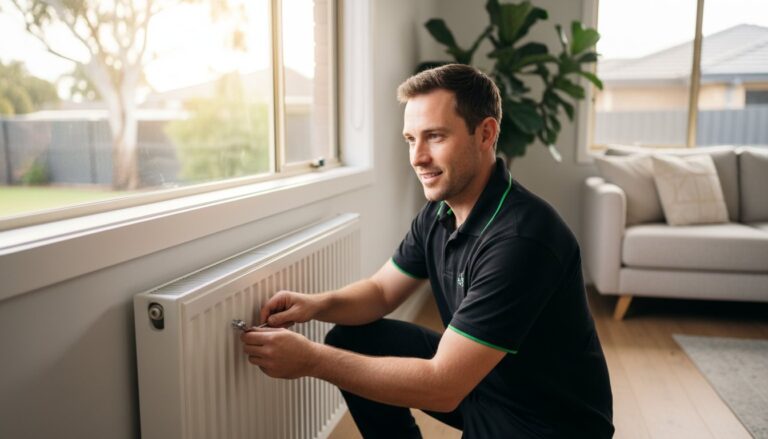
Regular care helps keep rad heating operating quietly and evenly. Arrange routine servicing for the boiler or heat pump in line with the equipment manufacturer’s maintenance schedule. A service can help identify issues affecting safe boiler operation or heat pump performance before they disrupt comfort. Keep service records and check the manufacturer’s warranty terms so you know what maintenance is required.
Water quality matters, too. A heating professional can assess whether the system needs a suitable inhibitor, an additive that helps reduce internal corrosion in radiators and pipework. If some panels heat unevenly, trapped air may be the cause. Air can often be released through a radiator bleed valve, but follow the equipment instructions or ask a professional if you are unsure. Procedures vary by system.
Power Flushing: Clearing Sludge from the System
Over time, corrosion inside a system can create black sludge, often called magnetite. It may settle in radiator panels and restrict water circulation. Cold areas at the bottom of a radiator, slow warm-up or uneven heating can indicate poor circulation, although other faults can cause similar symptoms. A qualified heating professional can assess the cause before recommending a flush.
Power flushing uses equipment to circulate water through the heating circuit and dislodge accumulated debris. Clearing a blockage may restore flow and help the system operate as intended, but it does not guarantee lower gas or electricity bills. Energy use also depends on the heat source, controls, insulation and household settings. Flushing is not needed on a fixed schedule for every system. An assessment can determine whether it is appropriate.
Local Knowledge and Ongoing Care
Melbourne Hydronic Heating is family-owned and has more than 30 years of experience in Victoria, serving Melbourne and Geelong. Its services include system servicing and maintenance, power flushing, radiator panels and heat pump integration. When a home heats unevenly, a technician can assess the system’s condition and circulation rather than assuming that flushing alone will solve the problem.
For service options and maintenance information, explore hydronic heating service in Melbourne. Contact the team to discuss servicing or power flushing for your hydronic system, and confirm the recommended maintenance schedule for your equipment.
Plan a Warmer, More Comfortable Melbourne Home
Rad heating combines quiet, water-based warmth with radiator styles that can suit contemporary and heritage homes. A suitable setup starts with careful planning: room-by-room heat requirements, panel placement, an appropriately sized boiler or heat pump, and controls that match how you use each space.
Ongoing servicing, suitable water treatment and attention to uneven heating help keep the system working as intended. Choosing between a gas boiler and an electric heat pump also calls for a home-specific assessment, since existing radiators and operating needs affect what may be suitable.
Melbourne Hydronic Heating is family-owned and operated, with more than 30 years of experience in Victoria and specialist knowledge of heat pump and boiler systems. To discuss a hydronic heating system for your home in Melbourne or Geelong, contact Melbourne Hydronic Heating.
With the right design and ongoing care, you can take the next step towards dependable, comfortable warmth at home.
Frequently Asked Questions
Is rad heating more expensive to run than ducted gas heating?
Not necessarily. Running costs depend on the heat source, system efficiency, home insulation, thermostat settings, energy tariffs and how much of the home you heat. Hydronic radiators connected to a gas boiler still use gas, while a heat pump uses electricity. For a fair comparison in your Melbourne home, consider expected energy use and comfort needs, not just the type of heater.
Can I install radiator panels in a home with a concrete slab?
Yes, radiator panels can be installed in a home with a concrete slab. Unlike underfloor heating, they do not require heating pipes to be embedded across the floor. Pipework may be routed through accessible ceiling or wall spaces, depending on the house. A site assessment can identify practical routes, how visible the pipes may be and whether the layout suits your rooms.
How long do hydronic radiator panels typically last?
Quality hydronic radiator panels can typically last around 25 to 30 years, provided they are well maintained and protected from internal corrosion. The heat source, such as a gas boiler or electric heat pump, is a separate component and may have a different service life. Ask about care requirements for your specific system, including servicing, water treatment and what the manufacturer’s warranty covers.
Do I need to leave my radiator heating on all day?
No, you do not necessarily need to leave radiator heating on all day. Use the thermostat and any room or zone controls to match heating to your routine. A programmed schedule can warm occupied areas before you need them and reduce heating in unused spaces. The best settings depend on your home’s insulation, the system’s response time and Melbourne’s changing weather.
Can I switch my old gas boiler to an electric heat pump?
A gas boiler can sometimes be replaced with an electric heat pump, but the existing system needs to be assessed first. Heat pumps generally work best with lower water temperatures, so older radiators may need resizing or other design changes to provide enough heat. A specialist can check your panels, pipework and home’s heating demand before recommending a suitable setup.
Will radiator panels get hot enough to burn children or pets?
Radiator panels can become hot during operation, so contact may cause discomfort or a burn. Surface temperature varies with the system’s settings and operating conditions. Teach children not to touch the panels, supervise pets around them and follow the manufacturer’s safety guidance. If a radiator will be in a high-traffic area, discuss its placement and suitable precautions with your installer.
How much does it cost to install rad heating in a 3-bedroom Melbourne home?
There is no single reliable installation price for every three-bedroom home. The scope depends on whether you are adding panels to existing pipework or installing a complete system, as well as the heat source, number of radiators, access and pipe routes. Ask for an itemised quote based on your home’s layout and heating requirements so you can compare proposals accurately.
What is the difference between a panel radiator and a designer radiator?
A panel radiator is a practical style, often chosen for its straightforward form and fit with everyday interiors. A designer radiator places more emphasis on shape, finish or visual impact, while still needing to deliver suitable heat output for the room. For either type, check compatibility with your boiler or heat pump and ensure it is sized for your home in Melbourne or Geelong.