Hydronic Towel Rails Melbourne: The 2026 Guide to Luxury Bathroom Heating
Stepping out of a warm shower into a freezing bathroom shouldn’t feel like a test of endurance. For many locals, the biting chill of a Victorian winter means dealing with damp towels that never quite dry and a room that feels perpetually cold. You likely agree that a bathroom should be a sanctuary, not a source of morning dread or rising energy bills from inefficient electric heaters. This 2026 guide reveals how premium hydronic towel rails melbourne can transform your space into a dry, radiant haven. By integrating these rails into a whole-home system, you’ll achieve a level of comfort that standard heating simply can’t match.
Discover how to eliminate mould and mildew while significantly lowering your long-term running costs. We’ll explore the latest shifts toward heat pump integration and the technical superiority of copper construction. This article provides a clear roadmap to choosing a system that adds genuine property value and provides the healthy, luxurious environment your family deserves. From understanding new Victorian standards to selecting designer finishes, we’ll cover everything you need to know about modern bathroom climate control.
Key Takeaways
- Learn why radiant heat from hydronic towel rails melbourne offers a more consistent and healthy warmth than traditional ducted air systems.
- Discover how premium copper construction provides superior heat transfer and long-term corrosion resistance for Victorian bathrooms.
- Understand the significant operational cost savings of hydronic technology compared to standard electric heated rails.
- Find out how to choose the right size and bar configuration to allow your towel rail to function as the primary heat source.
- Explore the efficiency benefits of integrating your bathroom heating with modern electric heat pumps to meet 2026 energy standards.
Elevating Bathroom Comfort with Hydronic Towel Rails in Melbourne
A Towel warmer in its hydronic form is far more than a luxury accessory; it’s a high-performance heat emitter designed to integrate seamlessly into your home’s central heating circuit. Unlike standalone electric versions, hydronic towel rails melbourne function as dedicated radiators that circulate hot water from a central boiler or electric heat pump. This integration ensures the bathroom remains a consistent temperature without the spikes and dips common with fan-forced heaters. It’s a sophisticated solution that prioritises both thermal precision and aesthetic elegance.
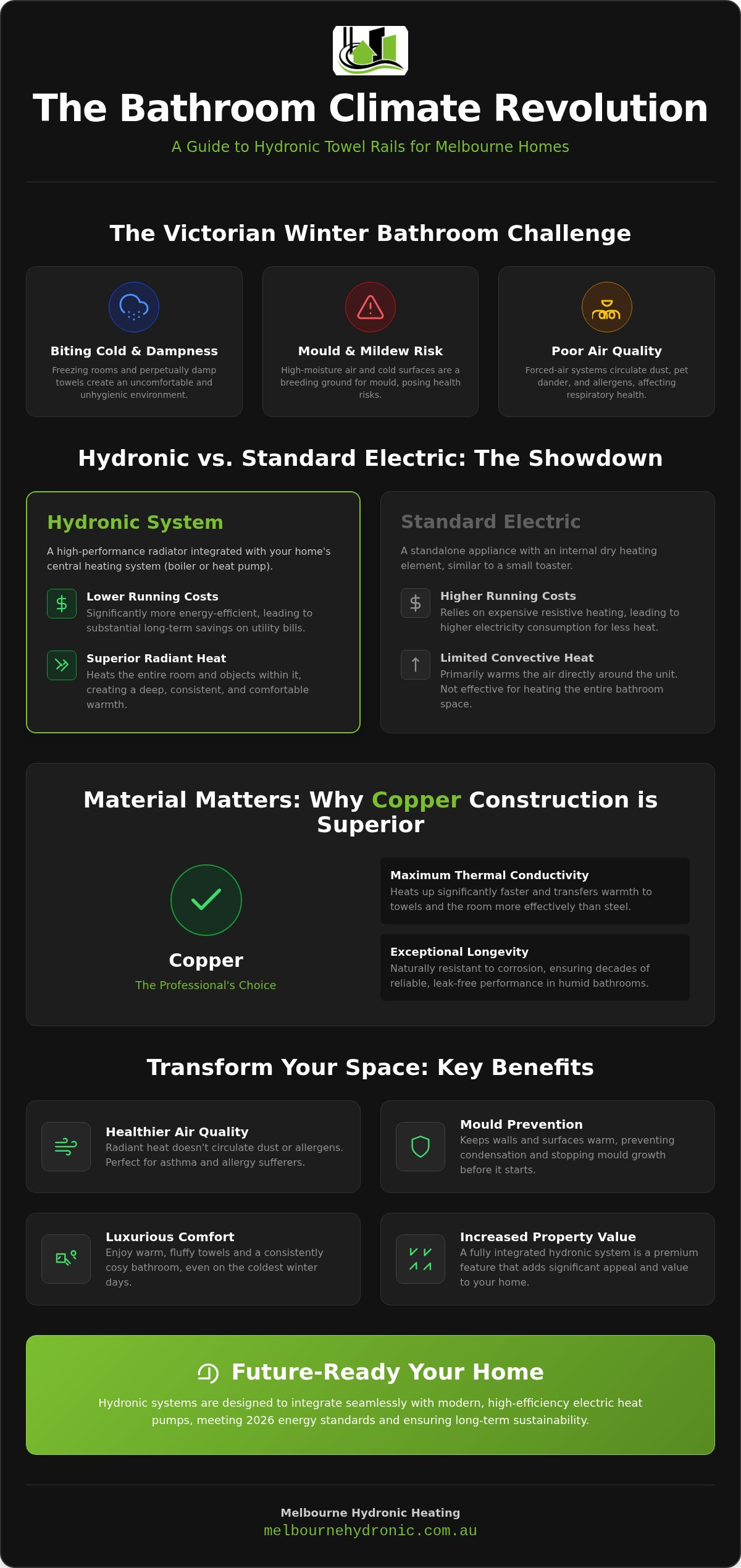
For Melbourne families, the primary advantage lies in the quality of the air. Traditional ducted systems rely on blowing hot air through vents, which inevitably circulates dust, pet dander, and allergens. Hydronic systems operate through convection and radiation, meaning there’s no forced air movement. This makes them the gold standard for asthma and allergy sufferers. You get a cleaner, healthier breathing environment while enjoying a level of warmth that feels natural and unobtrusive.
Why Radiant Heat Wins in Victorian Bathrooms
The physics of radiant heat is what sets these systems apart during the peak of a Victorian winter. Rather than simply warming the air, which quickly escapes when a door opens, radiant heat warms the objects in the room. It heats the tiles, the cabinetry, and your body directly. This creates that signature “cosy” feel that defines a premium home environment between June and August. In technical terms, hydronic towel rails are energy-efficient radiators specifically designed for textiles, ensuring your towels stay warm while the room remains perfectly tempered. It’s a deep, penetrating warmth that stays with you long after you’ve finished your morning routine.
Tackling Dampness and Mould
Melbourne’s high-moisture winters often lead to condensation on cold bathroom surfaces, which is the leading cause of mould and mildew growth. Consistent radiant warmth from a hydronic rail keeps tiles and mirrors above the dew point, preventing that thin layer of moisture from ever forming. Beyond the walls, there’s a significant hygiene benefit for your linens. By rapidly drying towels after use, the system prevents the bacterial growth that causes that unpleasant “damp towel” smell. Positioning these rails as a functional part of your home maintenance strategy doesn’t just protect your health; it preserves the structural integrity of your bathroom renovation by keeping the environment dry and ventilated.
The Technology Behind Premium Hydronic Towel Rails
Understanding the mechanics of hydronic towel rails melbourne is essential for homeowners who value long-term performance over temporary fixes. Unlike standard electric rails that rely on a dry internal element, these systems utilise the thermal mass of water. Hot water circulates from a central boiler or heat pump through the rail’s internal channels, creating a uniform surface temperature across the entire unit. This consistent flow ensures that every bar provides the same level of radiant warmth, allowing the rail to function as a genuine room heater rather than just a textile dryer.
The efficiency of these units is often measured in BTU (British Thermal Units). This figure represents the heat output required to raise the temperature of the room. Because hydronic systems are part of highly energy efficient heating systems, they often deliver a higher BTU per square centimetre than their electric counterparts. This makes them a powerful tool for maintaining comfort in larger Melbourne bathrooms during the peak of winter.
Copper vs. Stainless Steel Construction
Copper is the industry standard for hydronic efficiency in Australia for several reasons. It possesses significantly higher thermal conductivity than stainless steel, meaning the rail reaches its target temperature faster and transfers heat to your towels more effectively. In the damp, high-humidity environment of a Victorian bathroom, copper’s natural resistance to corrosion is a vital factor for longevity. When paired with high-quality powder coating or electroplating, a copper-based rail can last for decades without the risk of internal rust or external blistering. If you’re planning a major renovation, it’s worth discussing material options with a professional to ensure your system stands the test of time.
Valve Sets and Control Options
The precision of your bathroom heating depends heavily on the valve configuration. If your pipework emerges from the floor, you’ll require angled valve sets, while wall-fed pipes typically use straight valves for a flush, designer appearance. You can choose between manual valves, which function like a standard tap, or thermostatic valves. Thermostatic options are the superior choice for modern homes because they automatically modulate the water flow based on the ambient air temperature. This prevents the room from overheating and ensures your system only uses the energy it needs. For the best results, these should be integrated into a professionally balanced manifold setup to ensure even pressure across all your hydronic towel rails melbourne.
Hydronic vs. Electric Heated Towel Rails: Which is Best for Melbourne?
Choosing between electric and hydronic systems often comes down to the difference between a simple towel dryer and a genuine bathroom heater. While electric rails are popular for quick retrofits, they usually function as low-wattage accessories that struggle to influence the ambient temperature of a cold Victorian bathroom. In contrast, hydronic towel rails melbourne are integrated directly into your home’s central heating circuit. This allows them to provide constant, radiant warmth that keeps the entire room comfortable throughout the peak of winter. For homeowners seeking a high-performance solution, the hydronic approach offers a level of thermal stability that “on-demand” electric units simply cannot match.
Running Costs and Energy Efficiency
The long-term operational savings of hydronic technology are significant, especially when integrated with a modern heat pump hydronic heating system. Electric rails typically run on a one-to-one ratio, where one unit of electricity produces one unit of heat. High-efficiency heat pumps can achieve a Coefficient of Performance (COP) of 3.0 or higher, meaning they deliver three units of heat for every unit of electricity consumed. In terms of output, a standard hydronic rail provides a heat equivalent of approximately 400 to 800 watts, yet it operates at a fraction of the cost of an electric rail with similar performance. This efficiency makes hydronic systems the superior choice for managing energy bills during the sustained cold of a Melbourne winter.
Heating Performance: Accessory vs. Radiator
Electric rails are often designed only to take the chill off a towel, but they lack the surface area and thermal mass to act as a primary heat source. Hydronic rails are essentially vertical radiators. They provide enough BTU output to replace traditional hydronic heating panels in small to medium-sized bathrooms. This is a game-changer for Melbourne renovations where wall space is at a premium. Instead of cluttering the room with multiple fixtures, a single, well-placed rail can dry your linens and heat the space simultaneously. This dual-purpose functionality ensures your bathroom remains a dry, mould-free sanctuary without requiring additional bulky heaters. It’s a streamlined approach that combines high-end aesthetics with the practical demands of the local climate.
Choosing the Right Size and Style for Your Renovation
Selecting the ideal hydronic towel rails melbourne for your home requires a balance between architectural vision and thermal performance. It isn’t just about the look; it’s about ensuring the unit fits the physical footprint of your room while delivering enough radiant warmth to keep the space dry. If you’re working with a compact ensuite, a wall-mounted model frees up valuable floor space and keeps the design feeling open. For larger master suites, a floor-to-ceiling installation creates a striking vertical feature that anchors the room’s design. You should also consider the bar configuration. Clustered designs are particularly effective for those who want higher heat output, as the grouped rails create concentrated zones of thermal energy that dry heavy bath sheets much faster than evenly spaced designs.
The architectural style of your home should guide your choice between different series. A Traditional B-Series rail, with its classic jointed look, is the perfect companion for heritage renovations or Victorian-style homes. Conversely, the Modern Stream Series offers clean, minimalist lines that suit the contemporary aesthetic found in many new Melbourne builds. Both styles provide the same high-efficiency performance, but the choice allows you to treat your heating system as a deliberate design element rather than a hidden utility.
Sizing Guide: Bars, Width, and Height
Standard heights typically range from 1000mm for powder rooms to 1750mm for large family bathrooms. When selecting a size, consider the daily needs of your household. A 1000mm rail is sufficient for a guest bathroom, while a 1300mm rail is often the sweet spot for a couple’s ensuite, providing ample space for two large towels to dry without overlapping. For a family of four, the 1750mm models are essential to prevent dampness and ensure every user has a warm towel ready. It’s important to calculate the number of towels your family needs to dry simultaneously to avoid overcrowding the bars, which can reduce the system’s efficiency. If you’re unsure which model fits your floor plan, request a professional design consultation to find the perfect match.
Aesthetic Finishes for 2026 Bathroom Trends
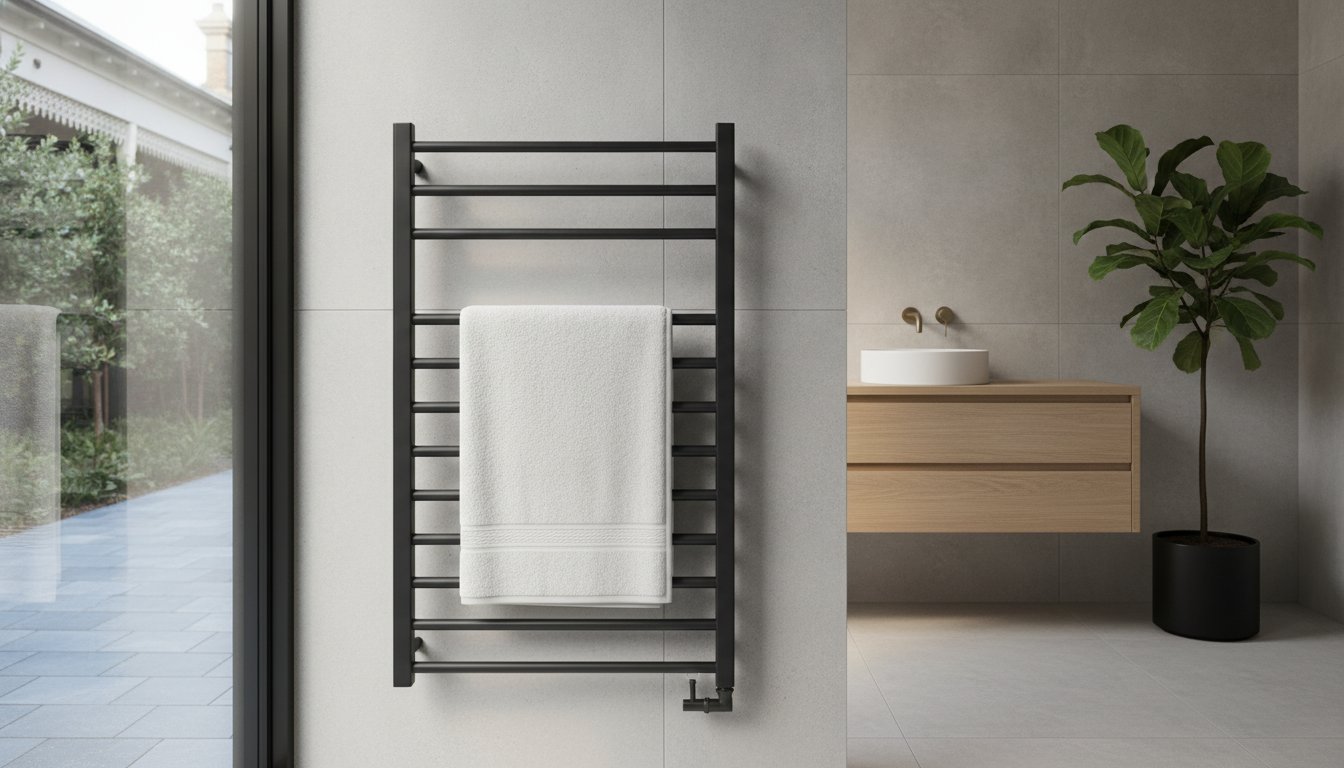
The design trends of 2026 favour bold, tactile finishes like matte black and brushed brass, which have become staples in Melbourne’s luxury renovation scene. These finishes offer a modern, sophisticated edge that contrasts beautifully against natural stone or large-format porcelain tiles. For those seeking a timeless look, classic chrome remains a popular choice due to its durability and ease of cleaning. Regardless of the finish, you must match your towel rail valves with your existing tapware. Using a consistent finish across your shower mixers, taps, and heating valves creates a cohesive, high-end feel that significantly boosts the property value and overall appeal of your renovation.
Professional Installation and System Integration in Melbourne
Successful installation of hydronic towel rails melbourne depends on technical precision and early-stage coordination. Unlike a simple plug-and-play electric rail, these units are high-pressure heat emitters that must be balanced within your home’s hydraulic circuit. This is why planning is critical during the “rough-in” stage of a renovation or build. Pipework must be precisely positioned before tiles are laid to ensure a seamless, professional finish. Integrating these rails with modern electric heat pumps represents the pinnacle of 2026 energy efficiency. By using ambient air to heat the water in your system, you achieve a level of sustainability that traditional gas boilers can’t match.
With 30+ years of experience in Victoria, we understand the complexities of high-pressure hydronic systems. A poorly installed rail can lead to air locks or uneven heating, which compromises the comfort of your entire home. Regular maintenance is also vital. Ensuring your bathroom units are part of a scheduled hydronic heating service prevents sediment buildup and maintains the integrity of the copper tubes. It’s about protecting your investment and ensuring the system operates at peak performance for decades.
Retrofitting vs. New Build Installations
Installing hydronic pipes in a new build is a straightforward process, but retrofitting in existing Melbourne homes requires a more nuanced approach. Challenges often arise when navigating solid brick walls or concrete slabs common in older Victorian suburbs. For multi-storey upgrades, we often utilise internal wall cavities or ceiling spaces to run the necessary insulated piping. A professional consultation before you purchase any hardware is essential. It allows us to assess the flow rates and pressure requirements specific to your floor plan, ensuring your hydronic towel rails melbourne perform at their peak from day one.
The Melbourne Hydronic Heating Difference
Our approach combines decades of local Victorian expertise with a commitment to the latest international standards. We don’t just sell components; we design comprehensive home environments. For the ultimate luxury experience, many of our clients combine their towel rails with underfloor heating. This creates a dual-layer heating effect where the floor provides a gentle base warmth while the rail handles the radiant heating of the air and towels. It’s a sophisticated climate solution tailored to the unique challenges of the Melbourne climate. If you’re ready to elevate your bathroom’s performance and comfort, contact our specialist team today for a tailored design that fits your lifestyle.
Future-Proof Your Home with Radiant Bathroom Warmth
Investing in a high-performance heating system is about more than just warm towels; it’s about protecting your home’s health and your family’s comfort. By selecting premium hydronic towel rails melbourne, you ensure a dry, radiant environment that standard electric heaters can’t replicate. These systems offer superior energy efficiency and longevity, especially when paired with modern heat pump technology. A professional installation ensures your bathroom remains a sanctuary free from dampness and mould for decades to come.
Our family-owned and operated team brings 30+ years of Melbourne experience to every project, specialising in energy-efficient heat pump integration. We take pride in delivering technical precision and local expertise that adds genuine value to your property. If you’re ready to upgrade your bathroom experience, Request a Quote for Hydronic Towel Rail Installation today. Let’s work together to create a space where luxury and efficiency go hand in hand.
Frequently Asked Questions
Can a hydronic towel rail heat an entire bathroom?
Yes, provided the unit is sized correctly for the room’s BTU requirement. In many small to medium-sized Melbourne bathrooms, a high-output hydronic rail acts as the primary heat source. For larger master suites, it works best in tandem with underfloor heating or a radiator panel. The key is calculating the heat loss of the space to ensure the rail provides enough radiant warmth to replace traditional ducted heating.
Do hydronic towel rails stay on all the time?
They operate as part of your central heating system, so they typically follow the schedule of your main thermostat. If you use thermostatic valves, the rail modulates its output based on the ambient temperature. This means it only circulates hot water when the room needs heat. It’s an efficient way to maintain a dry environment without the energy spikes associated with electric models that lack thermal mass.
Can I replace an electric towel rail with a hydronic one?
Replacement is possible, but it requires professional plumbing to connect the unit to your existing hydronic circuit. Unlike electric rails that only need a power point, hydronic towel rails melbourne require flow and return pipework. This usually involves opening the wall or floor to run insulated pipes. It’s a project best handled during a bathroom renovation when surfaces are already exposed, ensuring a clean and integrated look.
Are hydronic towel rails more expensive to run than electric ones?
No, they are significantly cheaper to operate over the long term. While electric rails use high-cost electricity to power a resistance element, hydronic systems leverage the efficiency of a central boiler or heat pump. When integrated with an air-to-water heat pump, the running costs are a fraction of electric alternatives. This makes them the superior choice for homeowners looking to reduce their annual energy footprint while maintaining luxury comfort.
What maintenance do hydronic towel rails require?
Maintenance is minimal but essential for system longevity. You should include your towel rails in your regular hydronic heating service to ensure the water chemistry is balanced. This prevents internal corrosion and ensures the valves operate smoothly. Occasionally, you may need to bleed the rail to remove trapped air, which ensures the hot water circulates through every bar for even heat distribution across the entire unit.
Can I install a hydronic towel rail myself in Melbourne?
No, Victorian regulations require a licensed plumber to install any component of a hydronic system. This ensures the pipework meets safety standards and that the system is pressure-tested for leaks. Professional installation also guarantees that the flow rates are balanced across your whole home. Attempting a DIY installation can void your manufacturer’s warranty and risk significant water damage to your home’s structural elements during a high-pressure failure.
What is the best material for a hydronic towel rail?
Copper is widely considered the gold standard for Australian conditions. It offers superior thermal conductivity compared to stainless steel or mild steel, meaning it heats up faster and stays warm longer. Copper is also naturally resistant to corrosion in the high-humidity environment of a bathroom. Choosing copper-based hydronic towel rails melbourne ensures your investment lasts for decades without the risk of internal rust or external finish degradation.
How long does it take for a hydronic towel rail to heat up?
A high-quality copper rail typically reaches its target temperature within 15 to 20 minutes. The exact timing depends on the distance from your heat source and the starting temperature of the water. Because hydronic systems rely on thermal mass, the rail also stays warm for a considerable period after the system shuts off. This provides a steady, gentle heat that keeps your towels dry and your bathroom comfortable.