
Hydronic Heating in Kew: A Homeowner’s Guide to Choosing the Right System
The most comfortable hydronic system for a Kew home may not be the one with the most familiar radiators. The right hydronic heating Kew setup depends on your rooms, floor construction, heat source and plans for the property, particularly if you’re renovating an established home.
It’s understandable to focus first on visible components or worry about the disruption of adding heating to an existing layout. Comfort comes from matching the heat emitters and heat source to the home’s needs. This guide compares radiator panels, underfloor heating, trench heating and fan coils, alongside electric heat pumps and gas boilers. You’ll also learn what to consider when planning a retrofit, how system design affects everyday comfort and what to discuss before committing. Melbourne Hydronic Heating designs and installs hydronic systems across Melbourne, including Kew, and in Geelong. With more than 30 years of experience, the team helps homeowners plan a configuration that suits their property and heating priorities.
Key Takeaways
- Choose emitters and a heat source based on your home’s layout, the rooms you use and your comfort priorities.
- Compare radiator panels, underfloor heating, trench heating and fan coils by how they fit your rooms and project scope.
- For hydronic heating Kew homes, retrofit disruption depends on the building and work involved, so include installation planning in your decision.
- Consider household routines, renovation plans and control preferences before settling on a system design.
- Melbourne Hydronic Heating’s family-owned team brings more than 30 years of experience to planning hydronic systems for local properties.
Hydronic heating in Kew: what should homeowners compare first?
Start with the home, not a particular heater. The right hydronic heating Kew plan depends on which rooms you want to warm, the property’s layout and construction, whether you’re renovating, and how your household uses each space. Hydronic heating circulates heated water through selected emitters, the components that release warmth into rooms. A design suited to one Melbourne home may not suit another, so begin by identifying the property’s features and your comfort priorities.
Which property details shape a Kew hydronic heating plan?
Room size and layout help determine how much heating each area needs and where emitters can fit. Insulation, window glazing and ceiling height also affect how quickly a room loses warmth. Note which rooms matter most, when they’re occupied, and whether you prefer consistent warmth throughout the home or targeted heating in selected areas.
Project context matters too. In an older home, the existing floor construction and available space can affect how pipes are installed. A renovation may create an opportunity to coordinate heating with other building work, while a new build allows the system to be planned alongside the floor layout. These are different scenarios, not assumptions about every Kew property. If heritage or other building constraints apply, include relevant requirements in your project planning.
What does a hydronic heating system include?
Hydronic heating warms water at a heat source, circulates it through pipework and releases its heat into rooms through selected emitters. The heat source is usually a boiler or an electric heat pump. A boiler heats water directly, while a heat pump transfers heat to the water. The water travels through distribution pipes to the chosen emitters, then returns to be reheated.
Emitters can include radiator panels, underfloor pipework, trench heating or fan coils. Controls manage when the system operates and, depending on the design, allow heating to be adjusted for different areas. Each component needs to work as part of a coordinated system: the heat source, pipe routes, controls and emitters all influence the final design. For a foundational overview of floor-based options, see Underfloor heating systems.
Comparing these elements against your home’s construction and daily routine is more useful than choosing a product in isolation. A property assessment helps shape a practical configuration around the spaces you want to heat and the scope of the work.
Compare hydronic heating options for Kew homes and renovations
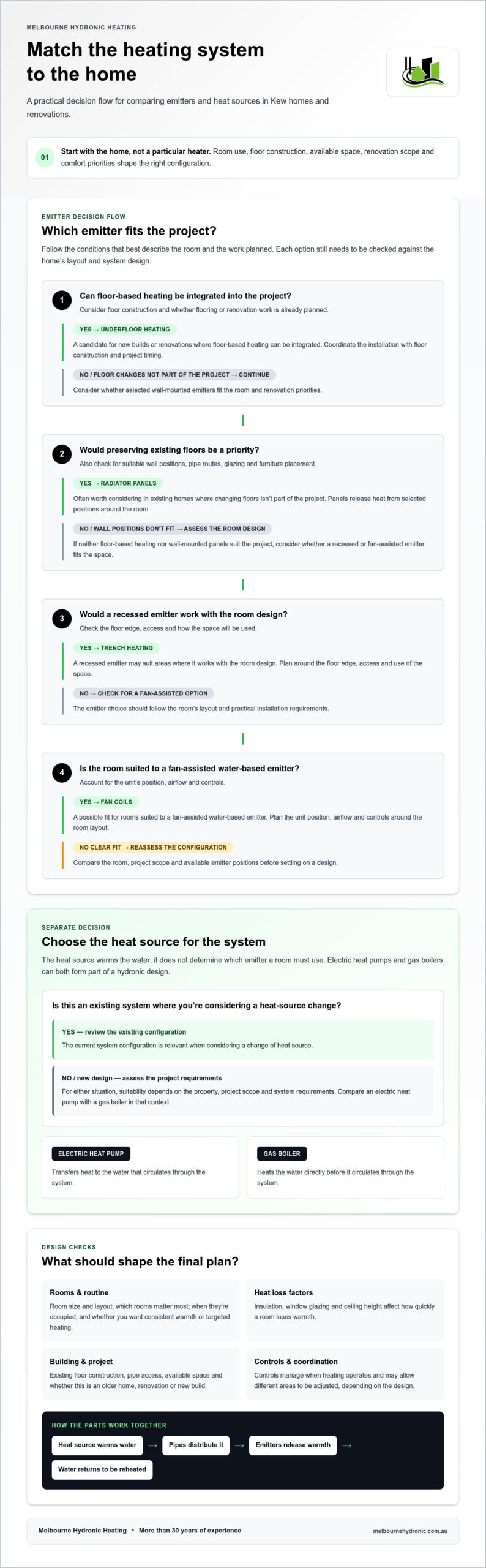
Consider the heat emitter and heat source as separate parts of the design. Emitters transfer warmth into rooms; a boiler or heat pump warms the water that circulates through them. The right combination for hydronic heating in Kew depends on floor construction, available wall or floor space, renovation scope and how each room is used.
| Option | May suit | Planning considerations |
|---|---|---|
| Radiator panels | Rooms where wall-mounted emitters fit the layout | Allow for suitable panel positions, pipe routes and furniture placement. Often worth considering in existing homes where changing floors isn’t part of the project. |
| Underfloor heating | Projects where floor-based heating can be integrated into the design | Assess floor construction and coordinate the work with flooring or renovation timing. |
| Trench heating | Areas where a recessed emitter may work with the room design | Consider the floor edge, access and how the space will be used. |
| Fan coils | Rooms suited to a fan-assisted water-based emitter | Plan the unit’s position, airflow and controls around the room layout. |
Radiator panels or underfloor heating: which suits the project?
Radiator panels release heat from selected positions around a room, so wall space, glazing and furniture affect where they can go. They can be practical in a renovation where preserving existing floors is a priority. For panel-specific information, read the hydronic radiator panels guide.
Underfloor heating distributes warmth through pipework beneath the floor. It can suit new builds or renovations where floor work is already planned, but construction method and project timing matter. Explore the underfloor heating guide for Melbourne homes for more detail.
Heat pump or gas boiler: how does the heat source affect choice?
A heat source warms water; it doesn’t determine which emitter a room must use. Electric heat pumps and gas boilers can both form part of a hydronic design. Suitability depends on the property, project scope and system requirements. For an existing system, its configuration is also relevant when considering a change of heat source. The heat pump hydronic heating guide explains this option in more depth.
Melbourne Hydronic Heating designs systems around each home rather than treating one emitter or heat source as right for every property. To discuss how the options could fit your project, talk with the hydronic heating team.
Is hydronic heating difficult to install in an existing Kew home?
Installation can involve building work, but the amount of disruption depends on the property and system design. Hydronic heating in an existing Kew home is not a one-size-fits-all retrofit: access for pipework, floor construction, room layout and the chosen emitters all affect the approach. A property assessment helps establish what’s practical before installation planning begins.
The assessment also helps weigh the work involved against the benefit of designing heating around the home’s layout. The aim is to identify suitable emitter locations and pipe routes, then plan a system for the property and rooms you want to heat. Melbourne Hydronic Heating designs and installs hydronic systems for residential and commercial properties.
What can affect a hydronic heating retrofit?
Pipework needs a route between the heat source and emitters. Existing floor construction, access beneath or within floors, and the condition of wall finishes can influence that route. Room dimensions and layout matter too, helping determine whether radiator panels, underfloor heating or another emitter type fits the project.
Renovation timing can create different options. If floors or walls are already being altered, pipework may be coordinated with that work. If finishes are staying in place, the design needs to account for access and avoid unnecessary changes where practicable. A property assessment brings these factors together and clarifies the likely scope, rather than assuming a retrofit will be simple or unsuitable.
How can installation planning reduce uncertainty?
A clear project plan connects each stage to the selected system configuration. It generally covers:
- Design: Match the heat source, emitters and pipe routes to the property and heating requirements.
- Supply: Coordinate the system components required for the agreed design.
- Installation: Fit pipework, connect the heat source and install the chosen emitters and controls.
- Commissioning: Put the system into operation and check that its components work together as intended.
The sequence and construction work vary with the building and project scope. For example, an installation involving underfloor pipework has different floor-related considerations from one using radiator panels. Planning around the home helps set realistic expectations about access, finishes and how the work fits with other renovation tasks. It also gives the design a practical basis without assuming a fixed timeline or promising a disruption-free installation.
How to assess a hydronic heating design for your Kew property
A useful design discussion starts with your comfort needs, then considers the property, system options and installation plan. This sequence turns broad preferences, such as warming living areas first or maintaining comfort in bedrooms, into practical decisions about which rooms to heat and how the system should operate.
- Define comfort needs: Note which rooms you use most, when they’re occupied and whether you want heating throughout the home or in selected spaces.
- Review the property: Consider its layout, existing heating, floor construction and any renovation plans that could affect installation.
- Compare system options: Assess suitable emitters and heat sources in relation to the rooms and building, rather than choosing components in isolation.
- Plan installation: Map the design to the property and coordinate the work with other renovation tasks where relevant.
What should homeowners prepare before a system consultation?
A little preparation makes the conversation more focused. Bring a room-by-room list of spaces you want heated, any floor or property plans you have, and details of planned renovations. It’s also useful to describe current heating concerns, such as rooms that feel uncomfortable or spaces that are rarely used.
- Which rooms need heating, and when are they usually occupied?
- Are any rooms being renovated, or are floors and walls staying as they are?
- Do you have preferences for adjusting temperatures or controls in different areas?
These details support a property-specific discussion, not a fixed specification. The system design still needs to account for the home and how its spaces connect.
How does system design connect emitters, controls, and heat source?
A hydronic system works best when its heat source, water distribution, room emitters and controls are selected together to suit the property’s heating needs. The designer considers each area’s heating demand alongside emitter placement. A panel’s position, underfloor pipework or another emitter type needs to be planned for the space it will serve. The distribution layout connects those emitters to the heat source, while controls shape how the system responds to household routines.
An electric heat pump can be considered as the heat source, but its role should be assessed as part of the complete design, not as a standalone choice. Read the hydronic heating overview for a broader explanation of how the components work together.
With your room priorities and property details in hand, discuss a hydronic heating design for your Kew home with Melbourne Hydronic Heating. The team tailors the system plan to your property and project scope.
Plan hydronic heating in Kew with an experienced local specialist
A suitable hydronic system brings together emitters, a heat source and controls that fit the property and how you want to use it. The right choices depend on more than product preference: floor construction, available wall space, renovation plans and the rooms you want to heat all shape the design. A tailored plan connects these practical details to a considered installation.
What can Melbourne Hydronic Heating help plan?
Melbourne Hydronic Heating is a family-owned specialist with more than 30 years of industry experience. The team designs, supplies and installs hydronic systems, using options such as radiator panels, underfloor heating, trench heating, fan coils, electric heat pumps and gas boilers. System selection and installation planning are tailored to the home and project scope.
For existing systems, the team also provides boiler replacements, servicing, maintenance and repairs. This hydronic experience brings key decisions into one project discussion, whether you’re planning a new installation, updating a system or addressing an existing heating concern.
What is a practical next step for Kew homeowners?
Before discussing hydronic heating options for your Kew property, gather any floor plans you have, note which rooms you want to heat, and outline renovation work or changes to floors and walls. Include your current heating concerns and how your household uses different spaces. You don’t need a finished specification; these details provide a useful starting point for exploring emitters, heat sources and the likely project scope.
A project discussion can clarify how the options relate to your home. Melbourne Hydronic Heating brings design and installation experience to projects across Melbourne and Geelong, helping homeowners consider system choices in the context of their property and comfort priorities.
Discuss your hydronic heating project with Melbourne Hydronic Heating.
Make a confident start on your Kew heating plan
The right hydronic system starts with your property and priorities. Match emitters, such as radiator panels or underfloor heating, to the rooms and renovation scope, then consider a heat source and controls that work with the complete design. A property-specific assessment helps clarify practical options without assuming one setup suits every home.
For hydronic heating Kew homeowners can plan with confidence, Melbourne Hydronic Heating brings together design, supply, installation, servicing and repair expertise across Melbourne and wider Victoria. The family-owned specialist has more than 30 years of industry experience, helping homeowners consider system choices in relation to their property and comfort needs.
Gather your room priorities, renovation details and any available plans, then discuss your hydronic heating project with Melbourne Hydronic Heating.
Frequently Asked Questions
Is hydronic heating suitable for older homes in Kew?
Yes, hydronic heating can suit an older Kew home, but the right design depends on the building’s layout and construction. Floor type, access for pipework, insulation, glazing and room sizes all affect system choices. Radiator panels may be worth considering where changing existing floors isn’t part of the project. If heritage or other property constraints apply, include them in planning so the proposed design reflects the home’s requirements.
Can hydronic heating be installed in an existing home?
Yes, hydronic heating can be installed in an existing home, though the practical approach varies with the property and project scope. A system designer considers pipe routes, floor and wall finishes, room layout, emitter positions and the chosen heat source. Renovation work can affect how installation is coordinated, especially if floors or walls are already being altered. A property-specific assessment helps establish suitable options and the work involved before installation planning proceeds.
What is the difference between hydronic radiators and underfloor heating?
Both are heat emitters, but they release warmth in different ways. Hydronic radiator panels sit in selected positions around a room and transfer heat from hot water flowing through them. Underfloor heating uses water-filled pipework beneath the floor to warm the space from below. The choice depends on room layout, available wall space, floor construction and renovation plans. For example, keeping existing floors may make radiator panels more practical to consider.
Is a heat pump suitable for hydronic heating in Melbourne?
An electric heat pump can be used as the heat source for a hydronic system in Melbourne when the system is designed as a whole. The home’s heating needs, selected emitters, water distribution and existing equipment all inform whether it’s suitable. If you’re updating an existing system, its current configuration also matters. A tailored design helps assess how a heat pump could integrate with the property and heating setup.
How disruptive is hydronic heating installation in a Kew home?
Disruption depends on the building, pipework access, chosen emitters and installation scope. Adding underfloor heating may involve floor-related work, while a radiator-panel design has different pipe-routing and wall-finish considerations. If you’re renovating, coordinating heating installation with planned work can shape the approach. No single level of disruption applies to every home. A property assessment helps clarify the likely work and how the installation plan can reflect the layout.
What should I consider before choosing hydronic heating for my home?
Start by listing the rooms you want to heat and how your household uses them throughout the day. Consider room sizes, insulation, glazing, ceiling height, available space for emitters, floor construction and renovation plans. Then compare heat sources, such as a boiler or electric heat pump, alongside controls and distribution. These components need to suit the property together. For hydronic heating Kew homeowners are planning, a property-specific design is more useful than a universal recommendation.
Does Melbourne Hydronic Heating install and maintain hydronic systems in Kew?
Yes. Melbourne Hydronic Heating designs, supplies and installs hydronic systems, and provides servicing, maintenance and repair services across Melbourne, including Kew. The family-owned specialist has more than 30 years of industry experience. Its work includes hydronic radiator panels, underfloor heating, heat pumps, boilers, trench heating and fan coils. To discuss a new installation or an existing system, prepare your room priorities and renovation details for a focused project conversation.