Hydronic Radiators vs Underfloor Heating: Which is Best for Your Melbourne Home?
What if the most popular heating choice for a modern home is actually the wrong fit for your daily routine? Melbourne’s volatile weather requires a system that can pivot as quickly as the temperature drops on a July afternoon. You likely already feel that traditional ducted systems circulate too much dust and noise, leaving your family searching for a healthier, silent alternative. When weighing up hydronic radiators vs underfloor heating, the right choice depends on whether you value rapid thermal response or the invisible luxury of a heated slab.
This guide provides a definitive comparison to help you choose the most efficient system for your specific property. You’ll discover which setup handles those freezing 5 AM starts most effectively while ensuring your home is ready for Victoria’s transition to all-electric heat pumps. We’ll look at everything from wall space constraints in open-plan designs to the long-term energy savings that come with a future-proofed installation. By the end, you’ll have the expert clarity needed to transform your home’s air quality and comfort for years to come.
Key Takeaways
- Learn how radiant heat technology eliminates the dust and allergen circulation common with ducted systems, creating a healthier environment for your family.
- Understand the critical performance differences when comparing hydronic radiators vs underfloor heating to see which system best handles Melbourne’s rapid morning temperature shifts.
- Identify the most cost-effective installation path for your property, whether it’s a slab-on-ground new build or a complex heritage retrofit.
- Discover why high-efficiency electric heat pumps are the 2026 gold standard for powering both radiator and underfloor systems in a gas-free Victoria.
- Balance your interior design needs by choosing between the “invisible” luxury of floor coils and the aesthetic versatility of modern radiator panels.
How Hydronic Radiators and Underfloor Heating Deliver Comfort
Hydronic heating operates on a simple yet highly efficient principle: using water to move energy. Instead of burning fuel to heat air that is then blown through a house, this system uses a central heat source to warm water. This water circulates through a sealed network of pipes to various “emitters” throughout your home. When you evaluate hydronic radiators vs underfloor heating, you’re essentially choosing how you want that thermal energy delivered into your living spaces. Both options provide a level of comfort that traditional forced-air systems simply cannot match.
The secret to this superior comfort is radiant heat. While standard heaters rely on moving air, hydronic systems warm the objects and surfaces in a room directly. This creates a stable, consistent temperature from floor to ceiling. Whether you choose wall-mounted panels or floor-integrated pipes, you’re investing in a system that works with the physics of your home rather than fighting against it.
Radiant vs. Convection Heat: A Healthier Choice
Traditional ducted heating relies on convection, which involves pushing large volumes of hot air through vents. This process creates drafts and inevitably circulates dust, pet dander, and other allergens throughout your living areas. For Melbourne families dealing with asthma or seasonal allergies, this constant air movement can be a significant health trigger. Hydronic systems are the gold standard for air quality because they don’t move air at all. They operate in complete silence, without fans or noise. Radiant heat mimics the sun to warm the body directly. Because the air remains still, humidity levels stay balanced, and the environment stays cleaner, making it a much healthier choice for sensitive households.
The ‘Feel’ of the System: Panels vs. Floors
The tactile experience of these two systems differs significantly. Radiator panels offer a more localized and immediate sense of warmth. You can feel the heat radiating from the panel as soon as you’re in its vicinity, making them perfect for bedrooms or study nooks where you want a quick temperature boost. Many homeowners also opt for hydronic towel rails in bathrooms, which provide the dual benefit of a warm room and dry, fluffy towels every morning.
In contrast, Underfloor heating provides a gentle, pervasive warmth that rises evenly from the entire floor surface. This is particularly effective in Melbourne’s heritage homes or modern builds with high ceilings. In these spaces, forced-air heat often gathers uselessly at the ceiling, leaving the floor level cold. Radiant floor systems keep the warmth in the lower two meters of the room where you actually live. This eliminates cold spots and creates a “feet-warm, head-cool” environment that most people find to be the pinnacle of domestic comfort.
Responsiveness and Control: Navigating Melbourne’s Weather
Melbourne’s weather is notoriously unpredictable. One moment it’s a crisp four degrees at dawn, and by midday, the sun is streaming through north facing windows, rapidly warming your living areas. This volatility is the primary reason why the choice between hydronic radiators vs underfloor heating is so critical for local homeowners. Your system needs to keep pace with these shifts without wasting energy or leaving you in a cold house while the heater “catches up” with a sudden cold snap.
Radiators are the sprinters of the hydronic world. Because they have low water content and high surface area, high efficiency panels can reach their full operating temperature in about 20 minutes. This makes them ideal for the typical Melbourne routine where you might only need a heat boost during breakfast before heading out for the day. If you value the ability to change your home’s temperature on a whim, radiators offer the agility you need to stay comfortable regardless of what the clouds are doing outside.
Thermal Mass and the ‘Heat Bank’ Effect
In slab underfloor heating operates on a completely different timeline. By embedding pipes within a concrete slab, you’re essentially creating a massive “heat bank” or thermal battery. This slab stores energy and releases it slowly over many hours. While this provides an incredibly stable and luxurious base temperature, it lacks immediate responsiveness. It’s a set and forget strategy. You shouldn’t turn an in slab system off and on; instead, you maintain a steady temperature throughout the season. However, if Melbourne delivers a surprise 25 degree day in late September, an over heated slab can’t cool down quickly. This can lead to an uncomfortably warm afternoon as the concrete continues to radiate heat long after the sun has come out.
Zonal Control: Heating Only Where You Need It
Precision is where radiator systems truly shine. By using Thermostatic Radiator Valves (TRVs), you can set a different temperature for every single room in your house. There’s no need to waste energy heating a guest bedroom or a home office that won’t be used until much later in the evening. This granular control is a major advantage for modern families with varying schedules. When paired with smart thermostats, you can even trigger your system remotely from your phone as you leave the office. If you’re unsure which level of control fits your lifestyle, it’s often helpful to speak with a local specialist who understands the nuances of Victorian floor plans and can help you map out a zonal strategy that maximizes both comfort and efficiency.
Installation Realities: New Builds vs. Melbourne Heritage Homes
The physical structure of your property often makes the final decision for you when comparing hydronic radiators vs underfloor heating. Melbourne’s architectural diversity means a solution that works for a contemporary build in Point Cook won’t necessarily suit a 120 year old terrace in Carlton. The installation process is fundamentally different depending on whether you’re starting with a fresh concrete slab or working within the constraints of an existing timber floor.
For new builds, underfloor heating is frequently the default choice because it’s most cost effective to install during the construction phase. Laying pipes directly into the structural slab before the concrete pour is a streamlined process that integrates perfectly with modern building schedules. However, if you’re renovating a heritage home, lifting original Baltic pine floorboards to install underfloor pipes is often prohibitively expensive and structurally risky. In these scenarios, radiators become the elegant, non invasive solution for hydronic heating in Melbourne restorations. They allow you to bring premium comfort into a classic space without compromising its historical integrity.
If your design features the floor to ceiling glass walls common in modern rear extensions, trench heating offers a smart middle ground. These units are recessed into the floor along the perimeter of the glass. They provide a curtain of warm air that prevents condensation and blocks drafts without obstructing your view or requiring wall space for a panel.
In-Slab vs. Screed Underfloor Systems
In slab systems are the most common in Victoria, where pipes are tied to the reinforcement mesh before the structural concrete is poured. If you’re working with an existing home but still want the luxury of floor heat, screed or ‘dry’ systems are an alternative. These use a thinner profile and can be installed on top of a timber subfloor. You must consider the weight, especially for upper storey installations; a screed layer adds significant load to your floor joists that may require structural reinforcement.
Retrofitting Radiator Panels with Minimal Disruption
Radiators are remarkably versatile for retrofitting into established homes. Most projects take only 3 to 5 days to complete, with pipework discreetly hidden in subfloors or ceiling cavities. This approach preserves the integrity of your home’s interior. You can choose from a range of styles, from minimalist flat panels for a mid century look to ornate cast iron designs that complement Victorian or Art Deco features. It’s a method that offers premium comfort without the weeks of construction mess associated with floor excavations.
Space, Style, and Maintenance: The Long-term Experience
Choosing a heating system isn’t just a technical decision; it’s an architectural one that dictates how you’ll live in your home for the next two decades. The aesthetic impact of your choice is immediate. Underfloor heating is the ultimate “invisible” luxury. It frees up every centimetre of wall space, allowing for floor to ceiling windows and unrestricted furniture placement. This is a significant advantage in modern, open plan Melbourne homes where minimalist design is a priority. You don’t have to worry about where the sofa goes or if a radiator will block a prized piece of artwork.
However, the debate of hydronic radiators vs underfloor heating isn’t a one sided win for the floor. Modern radiator panels have evolved into sophisticated design features. You can opt for sleek, minimalist flat panels that blend into a contemporary wall or choose ornate, traditional cast iron radiators that serve as a period correct centerpiece for a Victorian renovation. These units aren’t just functional; they’re part of the home’s character. Whether you want your heating to be seen or hidden, both systems provide a premium feel that enhances the property’s long term value.
Wall Space vs. Floor Height
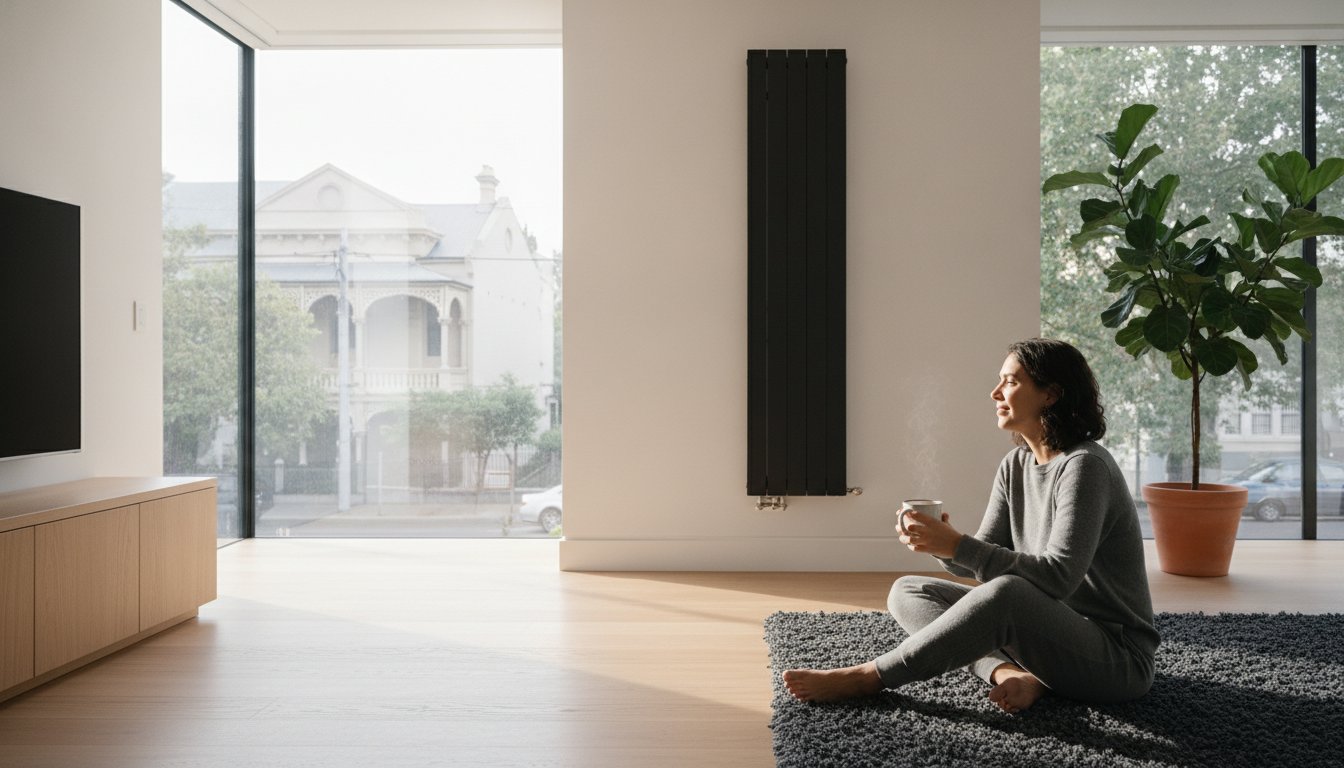
In smaller Melbourne apartments or narrow terrace houses, wall space is at a premium. If you find yourself with no room for a standard panel, vertical radiators are a brilliant solution. They utilize height rather than width, providing ample heat while fitting into narrow gaps between doors or windows. Conversely, if you’re considering retrofitting underfloor heating, you must account for floor height. Some “over floor” systems can raise the floor level by 15 to 20mm. This might seem small, but it can create issues with door clearances and skirting boards that require professional adjustment.
System Longevity and Power Flushing
Hydronic systems are famous for their durability, but they aren’t completely “set and forget.” Maintenance is vital for protecting your investment. Sludge buildup, technically known as magnetite, is the primary enemy of efficiency in older systems. It settles in the lowest points of the network, causing cold spots and forcing your heat source to work harder. Power flushing removes magnetite to protect your boiler or heat pump. You can generally expect your high quality pipes to last over 25 years, while the heat source itself typically has a lifespan of 15 years or more with proper care. Booking a regular hydronic heating service in Melbourne ensures your system remains at peak performance throughout its life.
If you want to ensure your home remains a sanctuary of comfort and efficiency, the right maintenance schedule makes all the difference. We recommend an annual check up to keep everything running smoothly. To secure the longevity of your system, contact our expert team today for a comprehensive assessment of your home’s heating needs.
Choosing Your Heat Source: Boilers and Heat Pumps in 2026
The landscape of home heating in Victoria is undergoing its most significant shift in decades. With the state government mandating that new homes and residential buildings be all-electric from January 2027, 2026 has become the pivotal year for homeowners to future-proof their properties. When deciding between hydronic radiators vs underfloor heating, you must also consider the “engine” that drives them. The transition to heat pump hydronic heating is now the standard for those looking to avoid volatile gas prices and comply with upcoming building regulations.
The choice of heat source directly impacts the efficiency of your delivery system. Heat pumps are most efficient when producing “low-temperature” water (around 35 to 45 degrees Celsius). This makes them a perfect match for underfloor systems, which rely on a large surface area to warm a room gently. If you prefer radiators but want to use a heat pump, the panels often need to be “oversized” compared to traditional gas-fed units. This larger surface area allows the radiator to emit the same amount of warmth even though the water circulating through it is cooler than what a boiler would provide.
Electric Heat Pump Integration
Modern air-to-water heat pumps can achieve a Coefficient of Performance (COP) of 4.5 in Melbourne’s climate. This means for every 1kW of electricity consumed, they produce 4.5kW of heat. This efficiency is amplified when you integrate the system with a Solar PV array. By programming your heat pump to do the heavy lifting during the day while the sun is out, you can essentially “charge” your floor’s thermal mass or pre-warm your home for free. While the upfront cost of a heat pump is higher than a boiler, the long-term running costs are significantly lower, especially as Victorian electricity default offers continue to decrease.
Gas Boiler Replacements and Upgrades
High-efficiency condensing gas boilers still play a role in Melbourne, particularly for heritage retrofits where installing a large heat pump unit outside isn’t feasible. However, you must be aware of the 2027 regulations. From March 2027, if a gas system in a rental property or a gas hot water service fails and is irreparable, it must be replaced with an electric alternative. If you choose to install a gas boiler today, it’s wise to ensure your pipework is “heat pump ready” by opting for larger diameter pipes and correctly sized radiators. This allows for a seamless transition to electric power down the road without tearing up your walls or floors.
To ensure you select the right combination of source and delivery for your specific property, get a professional consultation for your Melbourne home. A specialist can help you weigh these final factors:
- Build Type: Underfloor for new slabs; radiators for heritage retrofits.
- Lifestyle: Radiators for fast response; underfloor for constant, steady warmth.
- Energy Source: Heat pumps for solar integration and future-proofing; gas for specific high-temperature retrofits.
- Health: Both systems offer the dust-free benefits essential for asthma sufferers.
Investing in Your Home’s Future Comfort
Deciding between hydronic radiators vs underfloor heating ultimately comes down to your property’s architecture and your daily lifestyle. If you’re building a new home, the invisible luxury of in-slab heating provides unmatched thermal stability. For those restoring a classic Melbourne terrace, radiator panels offer the fast response and design flair needed to handle our unpredictable weather without invasive renovations. Both systems represent a significant upgrade in air quality, eliminating the dust and allergens common with traditional ducted heating.
As Victoria moves toward an all-electric future in 2026, choosing a system that integrates seamlessly with heat pump technology is essential. We bring over 30 years of local expertise to every project, specializing in energy-efficient transitions and custom designs tailored to the unique Victorian climate. Whether you value the rapid warmth of a designer panel or the gentle rise of floor heat, we ensure your investment provides lasting well-being and efficiency. Ready to transform your living environment? Book a Hydronic Design Consultation for Your Melbourne Property today. We look forward to helping you create a healthier, more comfortable home for your family.
Frequently Asked Questions
Is underfloor heating more expensive than radiators to install in Melbourne?
Underfloor heating generally involves a higher upfront installation cost than radiator panels. In-slab systems require more intensive labor and materials during the construction phase to lay pipework across the entire floor area. Radiators are often the more cost-effective choice for existing homes because they don’t require lifting floors or making major structural changes to the property.
Can I have underfloor heating downstairs and radiators upstairs?
Hybrid systems are a common and highly effective solution for multi-storey Melbourne homes. You can install underfloor heating in the ground-floor slab to provide a luxurious, consistent base temperature in open-plan living areas. Upstairs, radiator panels are often preferred in bedrooms because they offer faster temperature control, allowing you to cool the rooms quickly for a better night’s sleep.
How long does it take for hydronic radiators to heat a room?
Hydronic radiator panels typically begin warming a room within 10 to 20 minutes of activation. Their low water content and high surface area allow them to reach their operating temperature much faster than in-slab systems. This responsiveness is a major advantage when comparing hydronic radiators vs underfloor heating for families who need immediate warmth on cold Melbourne mornings.
Does underfloor heating work under carpet or timber floors?
Underfloor heating is compatible with most floor coverings, though performance varies depending on the material’s thermal conductivity. Polished concrete and tiles are the most efficient options as they transfer heat directly. Timber and carpet act as insulators, which means the system may take longer to warm the room. It’s essential to select specialized underlays and thin-profile timber to ensure the heat transfers effectively.
Is hydronic heating really better for people with allergies?
Hydronic heating is the gold standard for households dealing with asthma or seasonal allergies. Unlike traditional ducted systems, radiant heat doesn’t rely on fans or vents to move air around the house. This prevents the constant circulation of dust, pet dander, and pollen. The air remains still and clean, which significantly improves the indoor environment for sensitive family members.
What maintenance does a hydronic system need to stay efficient?
Regular maintenance ensures your system remains reliable and efficient for over 25 years. We recommend an annual service check to inspect the heat source and confirm the system pressure is correct. Every few years, your system may benefit from power flushing to remove any magnetite sludge that has settled in the pipes. This simple care prevents cold spots and protects your boiler or heat pump from unnecessary wear.
Can I run my hydronic radiators off an electric heat pump?
You can certainly power hydronic radiators using an electric heat pump, though the panels must be correctly sized for the lower water temperatures. Heat pumps are most efficient when producing water at around 45 degrees, whereas gas boilers often run at 60 degrees or higher. This sizing adjustment is a critical detail in the hydronic radiators vs underfloor heating debate for those transitioning to a gas-free home.
How much will I save on my energy bills by switching to hydronic?
Most homeowners experience a noticeable reduction in energy costs, particularly when moving from old gas ducted systems to electric heat pumps. Modern air-to-water heat pumps can achieve a COP of 4.5 in Melbourne’s climate, meaning they produce 4.5kW of heat for every 1kW of electricity used. If you have solar panels, you can run the system during the day to heat your home’s thermal mass for almost no cost.