Hydronic Heating Installation Cost Melbourne: 2026 Price & Value Guide
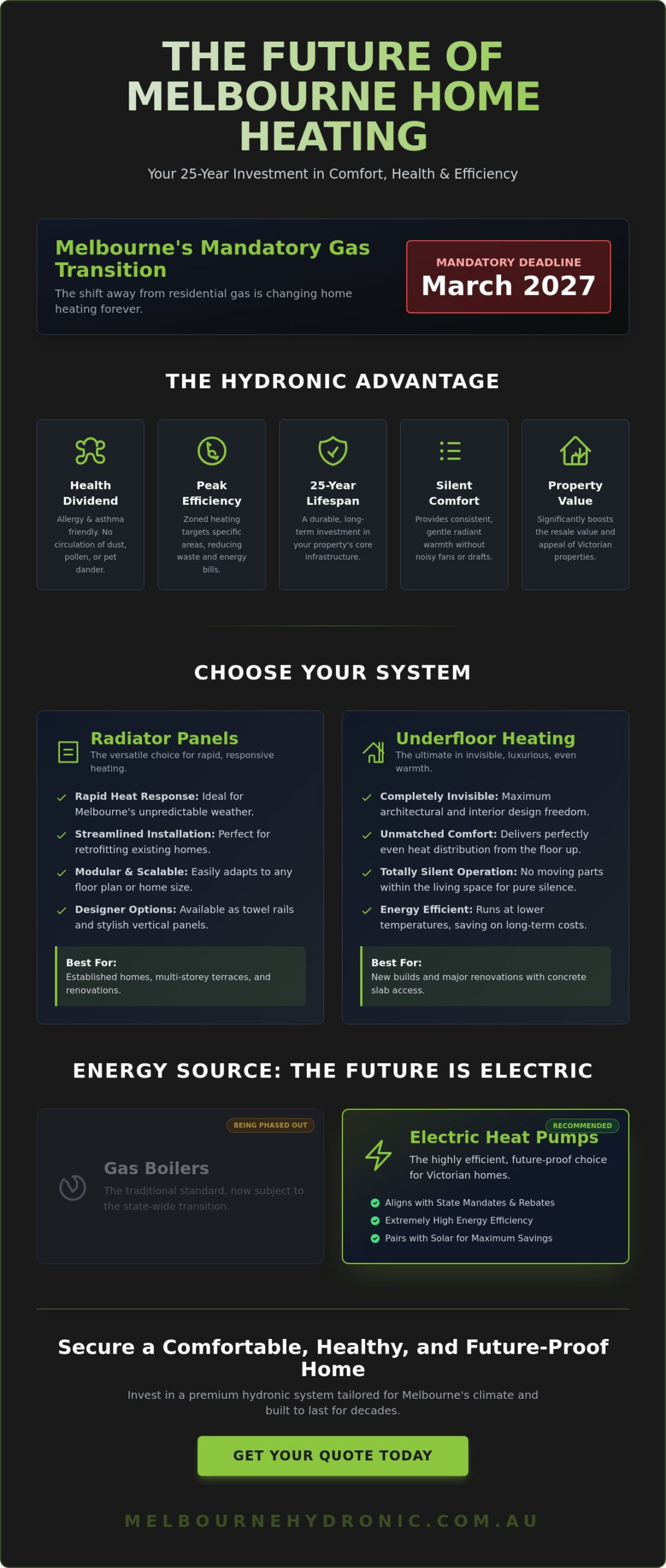
By March 2027, the way Melbourne families keep their homes warm will change forever as the mandatory transition away from residential gas takes full effect. For those looking to beat the deadline, understanding the hydronic heating installation cost Melbourne involves looking beyond the initial invoice and focusing on a 25 year investment in health and efficiency. It’s exhausting to watch winter energy bills climb while older ducted systems circulate dust and allergens through your living spaces. You shouldn’t have to choose between a warm home and clean air.
We understand that the shift toward electric heat pumps and the complexity of retrofitting can feel overwhelming. This guide simplifies the process, promising a clear breakdown of the variables that shape your investment and the long term ROI of a silent, allergy-friendly system. We will preview the differences between radiator panels and underfloor heating, compare modern energy sources, and show you how to navigate the current rebate landscape to ensure your home remains a comfortable, future-proof sanctuary.
Key Takeaways
- Learn why installing hydronic heating during a new build is the most cost-effective entry point and how to navigate the complexities of retrofitting Melbourne’s heritage homes.
- Compare the installation mechanics and lifestyle benefits of radiator panels versus underfloor systems to find the perfect fit for your home’s layout.
- Understand how the shift toward electric heat pumps impacts the hydronic heating installation cost Melbourne and discover which energy source offers the best long-term efficiency.
- Uncover the “health dividend” of dust-free heating and how this premium investment significantly boosts the resale value of Victorian properties.
Understanding the Investment: What Influences Hydronic Heating Installation Costs in Melbourne?
Melbourne’s winter is a season of bone-chilling dampness that penetrates even the best-insulated homes. When homeowners evaluate the hydronic heating installation cost Melbourne, it’s essential to view the expense as a multi-decade commitment to your family’s well-being. Unlike forced-air systems that move turbulent air, hydronic systems use water to transfer gentle, radiant heat. Understanding what hydronic heating is reveals a method that provides consistent warmth without the noise or airborne debris of traditional heaters.
Property size and zoning also play a critical role in the final infrastructure cost. A large, two-story home in Toorak requires a different layout than a single-fronted cottage in Richmond. The number of zones you choose, allowing you to heat the living area during the day and bedrooms at night, will dictate the complexity of the manifold and piping network. This level of customization ensures you don’t waste energy heating empty rooms, which is where the real return on investment begins.
The “Melbourne Factor”: Climate and Building Standards
Victoria’s climate is notorious for its rapid temperature swings and high humidity. Our cold, damp winters demand a system that can maintain steady temperatures without constant cycling. Local building standards often mean older Melbourne homes lack the airtightness of modern constructions. A local specialist will calculate your home’s specific heat load, considering ceiling heights and window orientations. This technical precision prevents you from overpaying for a system that’s too large or struggling with one that’s too small.
Core Components That Drive the Quote
The infrastructure of your system is the primary driver of the hydronic heating installation cost Melbourne. Your choice of heat source is the first major decision. While high-efficiency gas boilers have been the standard, electric heat pumps are the future of Victorian heating due to the state’s gas-to-electric transition. Beyond the heat source, the complexity of the piping network and the placement of manifolds will influence the specialist labor required. Finally, modern control systems allow for smart home integration, ensuring that your premium heating system operates at peak efficiency every single day.
System Types Compared: Radiator Panels vs. Underfloor Heating Costs
Choosing between radiator panels and underfloor heating isn’t just about aesthetics. It’s a structural decision that directly impacts your project timeline. The hydronic heating installation cost Melbourne depends heavily on your home’s foundation and layout. While both systems use the same high-efficiency boilers or heat pumps, their delivery methods change the installation timeline and labor requirements. Understanding these differences helps you budget for the specific needs of your property.
Hydronic Radiator Panels: The Versatile Choice
Radiator panels are the most popular option for Melbourne’s established suburbs. These wall-mounted units provide rapid heat response, which is ideal for our city’s unpredictable weather. If you’re renovating a multi-storey Victorian terrace or a brick veneer home, panels offer a streamlined installation process. The investment scales logically with the number of rooms you wish to heat. A 5-panel system for a compact apartment is naturally more affordable than a 12-panel setup for a sprawling family home. It’s a modular approach that fits almost any floor plan.
Beyond standard white panels, many homeowners now opt for designer radiator panels or hydronic towel rails. These additions turn a functional heater into a luxury design feature. These systems are easy to maintain and can be individually controlled. This means you can keep the nursery warm while keeping the guest room switched off, maximizing your daily efficiency.
Underfloor Heating: The Invisible Luxury
For those building a new home or undertaking a major extension, underfloor heating offers an unmatched “barefoot” comfort. This system turns your entire floor into a giant radiator. It’s the gold standard for open-plan living areas where wall space is at a premium. However, the installation mechanics vary. In-slab systems are integrated directly into the concrete foundation during the pour. In-screed systems are laid on top of an existing floor; this is often necessary for renovations but involves more preparation and height considerations.
Don’t overlook the hidden costs of floor preparation. High-quality insulation is vital to ensure the heat moves up into your home rather than down into the earth. While the initial setup is complex, the efficiency is remarkable. Many people looking for the cheapest way to heat your home find that underfloor hydronics provide the most consistent warmth for the lowest energy input over time.
A hybrid approach is often the smartest move for larger Melbourne properties. You might choose underfloor heating for the ground floor’s concrete slab and radiator panels for the upstairs bedrooms. This balances the luxurious feel of warm floors with the quick response time of panels where you need it most. If you’re ready to explore these configurations, our specialists can help you design a tailored hydronic heating solution for your specific needs.
The Energy Source Debate: Gas Boilers vs. Electric Heat Pumps in 2026
2026 marks a decisive turning point for Victorian homeowners. With the state government’s mandate to transition away from residential gas taking effect on March 1, 2027, the technology you choose today defines your home’s value for decades. This regulatory shift is a primary factor in the hydronic heating installation cost Melbourne, as families must now decide between the lower initial outlay of a boiler or the future-proof efficiency of an electric heat pump. Choosing the right energy source isn’t just about the first invoice; it’s about insulating yourself against rising gas tariffs and shifting energy standards.
Electric Heat Pumps: The Future-Proof Investment
Electric heat pumps have rapidly become the benchmark for new Melbourne builds and major renovations. Their appeal lies in their incredible efficiency. These systems operate with a Coefficient of Performance (COP) typically between 3.5 and 4.0. This means for every 1 kW of electricity consumed, the system delivers up to 4 kW of heat into your home. When you pair this technology with a local solar installation, your winter running costs can drop significantly, sometimes by as much as 70% compared to traditional methods. While the upfront investment for a heat pump is generally higher than a gas unit, government incentives like the Solar Victoria rebate can help offset the balance. You can find more detail in our Heat Pump Hydronic Heating: The 2026 Melbourne Homeowner’s Guide.
Gas Boilers: When Do They Still Make Sense?
Gas boilers remain a practical option for those with existing gas connections who require a straightforward boiler replacement. They typically involve a smaller initial investment compared to a full heat pump conversion, making them an accessible entry point for maintaining an existing system. Modern condensing boilers are significantly more efficient than the older, non-condensing models found in many established Melbourne homes. These units capture heat that would otherwise escape through the flue, ensuring you get more warmth for every megajoule of gas used. However, you must weigh this lower entry price against the long-term reality of the Victorian energy landscape. If your home is already configured for gas, a high-efficiency boiler can still provide that signature hydronic warmth. To explore the best models for your property, read our guide on Choosing the Best Hydronic Boiler in Melbourne: A 2026 Homeowner’s Guide.
Ultimately, the most cost-effective energy source depends on your property’s existing infrastructure and your goals for energy independence. Choosing electric now ensures you won’t face expensive retrofits when gas connections become a relic of the past. Our team focuses on helping you navigate these variables to ensure your hydronic heating installation cost Melbourne results in a system that is both economical and environmentally responsible for years to come.
Retrofitting vs. New Builds: Navigating Installation Complexity
Installing a hydronic system in a new build is the most streamlined entry point for any homeowner. Because the infrastructure is integrated into the construction phase, the hydronic heating installation cost Melbourne remains predictable and efficient. Pipes are laid before the concrete slab is poured or floorboards are fixed, meaning there’s no need for invasive wall work or floor lifting. This “blank canvas” approach allows for maximum design flexibility without the added labor of working around existing structures.
The Cost of Access: Sub-floors and Ceiling Voids
For existing properties, the ease of installation depends largely on what lies beneath your feet. Many of Melbourne’s established homes feature suspended timber floors. This is a significant advantage. It allows our specialists to run pipework through the sub-floor space with minimal disruption to your living areas. If your home sits on a concrete slab, we look to ceiling voids or internal cupboards to route the system. In cases where no void is available, we may “chase” pipes into the walls. While this requires more labor and subsequent plaster patching, it ensures the finished look is seamless and professional. Every home presents a unique puzzle, and the solution determines the total specialist hours required.
Melbourne Heritage Homes: A Specialist Approach
Integrating modern technology into a Victorian or Edwardian residence requires a delicate touch. These high-value properties often feature original cornices, ornate skirting boards, and delicate plasterwork that must be preserved. A generic contractor might suggest visible pipework, but a specialist Melbourne installer knows how to hide the infrastructure within the home’s existing architecture. We pride ourselves on maintaining the aesthetic integrity of period homes while introducing the health and comfort benefits of radiant heat.
A recent project involved retrofitting a 100-year-old cottage where we successfully hid all pipework beneath original Baltic pine floorboards. This preserved the home’s historic charm while eliminating the dust issues caused by its old ducted system. If you want to see how we can bring modern comfort to your heritage property, contact our expert team today for a tailored assessment.
Disruption during a retrofit is a common concern, but a professional team keeps this to a minimum. Most residential radiator installations are completed within three to five days. We use protective floor coverings and dust extraction tools to ensure your home remains livable throughout the process. The result is a silent, allergy-friendly heating system that feels like it has always been part of the house.
Maximising Your ROI: Long-Term Savings and Local Melbourne Expertise
Investing in premium heating is as much about your home’s future market position as it is about current comfort. When you analyze the hydronic heating installation cost Melbourne, consider that prospective buyers in Victoria’s high-end real estate market specifically look for radiant systems. It’s a silent marker of quality that sets a property apart from those relying on standard ducted or split systems. This capital gain, combined with lower monthly energy bills, ensures the system pays for itself long before its 25 year lifecycle ends.
Professional system design is the invisible factor that determines your daily running costs. A system that isn’t balanced correctly or uses poorly sized pipes will force your heat pump or boiler to work harder than necessary. Our approach focuses on technical precision from the initial site visit. We ensure that every radiator and every loop of underfloor piping is calibrated to your home’s specific thermal profile. This level of detail justifies the hydronic heating installation cost Melbourne by preventing energy waste and extending the life of your equipment.
Health and Wellbeing: The Priceless Benefit
The health dividend is perhaps the most significant return on your investment. Traditional forced-air systems are notorious for harboring dust mites and circulating allergens throughout every room. For families managing asthma or respiratory sensitivities, this constant air movement can lead to increased medical costs and discomfort. Hydronic systems eliminate this issue entirely. By providing gentle radiant heat, they maintain the natural humidity of the air and ensure a dust-free environment. It’s a lifestyle choice that prioritizes your family’s wellbeing. If you’re still exploring the basics, our What is Hydronic Heating? The Complete Melbourne Homeowner’s Guide for 2026 offers a deep dive into these fundamental benefits.
Why Local Experience Matters
With over 30 years of experience serving the Melbourne and Geelong regions, we understand the specific challenges posed by the local climate and housing stock. Our longevity in the industry isn’t just a number; it’s a guarantee that we’ll be here to support your system for its entire lifespan. To protect your investment, we recommend annual servicing and periodic power flushing. Power flushing removes the build-up of internal sludge that can settle in pipes and radiators over time, ensuring your system remains as efficient as the day it was installed. By choosing a local expert with a proven track record, you gain access to fixed-rate maintenance and technical support that keeps your home a sanctuary of warmth and health.
- Resale Value: Hydronic heating is a coveted feature in Melbourne’s premium property market.
- Operational Savings: Correct system sizing reduces wear and tear on boilers and heat pumps.
- System Longevity: Regular maintenance and power flushing prevent costly component failures.
- Health Gains: A dust-free environment provides immediate relief for allergy sufferers.
Secure Your Home’s Comfort and Value for 2026 and Beyond
Choosing the right heating system is one of the most significant decisions you’ll make for your property. We have explored how the choice between radiator panels and underfloor systems shapes your home’s layout and how the 2027 gas transition makes electric heat pumps a vital consideration for future-proofing. It’s clear that hydronic heating is more than a seasonal purchase; it is a 25 year investment in a dust-free, allergy-friendly environment that significantly boosts property resale value across Victoria.
Navigating the hydronic heating installation cost Melbourne requires a partner who understands the technical nuances of our local climate and heritage architecture. As a family-owned and operated business with over 30 years of experience, we specialize in complex heritage retrofits that preserve your home’s character while modernizing its comfort. We focus on delivering precision-engineered solutions that prioritize your family’s wellbeing and long term savings.
Ready to transform your living space into a sanctuary of radiant warmth? Request a Custom Hydronic Heating Quote for Your Melbourne Home and let our specialists design a system tailored to your unique needs. Your journey toward a warmer, healthier home starts with a single professional consultation.
Frequently Asked Questions
Is hydronic heating more expensive to install than ducted heating in Melbourne?
Yes, the upfront hydronic heating installation cost Melbourne is typically higher than ducted heating because of the specialized infrastructure and premium materials required. While ducted systems rely on flexible plastic tubing, hydronics use high-grade copper or multilayer piping and durable radiator panels. You’re investing in a system with a 25 year lifespan and significantly lower running costs, making it a more economical choice over the long term.
How much can I save on my energy bills with a hydronic heat pump?
You can reduce your heating energy consumption by up to 70% when switching from a traditional gas boiler to a modern electric heat pump. These systems are incredibly efficient; they often deliver 3.5 to 4.0 kW of heat for every 1 kW of electricity used. When integrated with a home solar array, your winter running costs drop even further, providing a rapid return on your initial investment.
Does hydronic heating add value to a Melbourne home?
Hydronic heating is considered a premium feature that significantly increases the resale value of Melbourne properties. Real estate experts often highlight it as a key selling point in established suburbs like Camberwell or Brighton. Buyers recognize the system as a sign of a high-quality build that offers superior comfort, health benefits, and energy efficiency compared to standard split systems or gas wall heaters.
Can I install hydronic heating in an existing double-storey home?
Yes, we regularly install hydronic systems in double-storey homes by using ceiling voids, internal cupboards, or sub-floor spaces to route the pipework. Radiator panels are the most common choice for the upper levels of existing homes. Our specialists focus on discreet installation methods that preserve your home’s aesthetic while ensuring consistent warmth is delivered across both floors without major structural changes.
How long does a typical hydronic heating installation take in Melbourne?
A typical residential radiator retrofit in Melbourne usually takes between three and five days to complete. New build installations are often split into stages that align with your construction timeline, such as laying pipes before the slab is poured. We prioritize efficiency and cleanliness to ensure your daily routine is disrupted as little as possible. Our team uses dust extraction tools to maintain a clean environment throughout the process.
Are there government rebates for switching from gas to electric hydronic heating?
Victorian homeowners can currently access several incentives, including Solar Victoria rebates of up to $1,000 for high-efficiency heat pumps. This amount can increase to $1,400 for Australian-made products. Additionally, the Victorian Energy Upgrades (VEU) program provides point-of-sale discounts. These rebates are designed to support the state’s mandatory transition away from residential gas, which takes full effect on March 1, 2027.
What is the most expensive part of a hydronic heating installation?
The heat source, particularly a high-efficiency electric heat pump, and the specialist labor are usually the most significant components of the quote. The complex network of piping and the selection of designer radiator panels also contribute to the total. While these components represent a higher initial outlay, they are the foundation of a system designed to operate silently and efficiently for decades without the need for frequent replacements.
Is hydronic heating worth the cost for people with allergies?
Hydronic heating is the gold standard for allergy and asthma sufferers because it doesn’t rely on fans or vents to move heat. Unlike ducted systems that circulate dust, pollen, and pet dander, hydronics provide gentle radiant heat that leaves the air still and clean. This creates a much healthier indoor environment. For many families, the improvement in daily wellbeing and reduced medical triggers make the system well worth the investment.