
Hydronic Heating for Off-Grid Homes: The 2026 Ultimate Guide
What if your remote sanctuary could feel as warm and silent as a luxury hotel, without ever needing a grid connection or a constant pile of firewood? Most people believe that off-grid living requires a choice between high-maintenance wood stoves or inefficient electric heaters that drain batteries in hours. It’s a common concern, especially when you’re managing the delicate balance of solar storage and seasonal weather shifts. However, achieving world-class comfort is now a reality through advanced hydronic heating for off-grid homes.
You deserve a home that provides security and well-being, even in the most isolated locations. In this 2026 guide, you’ll discover how to integrate high-efficiency systems like air-to-water heat pumps with your renewable energy setup to ensure a warm, silent environment. We’ll look at how smart thermal energy management and the latest 7-star NatHERS standards make energy independence easier than ever before. From radiator panels to underfloor solutions, we’ll walk you through the technical precision required to build a low-maintenance system that delivers premium comfort for decades.
Key Takeaways
- Discover why radiant water-based systems offer superior energy efficiency for remote building envelopes compared to traditional forced-air heating.
- Learn how to balance solar generation with thermal demand to implement hydronic heating for off-grid homes without compromising your battery storage.
- Compare high-efficiency electric heat pumps with sustainable wood-fired boilers to select the most reliable heat source for your specific location.
- Understand the trade-offs between quick-response radiator panels and high-thermal-mass underfloor systems for managing off-grid energy loads.
- Navigate 2026 Victorian building regulations and 7-star NatHERS requirements to design a compliant, low-maintenance system that lasts for decades.
Understanding Hydronic Heating in an Off-Grid Context
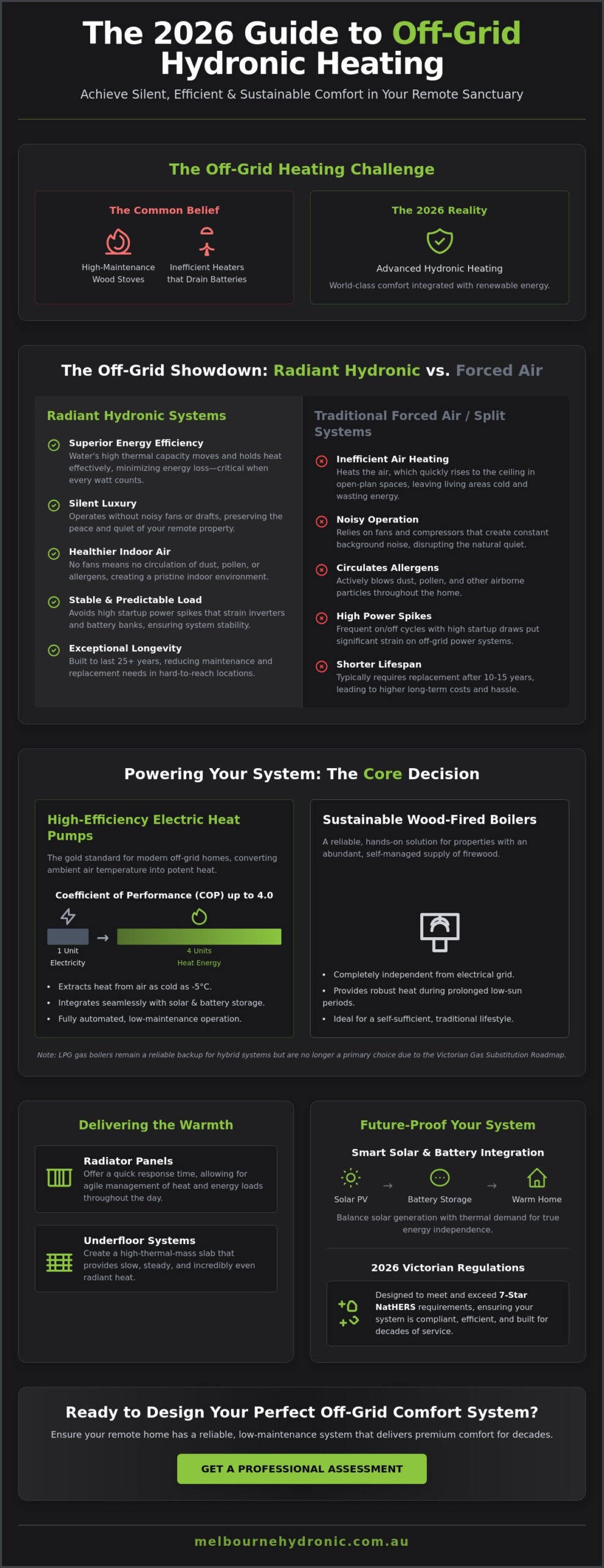
Imagine a heating system that operates with the same quiet precision as the wilderness surrounding your home. At its most basic level, What is Hydronic Heating? refers to a closed-loop system where water is heated and then circulated through sealed pipes to radiator panels or underfloor coils. For those exploring hydronic heating for off-grid homes, the primary advantage isn’t just the warmth. It’s the way that heat is delivered. Unlike traditional forced-air systems that push hot air into a room, hydronic systems rely on radiant energy. This approach is fundamentally more efficient because water has a much higher thermal capacity than air. It holds onto heat longer and moves it with minimal loss. This is a critical factor when every watt of battery storage counts during a Victorian winter.
The “silent luxury” of these systems is another reason they’re becoming the standard for remote living. Off-grid life is often a choice made for peace and connection with nature. Traditional heaters rely on noisy fans and clunky compressors that disrupt the silence of a remote property. Hydronic systems operate almost entirely without sound. There are no drafts, no rattling vents, and no hum of moving air. You simply experience a consistent, enveloping warmth that feels natural rather than manufactured.
The Science of Radiant Heat for Remote Living
Radiant heat works much like the sun. It warms the objects and people in a room directly rather than just the air between them. In many off-grid architectural designs, high ceilings and large glass windows are common features. Standard heaters often fail in these spaces because the warm air simply rises to the highest point of the ceiling, leaving the living zone cold. Radiant systems keep the heat where you actually live. There’s also a significant health benefit to consider. Because there are no fans blowing air, there’s no circulation of dust, pollen, or allergens. This creates a pristine indoor environment that matches the fresh air outside, making it an ideal choice for health-conscious homeowners.
Why Hydronic Beats Split Systems Off-Grid
Standard split system air conditioners are notorious for their frequent “on-off” cycles and high startup power draws. These electrical spikes can put immense strain on off-grid inverters and battery banks, particularly during the low-light months of June and July. In contrast, modern hydronic systems provide a steady and predictable energy load. They’re designed for endurance. While a split system might require replacement after a decade of heavy use, high-quality hydronic radiator panels and copper pipework are built to last 25 years or more. This long-term durability reduces the need for frequent maintenance or technician visits to remote areas. To learn more about the components involved, you can read our guide on What is Hydronic Heating? to see how these systems are engineered for longevity.
Choosing Your Off-Grid Heat Source: Heat Pumps vs. Boilers
The decision of how to heat your water is the most critical technical choice in any off-grid project. In 2026, the landscape has shifted significantly toward full electrification. This change is driven by advancements in battery storage and the Victorian Gas Substitution Roadmap, which encourages a move away from fossil fuels even in remote areas. While gas boilers fueled by LPG remain a reliable backup for hybrid systems, they’re no longer the primary choice for modern hydronic heating for off-grid homes. Instead, homeowners are increasingly choosing between the high-tech efficiency of heat pumps and the traditional, hands-on reliability of wood-fired systems.
Choosing the right energy source requires a careful balance between your available natural resources and your desired level of automation. If you’re unsure which path fits your property’s specific topography, you might consider a professional system assessment to ensure your choice aligns with your long-term comfort goals.
High-Efficiency Electric Heat Pumps
Modern electric heat pumps have become the gold standard for remote properties. Their success relies on the Coefficient of Performance, or COP. In simple terms, a COP of 4.0 means the system produces four units of heat for every one unit of electricity consumed. These units don’t create heat through electrical resistance. Instead, they extract ambient thermal energy from the outside air, even in temperatures as low as -5 degrees Celsius. When integrated with smart home controllers, these systems can be programmed to trigger during peak solar generation hours. This effectively turns your hydronic floor or radiator network into a thermal battery, storing heat when power is abundant and free.
Wood-Fired Boilers and Thermal Wetbacks
For properties with abundant, sustainable timber access, wood-fired boilers offer a rugged and independent alternative. Many off-grid enthusiasts appreciate the dual-purpose nature of wood-fired cookers with integrated wetbacks. These units provide space heating, domestic hot water, and a reliable cooking surface simultaneously. However, you must consider the lifestyle commitment involved. Wood-chopping and fire management are daily tasks that require physical effort and consistent time. Safety is also a major factor. High-temperature solid fuel systems require specialized plumbing to manage potential over-boil scenarios if the power to the circulation pumps fails. Consulting an EPA guide to hydronic heaters can help you understand the emission standards and efficiency ratings of modern wood-burning models before you commit to this traditional path.
Managing the Energy Load: Solar PV and Battery Integration
Running a high-performance heating system on a standalone power setup requires more than just a large battery bank. It demands a strategy. For hydronic heating for off-grid homes, the most significant hurdle is the winter solstice. This is when solar gain is at its lowest and thermal demand is at its peak. You need to calculate your heat load based on these worst-case scenarios to ensure you aren’t left in the cold during a week of overcast weather. Success lies in balancing your generation capacity with your home’s thermal mass.
One of the smartest strategies in 2026 is the concept of “solar dumping.” When your batteries reach 100% capacity by midday, your solar panels often go idle, wasting potential energy. A smart controller can detect this surplus and divert it into your hydronic system’s buffer tank. This effectively turns surplus electricity into stored hot water. This heated water can then circulate through your home long after the sun has set, providing warmth without drawing a single amp from your chemical batteries during the night.
Your inverter must also be up to the task. It needs to handle the “inrush current,” which is the initial surge required to start circulation pumps and compressors. While modern pumps are becoming more efficient, these momentary spikes can trip undersized systems. Ensuring your inverter is rated for these inductive loads is essential for a reliable, “set and forget” heating experience that doesn’t compromise your other household appliances.
Sizing Your Solar Array for Winter Heating
Orientation is everything in the Victorian bush. While a north-facing roof is standard, increasing the tilt of your panels to a steeper angle, roughly 10 to 15 degrees more than your latitude, optimizes them for the low winter sun. This small adjustment can significantly increase your winter yield. It provides the crucial energy needed to keep your hydronic pumps running without tapping into your emergency battery reserves. When scaling your battery bank, focus on the “autonomy period.” This is the number of days your system can run without sun. A well-designed hydronic system reduces this burden by using the house itself to hold heat.
Thermal Storage: Using Water as a Battery
Think of a large, well-insulated buffer tank as a thermal battery. Chemical batteries are expensive and have a limited cycle life. In contrast, storing energy as 60-degree water is incredibly cost-effective and lasts indefinitely. By heating a 500 or 1,000-liter tank during the day, you create a reservoir of warmth that the house can draw from overnight. According to the Department of Energy on Radiant Heating, these systems are particularly effective off-grid because they can be paired with diverse energy sources to maintain this thermal mass. This approach reduces the frequent “cycling” of your heat pump or boiler, which extends the life of your equipment and ensures a more stable indoor temperature.
Heat Distribution: Radiator Panels vs. Underfloor Slab
Once you’ve secured your heat source and calculated your solar load, you must decide how that warmth enters your living space. This choice dictates how quickly your home responds to temperature drops and how much energy you’ll consume. In the context of hydronic heating for off-grid homes, distribution is about precision. You aren’t just heating rooms; you’re managing a precious energy budget. The right configuration ensures that every kilojoule of energy harvested from the sun or your boiler is used effectively to maintain your comfort.
Many homeowners find that a hybrid approach works best for remote properties. This involves using different distribution methods for different areas of the house based on how those rooms are used. For example, high-traffic living areas benefit from consistent warmth, while bedrooms often require more immediate adjustments. Designing this balance requires a deep understanding of your home’s thermal envelope and your daily habits.
Hydronic Radiator Panels for Quick Response
For many remote properties, hydronic radiator panels are the preferred choice due to their agility. These modern European panels feature low water content, which allows them to heat up and radiate warmth into a room within minutes. This is a game-changer on a cold winter morning when you need immediate comfort without waiting for a concrete slab to warm up. Zoning is your secret weapon here. You can easily turn off radiators in guest wings or storage areas, directing every ounce of thermal energy only to the rooms you’re currently occupying. This targeted approach prevents energy waste and keeps your battery levels healthy during periods of low solar gain.
In-Slab Heating for Maximum Thermal Mass
If you’re building from scratch, Underfloor Heating in Melbourne offers a different kind of efficiency. By embedding pipes within a concrete slab, you turn the floor itself into a giant radiator. This provides incredible thermal stability, but it comes with a “lag time.” Concrete takes hours to heat up and just as long to cool down. For off-grid homes, this is only viable if you have high-performance slab insulation, typically R2.5 or higher. Without this barrier, the heat you’ve worked so hard to generate will simply bleed into the cold earth below. When managed correctly, a heated slab acts as a massive thermal battery, holding onto warmth long after your heat pump has turned off for the night.
Ready to design a distribution system that perfectly matches your remote lifestyle? You can book a technical consultation to explore the best configuration for your floor plan and energy profile.
Planning Your Off-Grid Hydronic System in Victoria
Planning a system for the Victorian bush requires a deep understanding of local building codes and environmental stressors. In 2026, all new dwellings must meet a minimum 7-star NatHERS energy rating, which makes the choice of hydronic heating for off-grid homes a strategic move for regulatory compliance. Beyond thermal performance, you must navigate the requirements of the new Building and Plumbing Commission (BPC) to ensure your installation is fully insured and certified. This technical oversight is vital for remote properties where access for repairs can be challenging and costly. You need a system that works the first time and continues to perform under pressure.
Melbourne Hydronic Heating specialises in these complex remote projects. We understand that an off-grid system isn’t just a luxury; it’s a critical piece of infrastructure for your security and well-being. Our approach combines global engineering standards with a localized understanding of Victorian weather patterns. We don’t just install equipment. We design a thermal solution that respects your energy constraints while delivering the premium comfort you expect from a high-end build.
Local Climate Considerations for Melbourne and Geelong
Designing for the damp, cold winters of the Otways or the salt-laden air of the Mornington Peninsula demands specific technical choices. External heat pump units must be equipped with sophisticated frost protection to manage defrost cycles without draining your battery bank during a cold snap. If the unit freezes, your efficiency drops to zero, putting your comfort at risk. We also look at the home as a holistic unit. Hydronic systems perform best when paired with high-quality double glazing and superior wall insulation. This synergy ensures the radiant heat stays inside your living zone, reducing the workload on your energy source and extending your off-grid autonomy during stretches of overcast weather.
Designing for Longevity and Low Maintenance
Remote living shouldn’t mean constant mechanical headaches. In coastal or alpine areas, we specify corrosion-resistant components and high-grade fittings to withstand the harsh Victorian elements. Longevity is built into the design phase. A key part of this is establishing a clear maintenance schedule. We recommend annual servicing to prevent the buildup of system sludge and to check the health of your circulation pumps and inhibitors. With over 30 years of experience, we’ve seen how poorly designed systems fail in the bush. Our expertise allows us to anticipate these issues, providing you with a warm, silent, and dependable home that lasts for decades.
Securing Your Off-Grid Comfort for the Decades Ahead
Building a remote home shouldn’t mean sacrificing the premium comfort of a modern lifestyle. We’ve explored how smart thermal storage and high-efficiency heat pumps turn the challenge of off-grid living into a sustainable, silent reality. By choosing the right distribution method, whether it’s quick-response radiator panels or the deep thermal mass of an insulated slab, you’re investing in a system that respects your energy limits while delivering world-class warmth. These technical choices ensure your home remains a sanctuary of well-being, even during the harshest Victorian winters.
Navigating the technical requirements of hydronic heating for off-grid homes requires a partner who understands the unique local landscape. As family-owned local experts with over 30 years of installation experience, we specialise in the high-efficiency heat pump integrations that make modern independence possible. We’re here to ensure your system is as durable as the bushland surrounding it. Every design we create focuses on long-term reliability and the health-conscious benefits of radiant heat.
You can take the first step toward a more comfortable, self-sufficient future today. Book an Off-Grid Consultation with Melbourne Hydronic Heating and let our specialists design a solution tailored to your property. Your sanctuary deserves the peace of mind that only expert engineering can provide.
Frequently Asked Questions
Can a heat pump really run on an off-grid solar system?
Yes, modern electric heat pumps are specifically engineered to integrate with off-grid solar and battery setups. Unlike older models, these units use inverter-driven compressors that ramp up speed gradually. This soft-start technology prevents the massive power spikes that used to trip off-grid inverters. When paired with a smart controller, the system can run primarily on surplus solar power during the day, storing thermal energy for use overnight.
How much solar PV do I need for hydronic heating?
The required solar capacity depends on your home’s insulation and the local climate, but most off-grid properties require an additional 5kW to 10kW of PV panels dedicated to the heating load. You must size the array based on winter generation, which is significantly lower than summer peaks. This ensures you have enough energy to power the heat pump even during the shorter, overcast days of a Victorian winter.
Is underfloor heating or radiator panels better for off-grid?
Both have distinct advantages, but hydronic radiator panels are often preferred for off-grid living due to their rapid response times. They allow you to heat specific zones quickly, which is more energy-efficient than heating a large concrete slab. However, underfloor systems are excellent if you want to use your floor as a thermal battery to store excess solar heat during the day for release throughout the night.
What happens to my heating if the sun doesn’t shine for three days?
A well-designed system relies on a combination of battery storage and thermal buffer tanks to bridge gaps in solar generation. By storing energy in a large tank of hot water during sunny periods, you create a reservoir of warmth that lasts for days. If your battery levels drop too low, the system will prioritize critical circuits, or you may need to engage a backup heat source to maintain comfort.
Do I need a backup generator for my off-grid hydronic system?
While not strictly mandatory for the heating system itself, a backup generator is a vital safety net for any off-grid property. If you experience a week of heavy cloud cover, a generator can provide the necessary boost to top up your batteries and keep the circulation pumps running. This ensures your home remains safe and warm regardless of the unpredictable Victorian weather patterns you might face.
Is wood-fired hydronic heating cheaper than electric heat pumps?
Wood-fired systems can have lower operational costs if you have free access to sustainable timber on your property. However, they require significant daily labor for wood-chopping and fire management. Electric heat pumps provide a much higher level of automation and consistent efficiency. For many, the cost of the manual labor involved in wood heating makes the electric heat pump a more economical and convenient long-term choice.
How much maintenance does an off-grid hydronic system require?
Modern systems are designed for high durability, but annual servicing is essential to ensure longevity in remote environments. This includes checking system pressure, testing water quality to prevent internal corrosion, and inspecting the heat source components. Consistent maintenance for hydronic heating for off-grid homes prevents the buildup of system sludge, which can reduce efficiency and put unnecessary strain on your solar batteries.
Can I use hydronic heating for domestic hot water as well?
Yes, integrating domestic hot water is a standard feature for most hydronic heating for off-grid homes. By using a specialized tank with an internal heat exchange coil, your heat pump or boiler can provide both space heating and hot water for showers and taps. This dual-purpose approach simplifies your off-grid infrastructure and ensures that you maximize the utility of every kilowatt of energy generated by your solar array.