
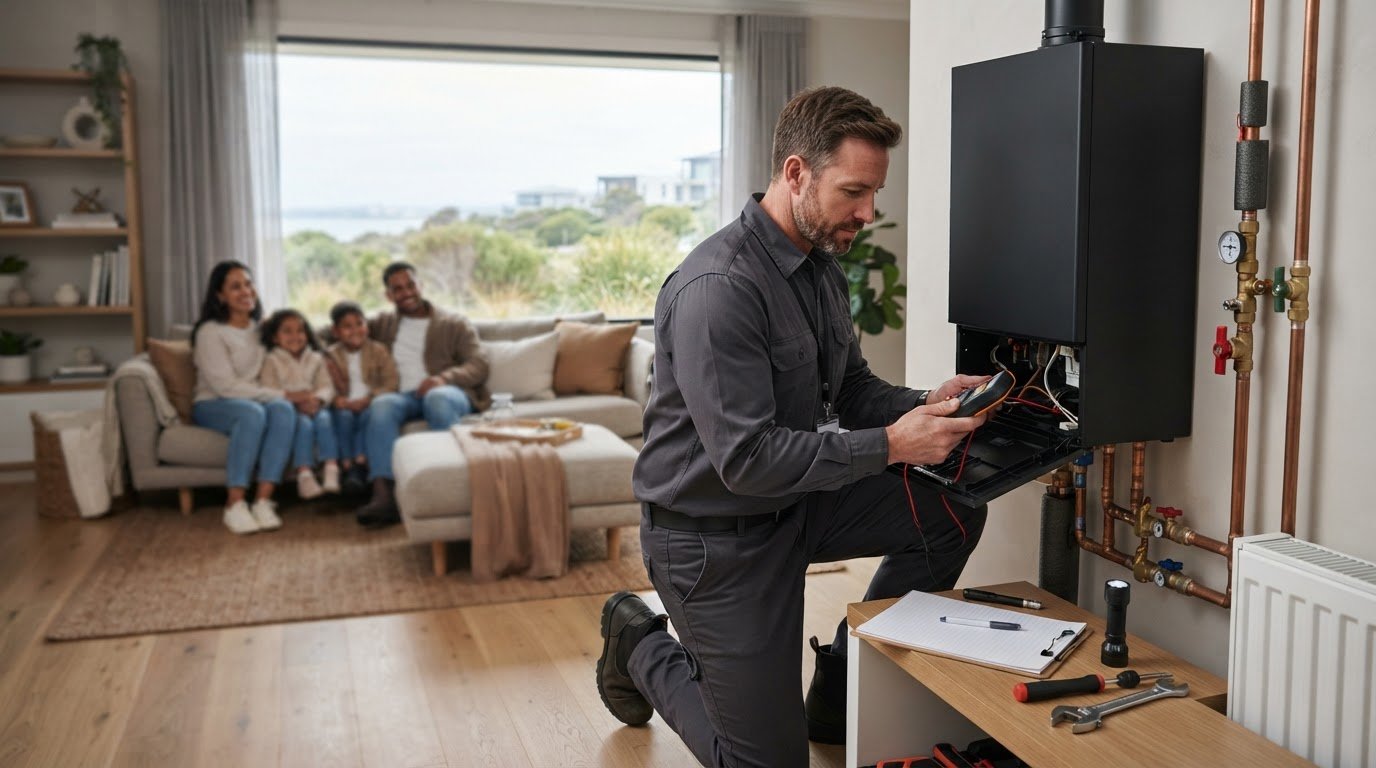
Immergas Boiler Servicing and Maintenance Geelong: 2026 Checklist
A sudden mid-winter heating failure along the breezy Geelong coast is rarely bad luck; it’s almost always the quiet result of deferred preventative care. If you’ve noticed unexplained drops in water pressure, radiators making gurgling noises, or rising gas bills without any extra indoor warmth, you already know the frustration of an underperforming system. Booking professional immergas boiler servicing and maintenance Geelong specialists recommend is the single most reliable way to restore peak performance before winter storms roll in across Corio Bay.
You shouldn’t have to spend the coldest months worrying about unexpected shutdowns or carbon monoxide risks. In this guide, you’ll discover our complete 2026 checklist to confirm your boiler runs safely, complies with Victorian regulations, and burns fuel at optimal efficiency. We’ll walk you through the essential technical inspections, system balancing steps, and key warning signs to watch for so your hydronic heating stays dependable year after year.
Key Takeaways
- Learn how to spot early warning signs such as kettling noises or pressure drops outside the 1.0 to 2.5 bar operating range before major faults develop.
- Discover what certified technicians inspect during an annual service, from precision combustion analysis to thorough heat exchanger cleaning.
- Understand the critical difference between routine Immergas boiler servicing and maintenance Geelong homes need and a full system power flush to remove corrosive magnetite sludge.
- Follow simple homeowner maintenance habits, including monthly cold pressure monitoring and routine radiator bleeding, to ensure even warmth across every room.
- Find out how to verify local credentials, including Type A gas fitting endorsements and mandatory Victorian compliance documentation, to protect your home’s safety.
Pre-Season Immergas Boiler Inspection Checklist: Key Warning Signs
Catching mechanical problems before winter sets in spares your home from uncomfortable cold snaps and costly emergency repairs. Premium hydronic heating systems rely on balanced hydraulic pressure and steady combustion. When internal components begin to wear, your boiler gives off subtle clues. Proactive property owners should review this pre-season checklist to determine whether their unit needs professional attention:
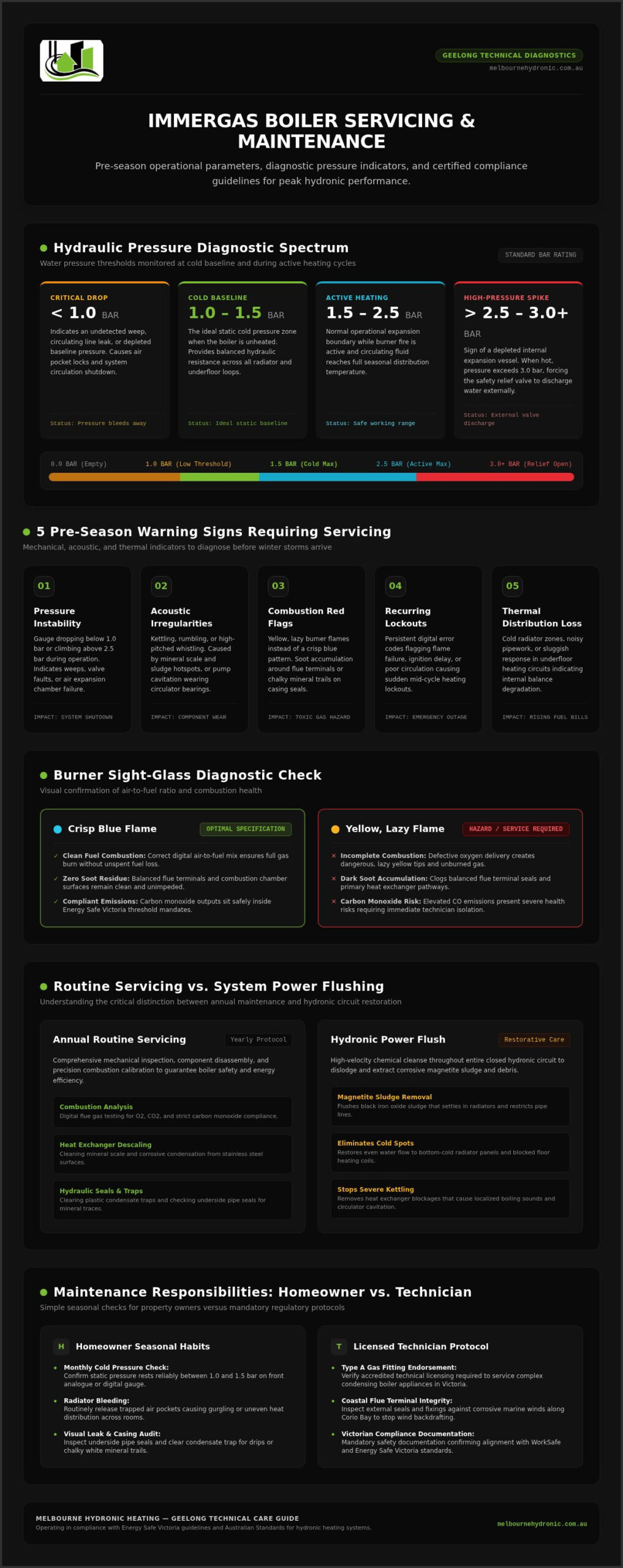
- Pressure gauge instability: Water pressure dropping below 1.0 bar or climbing beyond 2.5 bar during active heating.
- Acoustic irregularities: Loud kettling, rumbling, or high-pitched metallic whistling coming from the internal heat exchanger.
- Visual combustion red flags: Yellow, lazy burner flames instead of a sharp blue flame, or soot accumulation around the balanced flue terminal.
- Recurring fault lockouts: Persistent digital error codes signalling flame failure, ignition delay, or poor circulation.
- Thermal distribution loss: Cold radiator spots, noisy pipework, or unusually slow warmth across underfloor heating circuits.
Spotting any of these symptoms early makes scheduling expert immergas boiler servicing and maintenance Geelong technicians recommend essential before frosty coastal weather arrives.
Pressure and Circulation Diagnostic Indicators
Start your inspection at the front digital display or analogue dial when the system sits cold. Ideal static pressure rests between 1.0 and 1.5 bar. If pressure routinely bleeds away, an undetected weep or a failed internal expansion vessel might be the culprit. A depleted expansion vessel causes pressure to spike past 3.0 bar once hot, forcing the safety relief valve to discharge water externally. Trapped air pockets can also lock up circulating lines, starving your radiator panels or floor loops of continuous heat transfer.
Acoustic and Visual Combustion Warnings
Unusual noises often point to restricted flow. Localised mineral scale or sludge buildup inside the heat exchanger creates hot spots, generating steam pockets that sound like a boiling kettle. High-speed pump cavitation produces a distinct grinding vibration that wears out circulator bearings quickly.
Visually inspect the outer boiler casing, underside pipe seals, and the clear plastic condensate trap for leaks or chalky mineral trails. Finally, glance through the burner sight glass during operation. You should observe an even, crisp blue flame pattern. Yellow tipping or dark soot deposits indicate poor air-to-fuel ratios, signalling that you must book complete immergas boiler servicing and maintenance Geelong specialists endorse to guarantee safe combustion and prevent hazardous carbon monoxide risks.
Annual Professional Immergas Boiler Servicing Checklist
A qualified technician goes far beyond a casual glance over the casing. Thorough immergas boiler servicing and maintenance Geelong homes rely on requires systematic testing, component disassembly, and precision tuning aligned with strict manufacturer protocols. Certified specialists follow a meticulous procedure to verify that your unit performs cleanly and safely under heavy winter loads.
Combustion Analysis and Emissions Testing
Technicians begin by inserting a calibrated digital flue gas analyser into the exhaust sampling port. This test precisely measures oxygen and carbon dioxide levels to verify optimum air-to-fuel combustion ratios. More critically, it confirms that carbon monoxide emissions and combustion ratios sit comfortably within thresholds mandated by Energy Safe Victoria and relevant Australian Standards.
Coastal Geelong environments frequently expose external balanced flues to strong winds and corrosive marine air. Specialists inspect flue terminals, silicone seals, and mechanical fixings to stop wind backdrafting and seal degradation. During this process, assessing your existing boiler configuration ensures operating water temperatures match your home’s seasonal thermal profile.
Hydraulic and Heat Exchanger Maintenance
Next, the technician isolates gas and power supplies to access internal heating surfaces. Condensing technology delivers exceptional efficiency, but it also generates acidic condensation and mineral scale across the primary stainless steel heat exchanger. Disassembling the combustion chamber allows the specialist to clean the heat exchanger coils thoroughly, restoring rapid thermal transfer.
The service also systematically addresses vital hydraulic safety mechanisms:
- Condensate trap cleaning: Clearing sludge from the internal siphon to prevent acidic water backups that trigger sudden burner lockouts.
- Dynamic gas pressure verification: Measuring operational gas pressure at full burn capacity to eliminate burner starvation during peak demand.
- Circulator pump diagnostic: Testing impeller rotation, motor capacitor health, and variable-speed modulation settings to maintain correct flow rates.
- Electrical safety interlocks: Verifying flame rectification sensors, high-limit thermostats, and printed circuit board wiring loom connections.
If your heating system hasn’t been inspected ahead of cold weather, booking a preventative check with Melbourne Hydronic Heating ensures reliable comfort and uncompromising safety all winter long.
Routine Servicing vs Power Flushing: Protecting Closed-Loop Systems
Many homeowners confuse an annual boiler tune-up with a comprehensive system clean. A standard boiler service focuses strictly on the appliance: burner combustion, safety valves, electrical components, and the primary heat exchanger. Power flushing, by contrast, targets the entire hydronic pipe network, radiator panels, and underfloor circuits. Both are vital, but neglecting water quality inevitably destroys high-efficiency heating hardware from the inside out.
The Impact of Magnetite Sludge on Immergas Boilers
Inside an untreated hydronic loop, water reacts continuously with internal steel and copper surfaces. This ongoing chemical reaction produces black iron oxide, commonly known as magnetite sludge. Because this metallic sediment is heavy, it settles at the base of radiators, causing telltale cold patches along the bottom while the top remains hot.
When circulator pumps push this gritty sludge back through the boiler, disaster follows. Fine metallic particles wear down modulating composite impellers and narrow waterways inside the stainless steel heat exchanger. Heat transfer slows dramatically, forcing your boiler to burn more gas to reach target temperatures. Booking comprehensive hydronic heating service melbourne and regional specialists offer clears these choked distribution pathways before pump failure occurs.
Chemical Treatment and System Protection Protocols
Maintaining clean water chemistry is the ultimate safeguard for your investment. During professional immergas boiler servicing and maintenance Geelong technicians test circulating water for balanced pH levels and adequate inhibitor concentration. Acidic water accelerates corrosion, while excessively alkaline water damages aluminium and brass fittings.
A resilient closed-loop protection strategy relies on three complementary defences:
- Inline magnetic filtration: Installing a magnetic dirt separator on the return pipe captures floating iron particles before they reach sensitive boiler internals.
- Corrosion inhibitors: Dosing the circuit with high-grade chemical inhibitors forms a molecular barrier over metal pipe interiors to halt oxidation.
- High-velocity power flushing: Mobilising specialised flushing pumps and cleansing chemicals purges heavy scale and compacted sludge across older, neglected radiator networks.
If radiator bleeding releases murky brown or ink-black water, your system needs more than basic adjustments. A thorough power flush restores silent circulation, protects manufacturer warranties, and ensures your boiler runs at design efficiency for years to come.
Homeowner Seasonal Maintenance Checklist for Geelong Systems
While licensed technicians handle internal combustion analysis and electrical diagnostics, proactive homeowners can perform several basic upkeep tasks between annual visits. Taking twenty minutes each autumn to check your system prevents minor hydraulic imbalances from turning into mid-winter system shutoffs. Consistent oversight keeps your heating running efficiently when southern ocean winds batter the Bellarine Peninsula.
Work through these simple homeowner maintenance steps before cold weather peaks:
- Monthly pressure verification: Glance at your boiler display when the system is resting cold to confirm stable hydraulic pressure.
- External flue examination: Clear garden debris, cobwebs, and coastal salt encrustation from the outdoor termination cowl.
- Pipework inspections: Check copper fittings and shut-off valves directly beneath the unit for greenish scale or weeping water droplets.
- Radiator venting: Release trapped air pockets from upper panels to maintain quiet, wall-to-wall heat output.
Safe Hydronic Re-Pressurisation Steps
If your cold pressure gauge drops below 1.0 bar, you can safely top up the system using the external filling loop. Locate the braided flexible hose and small valve handles beneath the boiler casing. Slowly open the valve to introduce fresh mains water, watching the digital or analogue gauge rise. Once the dial reaches between 1.2 and 1.5 bar, close the valves completely. Never exceed 2.0 bar while cold. If pressure drops again within days, book comprehensive immergas boiler servicing and maintenance Geelong experts deliver to locate hidden circuit leaks.
Radiator Bleeding and Seasonal Valve Operation
Air naturally collects at the highest points of your heating pipework, causing radiators to feel cool across their upper section. Switch off heating power at the main isolator and wait twenty minutes for circulating water to settle. Insert a brass radiator key into the top end bleed valve, hold a clean rag beneath the nozzle, and gently turn the key anti-clockwise a quarter turn.
Hissing air will escape first. The moment a solid trickle of water appears, tighten the valve immediately to avoid floor spills. Bleeding radiators vents water volume, so always recheck your boiler display afterwards and top up pressure if needed. Additionally, twist manual thermostatic radiator valves (TRVs) fully open and closed several times before winter. This simple motion prevents internal brass operating pins from seizing after sitting idle throughout warm summer months.
When unexpected pressure drops persist or your panels stay cool, contact Melbourne Hydronic Heating to arrange a fixed-rate diagnostic visit from an experienced local technician.
Selecting Licensed Hydronic Boiler Technicians in Geelong
Not all gasfitters possess the specialized engineering background required for modern hydronic systems. Entrusting a sophisticated European condensing boiler to a general handyman puts both household safety and operational efficiency at risk. Securing dependable immergas boiler servicing and maintenance Geelong homeowners expect begins with vetting technician credentials, digital diagnostic equipment, and strict adherence to Victorian statutory standards.
Victorian Regulatory Standards and Gas Safety Compliance
Working on residential gas heating units across Victoria demands rigorous licensing. Always confirm your tradesperson holds a current Victorian Building Authority (VBA) licence featuring a specialised Type A gas appliance servicing endorsement. This endorsement proves the technician has completed advanced technical training in sealed combustion chambers, flame rectification circuits, and forced-draft burner systems.
Legitimate specialists provide formal compliance documentation upon completing any maintenance work. Under Energy Safe Victoria directives, technicians must verify negative carbon monoxide spillage and log flue clearance parameters in full accordance with AS/NZS 5601 gas installation regulations. Keeping an unbroken, documented record of licensed servicing also preserves manufacturer warranty protection on key mechanical assemblies.
The Melbourne Hydronic Heating Advantage Across Geelong
Melbourne Hydronic Heating delivers over 30 years of family-owned specialist hydronic engineering expertise across Geelong and surrounding coastal communities. Rather than treating a heating unit as an isolated box, our technicians look at the entire picture. We combine boiler combustion tuning with radiator balancing, underfloor circuit diagnostics, and comprehensive water quality testing.
Dedicated diagnostic tooling allows our team to identify hidden hydraulic bottlenecks and calibrate digital modulating controls with extreme precision. When replacement parts are needed, we install genuine manufacturer components to protect your system’s design longevity. Don’t leave your winter warmth to chance. Schedule your professional Immergas boiler servicing and maintenance Geelong inspection today to enjoy reliable comfort throughout the colder months.
Secure Reliable Hydronic Heating Across Geelong This Winter
Staying ahead of hydronic heating care protects both your energy bills and your household’s safety. While monthly pressure checks and radiator bleeding prevent minor airlocks, professional combustion tuning and water chemistry treatment keep your condensing system operating at peak thermal efficiency. Along the coast, preventing corrosive magnetite sludge buildup ensures uninterrupted warmth even during the harshest cold fronts.
When you need thorough immergas boiler servicing and maintenance Geelong homeowners can depend on Melbourne Hydronic Heating. Backed by over 30 years of specialized hydronic heating engineering experience, our team consists of fully licensed Victorian gas fitters certified for hydronic condensing systems. We deliver dedicated regional service covering Geelong, the Bellarine Peninsula, and the Surf Coast, ensuring every component runs smoothly and complies with strict state regulations. Take the stress out of winter heating. Book your Geelong Immergas boiler service with Melbourne Hydronic Heating today and enjoy whisper-quiet, dependable comfort all season long.
Frequently Asked Questions
How often does an Immergas hydronic boiler need servicing in Geelong?
An Immergas hydronic boiler requires professional servicing at least once every 12 months, ideally during autumn before peak winter demand. Annual servicing maintains manufacturer warranty conditions, clears combustion deposits from condensing heat exchangers, and verifies fuel efficiency. For coastal Geelong homes, routine maintenance also guards against salt-air wear on external flue terminals. Scheduling regular immergas boiler servicing and maintenance Geelong specialists provide prevents costly mid-season shutdowns when you need heating most.
What should I do if my Immergas boiler pressure drops below 1 bar?
Top up your system using the external filling loop beneath the unit until the cold pressure gauge reads between 1.2 and 1.5 bar. First, confirm the system is switched off and cool. Slowly open the filling loop valves to admit fresh mains water while watching the display dial closely. Once the needle reaches roughly 1.3 bar, shut both valves tightly. If pressure drops again within days, call a technician to check for leaks.
Can any licensed plumber service an Immergas hydronic boiler in Victoria?
No, general plumbers cannot legally service gas hydronic boilers unless they hold a specific Type A gas appliance servicing endorsement from the Victorian Building Authority (VBA). Modern Immergas condensing units feature sealed combustion chambers, variable-speed fan modulation, and digital controls that require specialised diagnostic instruments. Choosing a dedicated hydronic technician ensures full compliance with AS/NZS 5601 standards and guarantees that your service complies with strict Energy Safe Victoria regulations.
What are the common Immergas boiler error codes and what do they mean?
Common Immergas error codes include Code 01 (ignition lockout or gas supply interruption), Code 02 (safety thermostat overheat), and Code 10 (insufficient hydronic water pressure). Code 27 typically indicates poor circulation caused by pump blockage or internal airlocks, while Code 04 points to flue gas switch faults. While you can clear Code 10 by manually re-pressurising the system, recurring ignition or circulation fault codes require diagnostic evaluation by a licensed technician.
How does Geelong coastal air affect hydronic boiler lifespan and components?
Airborne sea salt accelerates exterior casing corrosion, degrades exposed copper fittings, and causes pitting on outdoor flue terminal seals. Across Geelong, Corio Bay, and the Surf Coast, moist marine air enters combustion intake vents, which can gradually deteriorate burner components. Annual servicing protects your system by inspecting casing seals, cleaning air pathways, and dosing closed loops with high-performance corrosion inhibitors to stop metal degradation from occurring inside your radiators and boiler.
What happens during a professional hydronic carbon monoxide safety check?
A professional check uses a calibrated digital electronic analyser to sample exhaust gases, measuring carbon monoxide concentrations and detecting any hazardous fumes leaking into living spaces. The technician tests the negative-pressure combustion seal, inspects balanced flue joints, and conducts spillage tests across surrounding utility zones. Once the unit passes Energy Safe Victoria compliance thresholds, the technician provides formal safety documentation confirming your heating system is safe to run.