
Heat Pump Installation Cost Melbourne: 2026 Pricing & Rebate Guide
Why does one Melbourne homeowner receive a quote for a few thousand dollars while another is looking at a much more significant investment? This price gap usually stems from the confusion between a basic hot water heat pump and a sophisticated hydronic space heating system. If you’re feeling anxious about rising Victorian energy bills or wary of “solar cowboys” making too-good-to-be-true promises, you aren’t alone. Understanding the true heat pump installation cost Melbourne residents face requires looking beyond the sticker price and into the technical precision of the installation itself.
We agree that transparency is rare in the heating industry, especially when navigating complex government incentives. You deserve to know exactly what you’re paying for, whether it’s the specialized labor for hydronic pipework or the infrastructure needed to maximize your system’s Coefficient of Performance. In this 2026 guide, we promise to provide a clear breakdown of market variables and the technical factors that influence them. We’ll also preview the latest Solar Victoria and VEU rebate eligibility rules, giving you the confidence to transition away from gas and into a more sustainable, premium home environment.
Key Takeaways
- Distinguish between standard hot water heat pumps and the high-output hydronic units required for efficient whole-home space heating.
- Access a detailed breakdown of the heat pump installation cost melbourne residents face, covering everything from buffer tanks to electrical circuit upgrades.
- Evaluate the technical differences between retrofitting an existing radiator system and installing low-temperature underfloor heating in a new build.
- Learn the step-by-step process for claiming 2026 Solar Victoria and VEU rebates to significantly lower your upfront transition costs.
- Understand why expert system design and professional commissioning are essential for protecting your equipment and maximizing long-term energy efficiency.
Understanding Heat Pump Costs in Melbourne: Hot Water vs. Hydronic
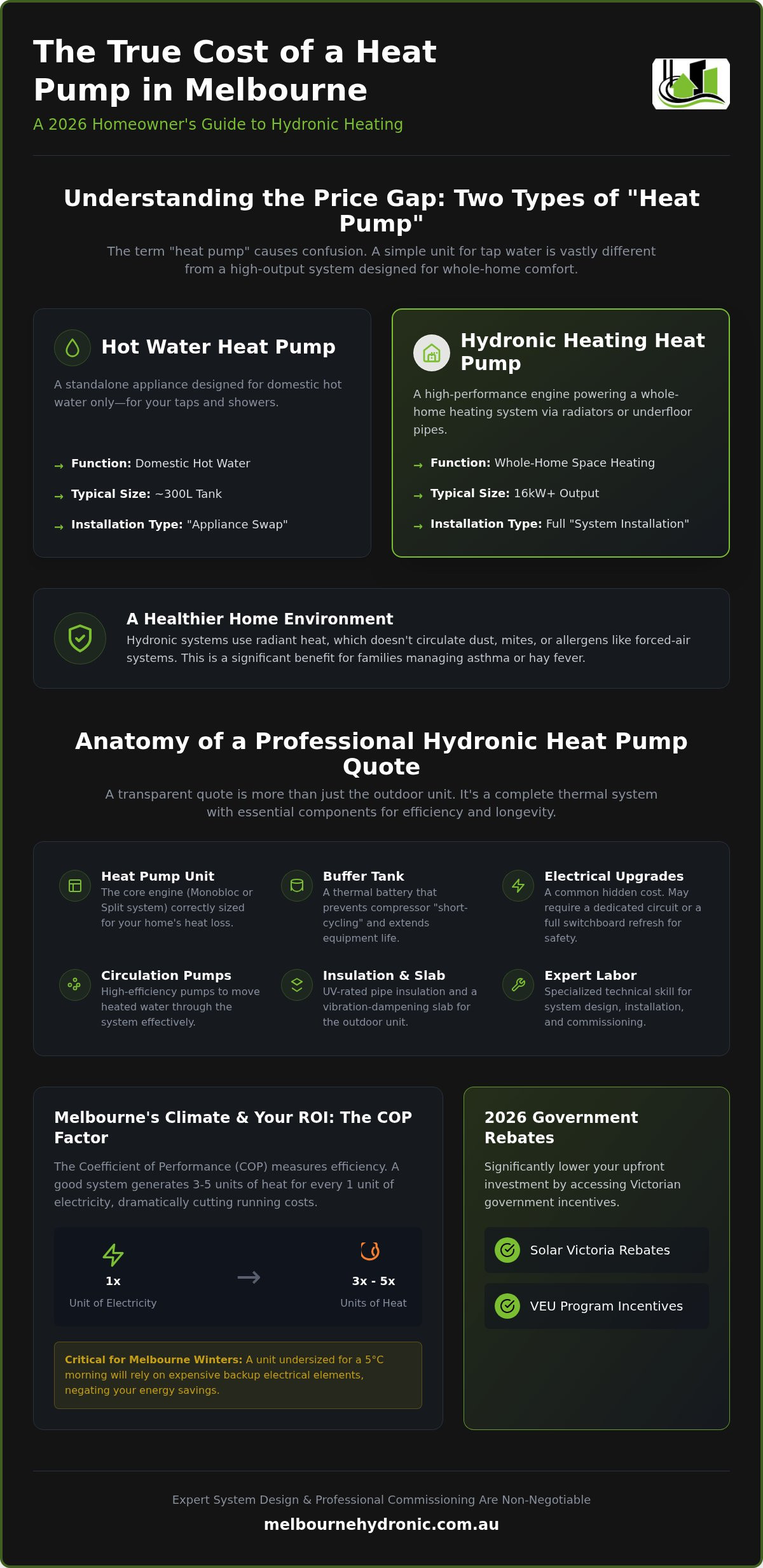
When researching the heat pump installation cost melbourne residents often encounter a massive price range that leads to immediate confusion. This discrepancy usually happens because the term “heat pump” is used for two very different technologies. A 300L hot water heat pump is a standalone appliance designed purely for your taps and showers. In contrast, a 16kW+ hydronic heat pump is a high-performance engine designed to warm your entire home through radiator panels or underfloor pipes. The latter requires significantly more robust hardware and a higher level of engineering to manage the constant energy transfer needed for space heating.
Melbourne’s transition to gas-free living is accelerating rapidly. By 2026, all-electric homes are commanding higher resale values as buyers look to avoid the volatility of gas prices. Beyond the financial shift, there’s a vital health component. Because hydronic systems provide radiant heat rather than blowing air, they don’t circulate dust, mites, or allergens. For families in Victoria managing asthma or hay fever, this move to a “sealed” heating method is an investment in long-term well-being as much as it is in infrastructure.
The “Appliance Swap” vs. “System Installation”
Replacing an old gas boiler with an electric heat pump isn’t a simple “like-for-like” swap. It’s a total system recalibration. Heat pumps thrive on low-temperature operation, which means the design must be more precise than an old-fashioned high-heat gas system. You’ll likely need a buffer tank, which acts as a thermal battery. This component prevents “short-cycling,” a process where the compressor turns on and off too frequently, leading to premature wear. Understanding how a heat pump works is vital here; the system relies on steady flow rates and specialized primary and secondary pumping to move heat efficiently from the outdoor air into your living spaces.
Melbourne’s Climate Factor: Why COP Matters
The Coefficient of Performance (COP) is the metric that defines your return on investment. It tells you how many units of heat you get for every unit of electricity you buy. On a typical 5°C Melbourne morning, a poorly sized unit will struggle to maintain efficiency. If the unit is too small for the home’s heat loss, it may trigger expensive backup electrical elements to keep up. In Victoria’s damp winters, units must also manage defrost cycles without losing significant indoor temperature. Ensuring your heat pump installation cost melbourne quote includes a correctly sized unit for our local climate is the only way to guarantee the 50% reduction in running costs that modern heat pumps promise.
The 2026 Breakdown: What Makes Up a Heat Pump Quote?
A transparent quote for a heat pump installation cost melbourne looks at your home as a complete thermal machine. It’s never just about the price of the outdoor unit. A professional breakdown includes the primary heat pump, buffer tanks that act as thermal batteries, and high-efficiency circulation pumps that move water through your home. You’ll also find costs for essential infrastructure like UV-rated pipe insulation, manifold upgrades, and the construction of a vibration-dampening outdoor slab. One of the most common hidden costs in 2026 is the electrical switchboard upgrade. Modern high-draw heat pumps often require a dedicated circuit or a complete board refresh to handle the increased load safely.
Hardware: Choosing the Right Unit
The design of your system depends on whether you choose a monobloc or split architecture. Monobloc units contain the entire refrigeration cycle in one outdoor box, which simplifies some aspects of the installation. Split systems separate the components, which can be beneficial in homes with limited outdoor space or specific layout challenges. Investing in premium Electric Heat Pumps is a choice for long-term reliability. These units are built for the local climate and come with the security of Melbourne-based technical support. If you’re integrating hot water, you should also review the Solar Victoria Hot Water Rebate guidelines to see how combining services affects your total out-of-pocket expense.
The Labor Component: Why Expertise Costs More
The labor involved in a heat pump installation cost melbourne quote reflects the high level of technical skill required for commissioning. It’s far more complex than a standard plumbing job. A specialist must perform precise hydronic balancing and flow rate calibration to ensure the system operates at its peak Coefficient of Performance. Without this step, your unit will work harder and consume more power than necessary. The process also includes a deep cleaning of your existing pipework. We use specialized equipment for flushing and treating the system to prevent old debris from clogging your new, high-tech components. If you’re ready to upgrade, it’s best to consult with a qualified designer who understands the nuances of Victorian homes.
Retrofit vs. New Build: How Your Home Affects the Price
Your home’s architectural blueprint is the single biggest variable in the final engineering of your heating system. In a new build, we design for high efficiency from the ground up, while a retrofit requires clever adaptation of modern technology to existing infrastructure. The total heat pump installation cost melbourne homeowners encounter is heavily influenced by the property’s thermal envelope. High-quality insulation and double glazing reduce the “heat loss” of the building, which often allows for a smaller, less expensive heat pump unit to achieve the same level of comfort.
Retrofitting Radiator Panels
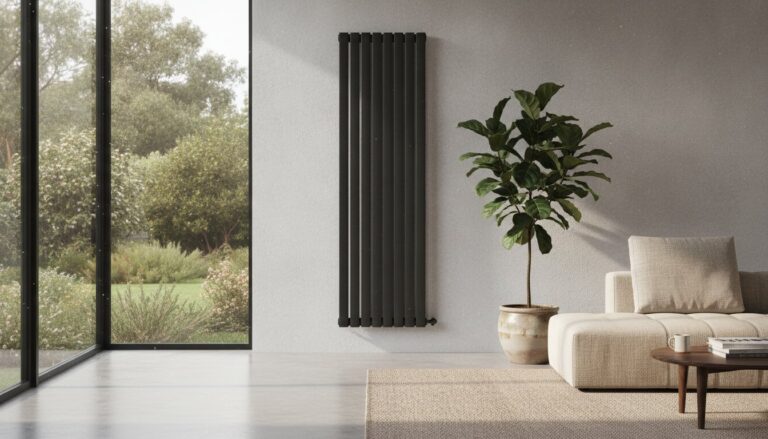
Most existing Hydronic Radiator Panels in older Melbourne homes were sized for the intense, rapid heat of a gas boiler. Because electric heat pumps operate most efficiently at lower flow temperatures, those same panels may need to be oversized to provide enough surface area for heat transfer. You might also need to upgrade internal pipework to accommodate the higher flow rates required by modern compressors. In large, open-plan residences where radiators alone might struggle at these lower temperatures, we often supplement the system with fan coils to provide a quick boost of warmth during peak winter mornings.
New Build Hydronic Design
Designing a system for a brand-new home allows for maximum optimization and long-term savings. By integrating Underfloor Heating in Melbourne, we can set the system to run at very low temperatures, typically between 35°C and 40°C. This is the ideal operating range for a heat pump’s efficiency. When these systems are paired with a rooftop solar PV array, they can achieve near-zero running costs by using self-generated electricity during the day to “charge” the concrete slab with thermal energy. Early design involvement from a specialist like Melbourne Hydronic Heating ensures the slab manifold is designed specifically for these flow temperatures, preventing costly modifications later in the construction process. This proactive approach ensures the heat pump installation cost melbourne builders face remains predictable while delivering a premium, future-proof result.
Navigating 2026 Melbourne Rebates: Solar Victoria & VEU
The actual heat pump installation cost melbourne residents pay is significantly offset by a multi-layered incentive structure. In 2026, the Victorian government continues to lead the nation in electrification support through two primary channels: Solar Victoria and the Victorian Energy Upgrades (VEU) program. While Solar Victoria offers direct rebates, the VEU program works through Victorian Energy Efficiency Certificates (VEECs). These certificates represent the energy savings your new system creates. They are usually traded by your installer to provide an immediate point-of-sale discount. On a federal level, Small-scale Technology Certificates (STCs) provide a third layer of savings, though these are often already factored into professional quotes. To access these funds, your installer must be an “Accredited Provider,” as the compliance paperwork requires specific licensing to ensure the system meets strict safety standards.
Eligibility Criteria for 2026
As of July 1, 2026, the Solar Victoria program maintains clear boundaries for participation. To qualify for the heating or hot water rebates, your combined household taxable income must be less than $150,000 per year. Additionally, the property’s value must be under $3 million. The highest rebate values are currently reserved for households replacing old, inefficient gas heaters, as this aligns with the state’s decarbonization goals. Once the work is finished, you must receive a Post-Installation Certificate. This document is your proof of compliance and is essential for the final rebate processing. Without it, you risk losing the financial incentive regardless of how well the system performs.
Calculating Your Real Return on Investment
Switching from a gas boiler to a hydronic heat pump can lower your annual space heating running costs by up to 50% compared to traditional gas systems. While gas network charges continue to climb, electricity remains a more versatile fuel source, especially when paired with smart thermostats. These devices allow you to “load shift” your heating to off-peak periods or times of high solar production. The “opportunity cost” of staying on gas is becoming harder to ignore as maintenance for aging gas infrastructure becomes more expensive. If you want to see how these incentives apply to your specific home, you can request a professional rebate assessment from our expert team. By choosing a system that uses three to four times less electricity than a conventional heater, you’re securing a premium lifestyle that’s protected from future energy price shocks.
Why Professional Installation is Non-Negotiable
Selecting the lowest heat pump installation cost melbourne quote often leads to long-term technical failures that far outweigh any initial savings. A heat pump is a precision-engineered machine, not a simple plug-and-play appliance. If the system design is flawed, you risk the dreaded “short-cycling” effect. This occurs when the unit is incorrectly sized or the flow rates aren’t balanced, causing the compressor to turn on and off rapidly. This constant stress doesn’t just spike your energy bills; it can destroy a compressor years before its expected lifespan.
System hygiene is equally critical during the transition from gas. When we replace an old gas boiler, the existing pipework often contains decades of sludge and debris. Installing a high-tech heat pump without a thorough Power Flushing is a recipe for disaster. This debris can clog the sensitive heat exchanger and reduce the system’s efficiency to a fraction of its potential. With over 30 years of industry experience as a local family-owned contractor, we understand that a correctly engineered system pays for itself through decades of silent, trouble-free operation.
The Melbourne Hydronic Heating Difference
Our approach focuses on custom system design rather than generic hardware sales. We conduct a detailed heat loss calculation for every home, considering everything from ceiling heights to window orientations. We prioritize premium, energy-efficient components because we know they deliver the best life-cycle value for Victorian families. Beyond the initial setup, we provide ongoing Hydronic Heating Service and maintenance. This commitment ensures your investment continues to provide the same clean, healthy warmth on day one thousand as it did on day one.
Ready for a Tailored Quote?
When you’re ready to discuss your project, having a few items prepared will help us provide the most accurate assessment. We recommend having your architectural floor plans and recent energy bills handy. This data allows us to model your home’s thermal needs with engineering precision. Our pricing is transparent, clearly detailing the hardware, labor, and infrastructure required for a premium result. You won’t find hidden surprises or “cowboy” shortcuts in our documentation. If you’re looking for clarity on your specific heat pump installation cost melbourne, take the first step toward a more comfortable home today. Request your professional hydronic heat pump quote today and experience the difference that expert design makes to your quality of life.
Securing Your Future Comfort in a Gas-Free Melbourne
Transitioning to an all-electric home is one of the most significant investments you’ll make in your property’s value and your family’s well-being. By distinguishing between simple hot water units and high-performance hydronic systems, you can better understand the variables behind a heat pump installation cost melbourne quote. Precision in design and professional commissioning are the only ways to guarantee the long-term ROI and efficiency that modern technology promises. It’s about more than just hardware; it’s about engineering a system that works in harmony with Victoria’s unique climate.
As specialist hydronic engineers and Victorian government rebate experts with over 30 years of local experience, we’re here to guide you through the technical landscape. We’ll ensure your system is perfectly sized for your specific home while maximizing every available incentive. Don’t leave your comfort to chance with uncertified installers or poorly designed layouts. Take the first step toward a cleaner, healthier, and more cost-effective home environment today. Get a Professional Heat Pump Installation Quote and invest in a future of effortless warmth and sustainable living.
Frequently Asked Questions
How much does a hydronic heat pump cost to install in Melbourne in 2026?
The total heat pump installation cost melbourne residents face varies based on whether you’re retrofitting radiators or installing new underfloor pipes. A whole-home hydronic system requires high-output hardware and complex engineering, making it a larger investment than a simple hot water appliance. Costs cover the outdoor unit, buffer tanks, circulation pumps, and specialized labor. We recommend a custom design to ensure the system is correctly sized for your home’s specific thermal loss.
Are there still government rebates for heat pumps in Victoria?
Yes, Victorian households can still access significant financial support through Solar Victoria and the Victorian Energy Upgrades (VEU) program. For hot water systems, rebates of up to $1,000 are available, increasing to $1,400 for eligible Australian-made units. For hydronic space heating, the VEU program uses Victorian Energy Efficiency Certificates (VEECs) to provide point-of-sale discounts. Eligibility depends on household income staying under $150,000 and property values remaining below $3 million.
Can I use my existing radiators with a new heat pump?
You can often retain your existing radiator panels, but they must be assessed for compatibility with lower flow temperatures. Gas boilers typically run much hotter than electric heat pumps. To achieve the same warmth, your radiators might need a larger surface area or the addition of fan coils in open-plan areas. A professional audit will determine if your current pipework can handle the higher flow rates required for peak efficiency.
How long does a typical heat pump installation take?
A standard hydronic heat pump installation usually takes between three and five business days to complete. This timeframe includes decommissioning your old gas boiler, performing a deep power flush of the system, and installing the new outdoor unit and buffer tank. Complex retrofits or homes requiring significant electrical switchboard upgrades may take longer. We prioritize a methodical approach to ensure every connection is pressure-tested and the system is perfectly commissioned.
Will a heat pump be loud enough to bother my neighbors in Melbourne?
Modern premium units are exceptionally quiet and must comply with local Victorian noise regulations. Most quality systems operate at decibel levels comparable to a quiet refrigerator or a standard split-system air conditioner. We use vibration-dampening outdoor slabs and strategic placement to ensure the unit doesn’t disturb you or your neighbors. During your initial consultation, we’ll identify the optimal location that balances technical performance with acoustic comfort for the property.
What is the difference between an STC and a VEEC rebate?
Small-scale Technology Certificates (STCs) are federal incentives based on the renewable energy your system generates over its lifetime. In contrast, Victorian Energy Efficiency Certificates (VEECs) are part of the state-based VEU program focused on reducing carbon emissions. Both act as a form of currency that your accredited installer trades to lower your upfront quote. While STCs are common across Australia, VEECs offer an additional layer of savings specifically for Victorian residents.
Is a heat pump cheaper to run than a gas boiler in Victoria?
A correctly engineered heat pump is significantly cheaper to run than a traditional gas boiler. While gas boilers are roughly 80% to 90% efficient, heat pumps have a Coefficient of Performance (COP) of 3 to 4, meaning they produce three to four units of heat for every unit of electricity consumed. As gas network charges in Victoria continue to rise, the gap in running costs will only widen, especially if you have rooftop solar.
What maintenance does a hydronic heat pump require?
Your system requires an annual professional service to ensure it continues to operate at peak efficiency. This maintenance includes cleaning the outdoor unit’s heat exchanger, checking refrigerant levels, and inspecting the circulation pumps. We also monitor water quality within the hydronic loop to prevent internal corrosion. Regular servicing not only protects your manufacturer’s warranty but also ensures the system provides the same premium comfort and low running costs for decades.