
Avoiding Common Hydronic Heating Mistakes: A 2026 Guide for Melbourne Homeowners
Why is your “ultra-efficient” hydronic system still sending your energy bills through the roof? You likely chose this technology for its reputation for silent, allergy-friendly warmth, yet many Melbourne homeowners find themselves battling cold spots or noisy pipes instead of enjoying premium comfort. It is a common frustration, but the truth is that efficiency is often lost during the design and maintenance phases rather than at the thermostat. By avoiding common hydronic heating mistakes such as poor system balancing or choosing unaccredited installers, you can protect your investment and ensure your home stays perfectly cozy all winter long.
We understand that you want a heating solution that provides peace of mind and long-term reliability. This 2026 guide will show you exactly how to achieve lower running costs and a longer lifespan for your heat pump or boiler. We will walk you through critical updates, including the new Building and Plumbing Commission standards and the urgent June 30 deadline for the Solar Victoria rebate income threshold change. You will also learn how to navigate the upcoming 2027 gas transition and why professional power flushing might be the secret to restoring your system to its peak performance.
Key Takeaways
- Understand how subtle installation errors can lead to a 20% efficiency drop over time, impacting your long-term return on investment.
- Protect your home’s comfort by avoiding common hydronic heating mistakes like oversized boilers, which cause inefficient short-cycling and uneven room temperatures.
- Discover why monitoring your pressure gauge and addressing “black sludge” buildup is critical for preventing system lockouts and pump damage.
- Master the art of thermostat management by understanding why “cranking up” the heat is a fallacy and how “setback” temperatures keep running costs low.
- Learn how custom system designs tailored to Victoria’s unique architectural styles can significantly extend the lifespan of your boiler or heat pump.
Why Hydronic Efficiency Fails: Understanding the Cost of Common Mistakes
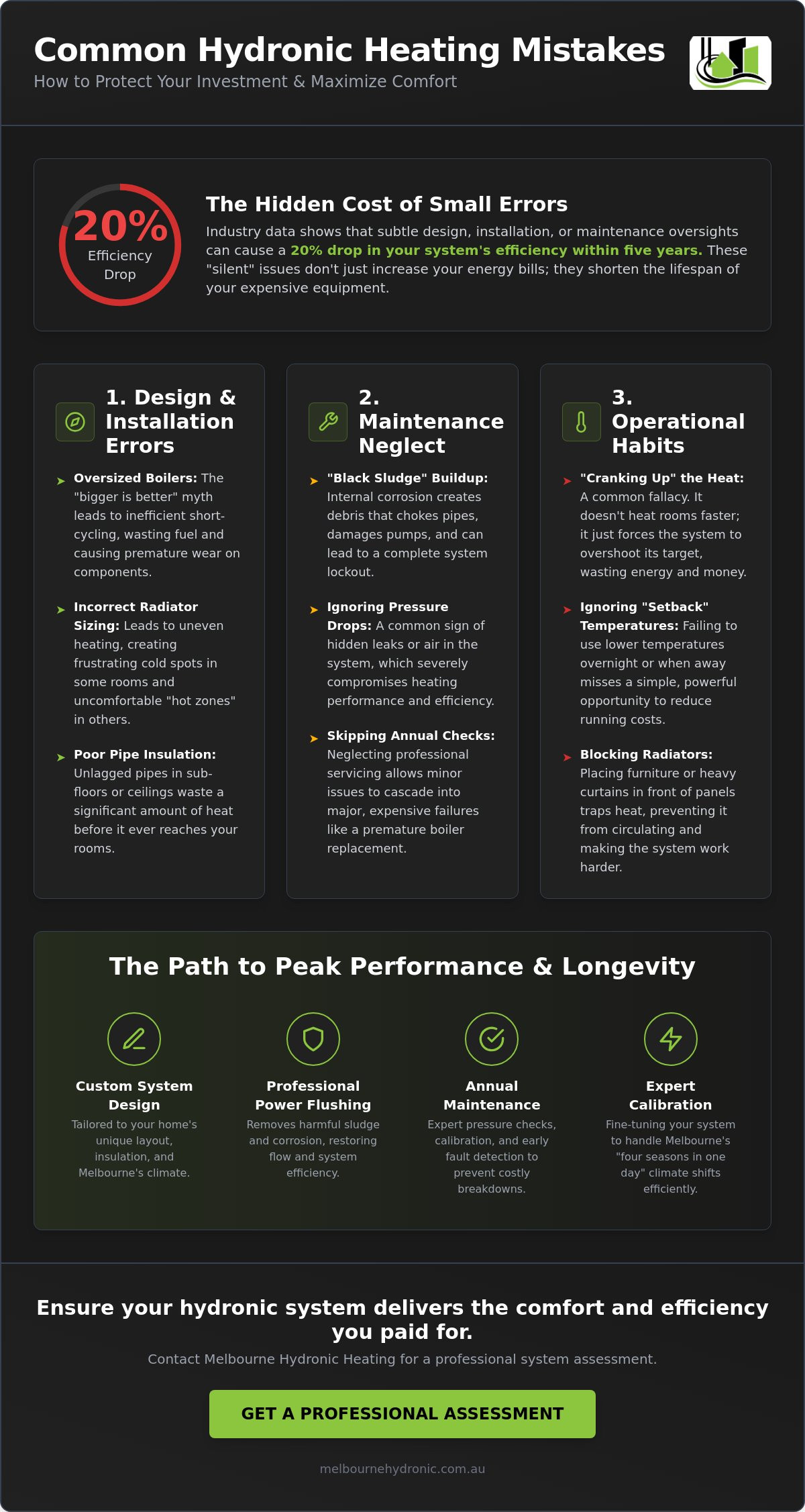
Hydronic heating isn’t just a boiler and some pipes; it’s a sophisticated ecosystem designed to provide radiant warmth. Many homeowners view it as a single appliance, but true efficiency requires a system-wide perspective. When you are avoiding common hydronic heating mistakes, you must look beyond the thermostat. A system that’s technically “working” might not be “performing” at its peak. In a harsh Victorian winter, the difference between the two is felt in your wallet and your daily comfort. Small design or maintenance errors in the first twelve months don’t always cause a breakdown immediately. Instead, they lead to a slow, expensive decline. Industry data suggests that minor oversights can cause a 20% drop in efficiency by the fifth year of operation.
Most homeowners overlook the “silent” signs of a failing system. A slight gurgle in a radiator or a room that takes thirty minutes longer to heat than it used to are red flags. These aren’t just quirks of an older house. They’re symptoms of air pockets, balancing issues, or internal debris. Addressing these early prevents the cumulative damage that leads to the efficiency loss mentioned above. It’s about maintaining that premium, “barefoot” comfort you invested in originally.
The Long-term Financial Impact of Neglect
Neglecting your system doesn’t just lead to higher bills; it shortens the life of your equipment. Poor water quality is a silent killer. When oxygen or minerals enter the loop, they create internal corrosion. This leads to “black sludge” that chokes your heat pump or boiler. Understanding What is Hydronic Heating? helps clarify why water chemistry is so vital. It isn’t just about “turning it on” and hoping for the best. To truly understand what is hydronic heating, you have to recognize it as a fluid-based thermal transfer process that requires pristine conditions. Even minor leaks, which might seem like a nuisance, can lead to major structural corrosion over a decade. This often results in a premature boiler replacement that could’ve been avoided with simple annual checks.
Melbourne Climate Factors and System Stress
Melbourne is famous for its rapid temperature shifts. These “four seasons in one day” events place unique stress on your system’s expansion tank and pressure valves. Many systems installed in Australia are based on European designs meant for consistent, deep freezes. However, Victorian humidity and fluctuating outdoor temperatures require different calibration. If your system isn’t locally tuned, it may struggle to react quickly enough to a sudden cold snap. Local expert calibration ensures that your system pressure remains stable despite these external changes. Avoiding common hydronic heating mistakes means acknowledging that a generic setup won’t cut it in the Melbourne or Geelong climate. Your home needs a system that is as dynamic as the weather outside.
Design and Installation Errors: Sizing, Zoning, and Placement
A hydronic system’s success is determined long before the first pipe is laid. If the initial design is flawed, no amount of maintenance can fully fix the resulting inefficiency. One of the most prevalent myths in the industry is that “bigger is better.” Many homeowners believe an oversized boiler or heat pump provides a safety net for those freezing July nights. In reality, an oversized unit leads to short-cycling. This is where the system turns on and off rapidly because it reaches its target temperature too quickly, never hitting its peak efficiency. It’s like driving a car in heavy stop-start traffic; the constant starting and stopping wastes fuel and wears out the components prematurely.
Precision is key. When avoiding common hydronic heating mistakes, every room’s volume and insulation level must be calculated to determine the exact radiator size needed. An undersized panel leaves you with frustrating cold spots, while an oversized one creates an uncomfortable “hot zone” that disrupts the balance of the entire house. This thermal balance is further compromised when pipework in sub-floors or ceiling cavities isn’t properly insulated. Without high-quality lagging, you are essentially heating the dirt under your house instead of your living room. For a deeper look at the physics behind these systems, this U.S. Department of Energy guide on radiant heating explains how heat transfer works in a well-designed home.
Radiator and Panel Placement Pitfalls
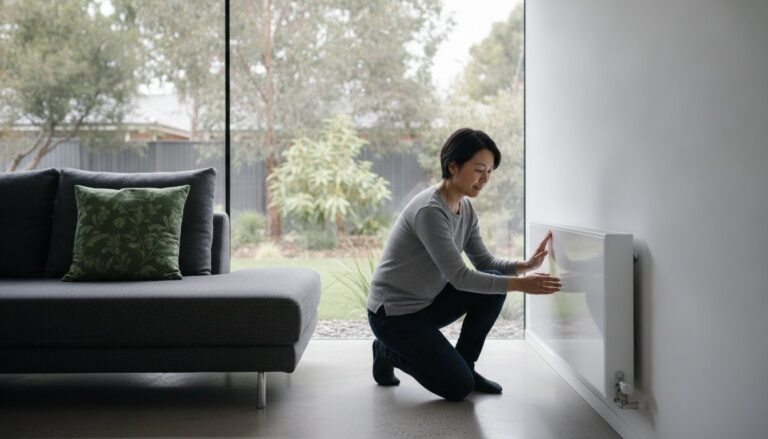
Placement is just as vital as size. A frequent mistake is hiding hydronic radiator panels behind heavy curtains or large sofas. This “blocking” traps the heat against the wall, preventing it from circulating through the room. We often see panels placed on internal walls for aesthetic reasons, but this is less efficient than placing them under windows. When a panel sits under a window, it intercepts the cold air falling from the glass and warms it instantly. This creates a natural convection current that distributes warmth evenly across the floor. Ensure there is enough clearance from the floor to allow air to flow up through the panel’s fins, as restricted airflow is a common cause of poor performance.
Zoning Mistakes in Multi-Storey Homes
Many larger Melbourne properties suffer from “whole-house syndrome.” Heating an entire four-bedroom home when you are only using the lounge is an expensive error. Smart zoning allows you to divide your home into independent areas, each controlled by its own thermostat. This is especially critical for multi-storey homes where heat naturally rises. Without independent upstairs and downstairs zones, your bedrooms will often be stiflingly hot while the ground floor remains chilly. Effective zoning can reduce running costs significantly, often by as much as 30% in larger residences. If you’re planning a new build or a major renovation, getting a professional system design is the best way to ensure your layout matches your lifestyle.
Maintenance Neglect: The Danger of Sludge and Pressure Drops
A hydronic system is designed to be a closed loop, meaning the same water should circulate for years without interference. However, many homeowners treat their system like a standard tap, frequently topping it up with fresh water or ignoring the subtle signs of internal wear. When you are avoiding common hydronic heating mistakes, you must understand that what happens inside your pipes is just as important as the heat coming off your panels. Neglecting the chemical health of your system is the fastest way to turn a premium investment into a costly repair project.
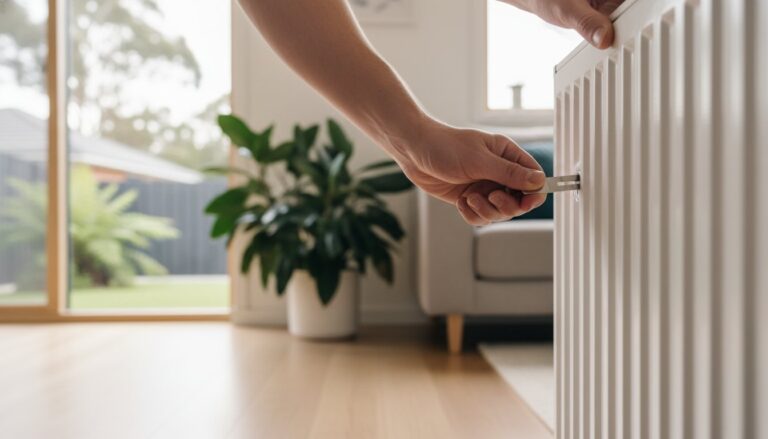
The most significant threat to your system’s longevity is “black sludge,” technically known as magnetite. This abrasive substance forms when oxygen enters the system and reacts with steel components. It doesn’t just sit there; it circulates, acting like liquid sandpaper on your pump’s delicate internal seals. If you find yourself bleeding your radiators every few weeks to remove air, you aren’t fixing the problem. You are likely treating a symptom of air ingress or a slow leak. Every time you bleed a radiator and refill it with untreated tap water, you introduce fresh oxygen and minerals that fuel further corrosion.
Why Power Flushing is Not Optional
Power flushing is a deep-cleansing process for hydronic circuits that uses high-velocity water and specialized chemicals to remove internal debris. It is a critical maintenance step that restores the flow and thermal efficiency of your entire home. You will know your system is struggling if you notice your radiators are cold at the bottom but hot at the top, or if your pump starts making a localized “kettling” or grinding noise. A professional flush clears out the magnetite that chokes the heat exchanger, ensuring your boiler doesn’t have to work twice as hard to achieve the same temperature. It is a proactive measure that prevents the total component failure often seen in neglected systems.
Monitoring System Pressure and Water Health
Your pressure gauge is the most honest indicator of your system’s health. For most Melbourne homes, a “normal” reading sits between 1.0 and 1.5 bar when the system is cold. If you notice the needle frequently dropping below 1.0, the system will eventually lock out for safety. Ignoring this drop until the heating fails is a mistake that often leads to emergency call-outs. Frequent “topping up” via the filling loop is a red flag, as it indicates a hidden leak that needs professional repair before it causes structural damage. Maintaining the correct level of corrosion inhibitors is essential for a high-quality hydronic heating service melbourne. These chemicals create a protective film inside your pipes, stopping the oxidation process before it starts. By keeping the water “dead” and chemically balanced, you ensure your system remains silent and efficient for decades.
Operational Habits: Thermostat Mismanagement and Inefficiency
Even a perfectly designed and chemically balanced system can underperform if your daily habits work against the technology. Many homeowners treat their thermostat like an accelerator pedal in a car, believing that setting it to 30°C will make the house warm up faster. This is the “Crank It Up” fallacy. Hydronic systems are designed to provide steady, radiant heat. Setting the target temperature higher than your desired comfort level won’t increase the speed of the boiler or heat pump; it simply ensures the system stays on longer and overshoots the mark, wasting energy in the process. Avoiding common hydronic heating mistakes starts with understanding that patience is part of the premium experience.
Another frequent error is turning the system completely off when you leave for work. Because hydronics rely on heating the thermal mass of your home, bringing a cold house back up to temperature consumes significantly more energy than maintaining a “setback” temperature. Keeping the system at 16°C or 18°C during the day allows it to reach 20°C quickly and efficiently when you return. This is particularly true for modern heat pump hydronic heating, which operates most efficiently when running at lower flow temperatures for longer periods rather than short, high-intensity bursts.
Thermostat Best Practices for Radiators vs. Underfloor
The way you interact with your thermostat should depend on your specific setup. Hydronic underfloor heating is a “slow and steady” technology. It can take several hours for a concrete slab to respond to a temperature change, so constant manual adjustments are counterproductive. In contrast, hydronic radiator panels respond much faster, but they still benefit from a programmed schedule. Smart thermostats are an excellent investment here. They can learn how long it takes your specific home to reach temperature based on the external climate, automatically adjusting the start time so your home is perfectly cozy the moment you wake up.
Seasonal Habits for Victorian Weather
Melbourne’s weather is notoriously unpredictable, but your heating strategy shouldn’t be. As we move into the milder days of spring, many homeowners forget to adjust their flow temperature. Reducing the water temperature in the pipes during these periods prevents the system from over-delivering heat. It’s also vital to keep the system “ticking over” even in mild weather. Most modern pumps have an anti-seize function that runs for a few seconds every day, but keeping the system active prevents internal components from sticking after months of disuse. Don’t wait for the first frost in June to find out something is wrong. If you want to ensure peak performance, book a professional system check in early autumn to beat the winter rush.
Professional Solutions: How Melbourne Hydronic Heating Ensures Long-Term Comfort
Choosing a partner for your home’s comfort is a decision that impacts your quality of life for decades. At Melbourne Hydronic Heating, we leverage over 30 years of experience across the Melbourne and Geelong regions to ensure your system operates with engineering precision. While a general residential plumber might understand basic pipework, hydronic heating is a specialized field that requires a deep understanding of fluid dynamics and thermal transfer. By working with a specialist, you are avoiding common hydronic heating mistakes that often stem from a “one-size-fits-all” approach. Our team understands how to balance a system so that every radiator performs exactly as intended, regardless of the home’s layout.
Our custom system designs are specifically tailored to Victoria’s diverse architectural styles. Whether you live in a heritage-listed Victorian terrace with high ceilings or a modern, glass-heavy coastal build, we account for the unique heat loss profiles of your property. This bespoke approach is the only way to guarantee consistent warmth and peak efficiency. We don’t just install hardware; we design a thermal environment that enhances your well-being and protects your investment.
Expert Design and Installation
In 2026, the shift toward electrification is more critical than ever. We specialize in energy-efficient electric heat pump transitions, helping homeowners navigate the upcoming gas system bans while maximizing available rebates. Our process begins with calculating precise heat loads for every room. We don’t guess; we use data to determine the exact requirements for your space. This ensures your installation meets all local Australian standards and safety codes, providing a safe and reliable environment for your family. By focusing on technical precision during the design phase, we help you enjoy the premium lifestyle benefits of a perfectly tuned system.
Comprehensive Maintenance and Repair
We believe the best way to protect your investment is through proactive care. Our maintenance plans are designed to be the ultimate insurance against system failure. From fixed-rate servicing to complex boiler replacements, we provide a clear path to long-term reliability. Our professional power flushing service is a standout solution. It can extend your system’s life by a decade by removing the internal debris that causes premature wear and efficiency drops. Don’t leave your comfort to chance as the temperature drops. Book your 2026 hydronic system health check with Melbourne Hydronic Heating today to ensure you are avoiding common hydronic heating mistakes and enjoying the clean, silent operation your home deserves.
Securing Your Home’s Comfort for the Decade Ahead
Hydronic heating is a premium choice for a reason, but its long-term success depends on technical precision. We’ve explored how efficiency is won or lost in the design phase and why proactive maintenance is the only way to prevent silent system killers like magnetite sludge. By avoiding common hydronic heating mistakes such as ignoring pressure drops or neglecting zoning, you ensure your system remains a silent, cost-effective provider of warmth rather than a source of unexpected repair bills. With the 2027 gas transition approaching, now is the ideal time to audit your home’s thermal health and prepare for a more sustainable future.
As a family-owned and operated Victorian business with over 30 years of local experience, we specialize in the latest energy-efficient heat pump technology. We understand the unique challenges of the Melbourne climate and are here to help you optimize your environment. Whether you need a routine service or a complete system redesign, our expert team is ready to assist. Get a Professional Hydronic System Assessment today and experience the peace of mind that comes with true specialist care. Your home deserves nothing less than perfect performance.
Frequently Asked Questions
How often should I service my hydronic heating system in Melbourne?
You should schedule a professional service for your system every 12 months. Booking this in early autumn ensures your boiler or heat pump is ready for the first Melbourne cold snap. Regular checks prevent small issues from becoming expensive repairs during the peak of winter, ensuring your home remains a sanctuary of comfort.
Why is my hydronic radiator hot at the top but cold at the bottom?
A radiator that stays cold at the bottom usually indicates a buildup of magnetite sludge. This heavy, black debris settles at the lowest point of the panel and blocks the hot water from circulating effectively. This is one of the most visible signs that you aren’t successfully avoiding common hydronic heating mistakes like neglecting system hygiene.
Is it cheaper to leave hydronic heating on all day or turn it off?
It’s generally more cost-effective to use a “setback” temperature rather than turning the system completely off. Maintaining a baseline of 16°C or 18°C prevents the thermal mass of your home from cooling down too much. Reheating a cold house requires significantly more energy than maintaining a steady, low-level warmth throughout the day.
What causes the banging or knocking noise in my hydronic pipes?
Banging or knocking noises, often called “kettling,” are usually caused by air trapped in the system or limescale buildup on the heat exchanger. It can also result from pipes that weren’t properly secured during installation, leading to vibration as water flows through. A professional assessment can identify the exact source and prevent further damage to your components.
How do I know if my hydronic system needs power flushing?
You likely need power flushing if your radiators have significant cold spots or if your pump makes a grinding sound. Another clear indicator is if the water released during bleeding looks dark or murky. Power flushing clears these internal blockages, restoring full heat output to every room in your property.
Can I install hydronic heating panels myself to save money?
No, you shouldn’t attempt a DIY installation for hydronic panels or boilers. Hydronic systems involve complex pressurized plumbing and specialized components that must meet strict Australian standards. Using an unaccredited installer also makes you ineligible for Victorian energy rebates and can void your manufacturer’s warranty, leading to much higher costs long-term.
What is the ideal thermostat setting for hydronic heating in winter?
The ideal thermostat setting for most Melbourne homes is between 18°C and 21°C. Every degree you go above this range can increase your running costs by approximately 10%. Using a programmed schedule ensures the system provides warmth only when you are actually home to enjoy it, maximizing both comfort and economy.
Why does my hydronic system pressure keep dropping?
Constant pressure loss is a primary indicator of a hidden leak or a failing expansion vessel. While you can top up the system yourself, frequently adding fresh water introduces oxygen that causes internal corrosion. Avoiding common hydronic heating mistakes means calling a specialist to find the leak rather than just treating the symptom with constant refills.