
Fixing Noisy Hydronic Pipes: A Guide to Restoring Silent Comfort in 2026
That sudden, metallic bang in the middle of the night isn’t just a nuisance; it’s your heating system’s way of telling you that something is wrong with its internal dynamics. You shouldn’t have to lie awake wondering if your boiler is failing or why your energy bills keep climbing while your radiators stay cold. We know how frustrating it is when the system meant to provide premium comfort starts causing anxiety instead. The good news is that fixing noisy hydronic pipes is often a straightforward process once you understand the fluid physics at play.
By following this guide, you’ll gain the confidence to identify exactly what those gurgles and knocks mean and how to silence them for good. We’ll show you how to restore the whisper-quiet operation and high-level efficiency your home deserves, ensuring your system is safe and reliable. We will walk through essential troubleshooting steps, explain the impact of the 2026 energy codes on system health, and help you decide when a simple DIY fix is enough or when it’s time to call in a specialist for a professional system flush.
Key Takeaways
- Learn how to distinguish between gurgling, banging, and whistling to pinpoint the exact mechanical issue within your heating system.
- Discover the step-by-step process for fixing noisy hydronic pipes through radiator bleeding and pressure adjustments to restore immediate peace.
- Understand the science of thermal expansion and why your pipes may be ticking against floor joists as they reach operating temperature.
- Find out how “kettling” and sludge buildup compromise efficiency and why a professional power flush is the ultimate solution for deep-seated noise.
- Implement long-term maintenance strategies, such as installing magnetic dirt separators, to ensure your system remains whisper-quiet and energy-efficient.
Identifying the Root Cause of Hydronic Pipe Noise
A premium hydronic system is defined by its silence. It should provide consistent, radiant warmth without drawing attention to itself. When your radiators begin to protest with unfamiliar sounds, it’s a clear signal that the system’s hydraulic balance has been compromised. Identifying the specific acoustic signature is the first step toward fixing noisy hydronic pipes and restoring the comfort your home was designed for. Understanding whether you’re hearing air, mechanical friction, or pressure waves allows for a methodical approach to repair. It’s about restoring fluid dynamics, not just tightening brackets.
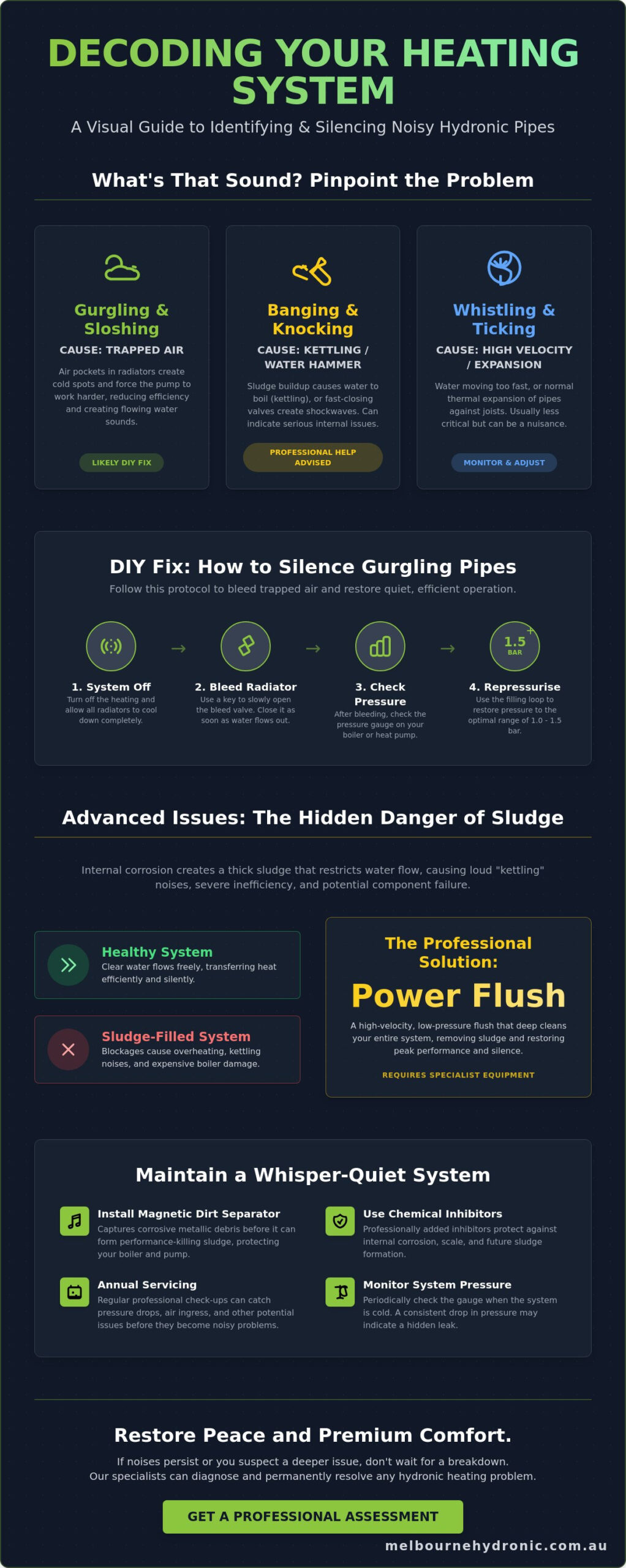
Systems that were once silent often develop noise after five to ten years of operation. This transition occurs because fluid dynamics are not static. Over time, system pressure may drop below the optimal threshold, or the chemical balance of the water can shift. Differentiating between a “nuisance” sound and a “critical failure” warning is essential. A light ticking as the heat turns on is often normal expansion. A heavy, rhythmic thumping from the boiler is not. We find that most noise issues fall into three distinct categories: gurgling, banging, or whistling.
Gurgling and Sloshing: The Air-Lock Dilemma
Air is the enemy of efficiency. It enters your system through fresh water top-ups or via gas diffusion in older pipe materials. These air pockets gather at the highest points of the loop, typically in the upper corners of your hydronic radiator panels. You’ll hear this as a distinct rushing or sloshing sound whenever the pump engages. These pockets don’t just cause noise; they create cold spots and force your pump to work harder. This extra strain leads to premature wear and higher energy bills. It’s a simple physics problem with a simple solution.
Banging, Knocking, and Water Hammer
Water hammer is a specific phenomenon where the kinetic energy of moving water is abruptly halted by a fast-acting valve. This creates a shockwave that vibrates through the entire pipe network. It’s often confused with the “ticking” of thermal expansion, but hammer is typically a singular, violent thud. If the noise originates from your gas boiler or heat pump, it might be “kettling.” This happens when sludge restricts flow, causing water to overheat and create steam bubbles that collapse with a loud bang. Properly fixing noisy hydronic pipes requires knowing if the sound is mechanical or hydraulic.
High-pitched whistling usually points to high flow velocity. This occurs when the circulator pump is set to a speed higher than necessary. It can also happen when too many thermostatic valves close simultaneously, forcing water through a narrow opening at high pressure. This creates a “singing” pipe that can be heard throughout the house. Addressing these sounds early ensures your system remains safe and operates at peak performance as we move into the 2026 heating season.
DIY Solutions: How to Silence Gurgling and Sloshing
Gurgling is the most frequent symptom of trapped air within a sealed system. While it sounds like a minor annoyance, these air pockets act as physical barriers to heat transfer. Fixing noisy hydronic pipes often starts with a methodical approach to removing this air and restoring the correct hydraulic balance. Most homeowners can resolve these fluid sounds with basic tools and a bit of patience. If your radiators are cold at the top but hot at the bottom, air is certainly the culprit. Restoring the silent, efficient flow of water is essential for maintaining both your comfort and the longevity of your system components.
The Radiator Bleeding Protocol
To begin, ensure your heating system is turned off and the radiators are cool to the touch. You’ll need a standard radiator key and a thick cloth to catch any stray droplets. Start with the radiator furthest away from your gas boiler or heat pump and work your way back. Insert the key into the bleed valve, typically located at the top corner of the panel, and turn it slowly anti-clockwise. You’ll hear a distinct hiss as the trapped air escapes. Once a steady stream of water appears, close the valve immediately. Be mindful that this water can be discoloured; keep your cloth ready to protect your flooring and maintain the premium aesthetic of your home interiors.
Recalibrating System Pressure
Every time you bleed air from the system, the overall pressure will drop. You must check the pressure gauge on your boiler or heat pump interface after finishing. For most modern systems, the “sweet spot” for silent operation is between 1.0 and 1.5 bar when the system is cold. If the needle is below 1.0, use the filling loop, usually two small valves connected by a braided hose, to carefully introduce fresh water until the gauge reaches the target range. Excessive pressure can force the safety relief valve to vibrate or discharge, creating a distinct chattering sound that disrupts your home’s quiet environment. If you find yourself constantly bleeding the same radiator, it’s often a sign that a professional hydronic heating service is needed to locate the source of the air ingress.
Don’t forget to inspect the auto-air vent (AAV), which is usually located inside the boiler cabinet or at the highest point of the pipework. This small, brass component is designed to release air automatically. If the small cap on top is screwed too tightly or if you see signs of crystalline salt deposits, the vent may be blocked or leaking. A faulty AAV can allow air to be sucked back into the system during cooling cycles, leading to a recurring cycle of noise. If bleeding the radiators and adjusting the pressure doesn’t silence the sloshing within 24 hours, the air lock may be trapped in a section of pipework that requires professional intervention.
Solving Banging and Ticking: Mechanical and Thermal Expansion
While air locks cause sloshing, a rhythmic ticking or a sudden metallic bang often points to a mechanical conflict between your pipework and your home’s structure. Fixing noisy hydronic pipes in these cases requires looking beyond the water chemistry and focusing on thermal physics. Copper is a highly conductive material, but it’s also prone to significant expansion. When water temperature rises, your pipework physically grows in length. If those pipes are restricted by tight brackets or narrow floor penetrations, that growth creates friction. This friction is released in small, audible “ticks” that can echo through the entire house.
Locating the exact source of a pipe bind doesn’t always require professional diagnostic tools. You can use a long screwdriver as a makeshift stethoscope. Place the tip against a suspected bracket or floorboard and press your ear against the handle while the system is heating up. The vibration will be clearest at the point of highest friction. Identifying these spots early prevents long-term wear on your pipe joints and ensures your system remains a silent partner in your home’s comfort. This proactive approach protects your investment and maintains the premium quality of your living space.
Addressing Pipe Friction in Melbourne Homes
Many classic Melbourne residences feature timber subfloors that are particularly sensitive to resonance. If your pipes were installed without enough “room to breathe,” the timber joists act like a sounding board for every thermal movement. To resolve this, we often recommend installing plastic sleeves or felt lining on the brackets to allow the pipe to glide silently. Ensuring there’s a small gap around floor penetrations can stop the “ticking” immediately. These small adjustments restore the quiet environment you expect from a high-end heating system.
Expansion Vessel Health Check
The expansion vessel is a critical component designed to absorb the pressure surges created as water heats up. It contains a flexible diaphragm that separates a pressurized air cushion from the system water. When this vessel fails or becomes waterlogged, your system has no way to handle the increased volume, leading to violent banging sounds and rapid pressure fluctuations. You can perform a simple “tap test” on the vessel; a healthy unit should sound hollow on the air side and dull on the water side. If it sounds dull and heavy all over, it’s likely waterlogged and needs professional attention to prevent safety valve discharge and further noise.
The Power Flush: Eliminating Sludge-Induced Noise
When your system moves beyond simple gurgles to a deep, resonant thumping or a sound resembling a boiling kettle, the issue is likely internal contamination. Over years of operation, the water inside your radiators reacts with the metallic components, creating a byproduct known as Magnetite. This black iron oxide sludge doesn’t just sit harmlessly at the bottom of your radiators; it circulates through the entire loop. It creates turbulence, restricts flow, and is a primary factor when fixing noisy hydronic pipes that have lost their original silent efficiency. Restoring laminar flow is the only way to return to that premium, whisper-quiet operation you expect from your home’s heating.
The Science of Kettling
Kettling is a specific acoustic phenomenon that occurs when sludge deposits settle on the surface of the heat exchanger. These deposits create localized “hot spots” where the water is forced to boil and turn into steam bubbles. As these bubbles move into cooler water, they collapse violently, creating the characteristic banging or whistling sound of a kettle on a stove. Magnetite is the primary culprit in hydronic system corrosion, appearing as a thick, black sludge that settles in low-flow areas. If left unaddressed, this process doesn’t just cause noise; it leads to physical stress on the heat exchanger, which can eventually cause a critical component failure.
The Power Flushing Process
A professional power flushing service is the most effective method for deep-cleaning the internal pipework. We use high-velocity, low-pressure pumps to circulate water and specialized chemical cleaners through each radiator individually. This process dislodges years of accumulated Magnetite without risking damage to the pipes. During the flush, we often use magnetic filtration to capture the dislodged particles, preventing them from re-entering the boiler. To ensure the process is successful, we verify the results using thermal imaging cameras. These cameras allow us to see “cold spots” in real-time; once those spots disappear, we know the sludge is gone and the silent flow is restored.
The benefits of a clean system extend far beyond acoustics. Removing internal debris can reduce your heating costs by up to 25% by allowing the water to transfer heat more effectively to your rooms. A clean system is a quiet system, and a quiet system is an efficient one. If you suspect your boiler’s noise is more than just air, it’s time to consider a professional intervention to protect your home’s comfort. You can contact our expert team to discuss a comprehensive system assessment and restore your peace of mind.
Long-Term Prevention: Maintaining a Whisper-Quiet System
Fixing noisy hydronic pipes shouldn’t be a recurring winter ritual. Once you’ve restored the initial silence, the goal is to implement a proactive maintenance strategy that prevents air ingress and sludge formation. In 2026, high-efficiency standards emphasize both system longevity and energy conservation. This is where a scheduled hydronic heating service becomes invaluable. A professional technician can spot microscopic leaks in seals or valves before they allow enough air into the loop to cause gurgling. They also ensure the water chemistry is balanced with high-quality corrosion inhibitors, protecting your radiators from the inside out. It’s about maintaining that premium, “set and forget” comfort that hydronic heating is famous for.
Upgrading to a modern, variable-speed circulation pump is another hallmark of the 2026 efficiency shift. Unlike older, fixed-speed pumps that push water at a constant rate regardless of demand, these smart units adjust their flow based on how many radiators are open. This prevents the high-pressure whistling often heard when thermostatic valves start to close. It’s a technical solution that delivers immediate lifestyle benefits. You’ll enjoy lower energy bills and a system that remains silent even during peak operation. These pumps are designed to meet the latest building codes, ensuring your home remains modern and compliant.
The Role of Magnetic Filtration
Magnetic filtration is the most effective long-term defense for any Melbourne system. A permanent dirt separator is installed on the return pipework to catch Magnetite before it reaches the boiler or heat pump. Cleaning this filter once a year is a simple task that prevents the return of the “kettling” sounds we discussed earlier. Leading brands like Adey and Fernox offer high-performance filters that are now considered standard for premium installations. By capturing metallic debris, you protect the most expensive components of your system and keep your pipework clear for decades. It’s a small investment that yields significant dividends in peace and reliability.
Hydronic System Balancing
System balancing is the final piece of the silent-comfort puzzle. If you notice a specific radiator is whistling, it’s likely receiving too much water too quickly. By adjusting the lockshield valve at the base of the radiator, you can throttle the flow to match the room’s specific requirements. This process, known as professional commissioning, ensures that every panel in your home heats up at the same rate. A professionally balanced system doesn’t just run quieter; it eliminates the hot and cold spots that often lead homeowners to turn up the thermostat unnecessarily. This precise calibration is what transforms a standard heating setup into a truly high-end environmental control system.
Restoring the Silent Sanctuary of Your Home
A hydronic heating system should be felt, not heard. Whether you’re addressing trapped air through simple radiator bleeding or resolving thermal expansion friction, taking a methodical approach to fixing noisy hydronic pipes is essential for your home’s long-term peace. Ignoring these sounds can lead to decreased efficiency and unnecessary strain on your boiler or heat pump components. By implementing modern 2026 maintenance standards, including magnetic filtration and regular system balancing, you ensure your environment remains both warm and whisper-quiet.
Sometimes, complex issues like Magnetite sludge or failing expansion vessels require the precision of a specialist. As family-owned local experts with over 30 years of experience across Melbourne and Geelong, we specialize in advanced power flushing and comprehensive system diagnostics. We understand the specific climate challenges of our region and are committed to restoring the premium comfort of your living space. Don’t let a noisy system disrupt your well-being any longer. Book a Professional Hydronic Noise Diagnosis Today and rediscover the luxury of silent, radiant warmth. Your home deserves a heating system that operates with the same technical precision and care that we bring to every service.
Frequently Asked Questions
Is a noisy hydronic heating system dangerous?
Most system noises aren’t immediately life-threatening, but they do signal mechanical stress that shouldn’t be ignored. Violent banging can eventually lead to pipe joint failure or significant water damage in your home. Kettling sounds suggest your boiler is overheating locally, which can crack the heat exchanger if left unaddressed. It’s always best to investigate these sounds early to ensure your system remains safe and operates at peak performance.
Why do my pipes make a clicking sound when the heating turns on?
Clicking usually signals thermal expansion as copper pipes grow in length and rub against timber joists or mounting brackets. This is particularly common in Melbourne homes with wooden subfloors. While it’s often a harmless nuisance, persistent clicking suggests the pipes are too tightly constrained. Installing plastic sleeves or felt lining on brackets can silence these sounds and protect the pipe’s long-term integrity.
Can I fix a banging hydronic pipe myself?
You can often resolve banging caused by air locks or low pressure by bleeding radiators and adjusting the pressure gauge. However, if the noise is “water hammer” from a fast-acting valve or “kettling” from internal sludge, professional intervention is required. Fixing noisy hydronic pipes involving internal mechanical components usually requires a specialist’s diagnostic tools to prevent accidental damage to the boiler or heat pump.
How much air should come out when I bleed my radiators?
You should continue the bleeding process until the hissing stops and a steady stream of water appears without any sputtering. This can take anywhere from five seconds to a full minute depending on the size of the air pocket. Don’t forget to check your system pressure gauge afterward. Removing air causes the pressure to drop, which usually requires a manual top-up at the filling loop to maintain the ideal range.
Why does my boiler sound like a boiling kettle?
This is known as “kettling” and is caused by Magnetite sludge buildup inside the heat exchanger. The debris creates hot spots where water flashes into steam bubbles that collapse violently as they move into cooler water. It’s a clear sign that your system’s fluid dynamics are compromised. A professional power flush is the most effective way to remove this sludge and restore the whisper-quiet operation your home deserves.
How often should I have my hydronic system power flushed in Melbourne?
We recommend a professional power flush every 5 to 10 years depending on your system’s age and the quality of the initial installation. Regular annual servicing and the addition of a magnetic dirt separator can extend this interval significantly. If you notice cold spots on your radiators or recurring kettling sounds, it’s a clear indicator that your system is due for a deep clean to restore efficiency.
Will a noisy pump eventually stop working?
Yes, persistent noise from a circulator pump usually indicates cavitation or bearing wear that will eventually lead to a total failure. Cavitation happens when air bubbles implode against the impeller, causing physical erosion over time. If the pump is rattling or grinding, it’s working harder than designed and consuming more energy. Replacing it with a modern variable-speed pump ensures better efficiency and silent performance for the 2026 season.
Can low water pressure cause my pipes to rattle?
Low water pressure is a frequent cause of pipe rattles because it allows air to enter the sealed system more easily. When the pressure drops below 1.0 bar, the pump may struggle to circulate water, leading to vibration and turbulent flow through the pipework. Maintaining the correct pressure is one of the simplest ways of fixing noisy hydronic pipes and ensuring your home enjoys consistent, radiant warmth without the disruption of rattling sounds.