
The Ultimate Hydronic Heating Maintenance Checklist for 2026
Did you know that your hydronic system can be up to 35% more cost-effective to run than a conventional ducted system, yet a simple buildup of internal sludge can quietly drive your Melbourne energy bills through the roof? It’s frustrating when you hear those strange knocking noises or discover cold spots on your radiator panels just as the Victorian winter begins to bite. You deserve a warm, healthy, and dust-free home without the constant worry of carbon monoxide leaks or escalating utility costs. That’s why following a structured hydronic heating maintenance checklist is the most reliable way to ensure your system operates with peak technical precision.
We understand that your home’s comfort is a priority, and we’re here to help you protect that investment. This comprehensive roadmap provides the clarity you need to maintain a premium living environment while lowering your winter heating bills. You’ll learn which simple DIY tasks you can perform yourself and gain a clear understanding of what a professional technician does during a specialized service. From checking boiler pressure to identifying when a power flush is necessary, this guide prepares your home for a safe and efficient 2026.
Key Takeaways
- Learn to distinguish between low-risk DIY tasks and the technical inspections required by AS/NZS gas safety standards to keep your home protected.
- Follow our hydronic heating maintenance checklist to proactively identify “Black Sludge” and restore your system’s original thermal efficiency.
- Understand the health benefits of radiant heat, which provides relief for asthma sufferers by ensuring a dust-free environment through proper system care.
- Discover why April is the critical month for Melbourne residents to book a service, helping you avoid the July breakdown rush and rising energy costs.
- Gain insights into how professional power flushing can extend the life of your radiator panels and heat pumps while lowering your seasonal utility bills.
The Homeowner DIY Checklist: Pre-Winter Preparation
Proactive maintenance is the cornerstone of a high-performing home. While complex repairs require a licensed technician, your hydronic heating maintenance checklist begins with simple, low-risk observations. Before the Melbourne chill arrives, perform a “Spring/Summer Run.” This involves turning your system on for 15 minutes once a month during the warmer months. It’s a simple step that prevents the internal pump from seizing due to inactivity. To understand why these components matter, it helps to look at What is Hydronic Heating? and how water-based thermal transfer works.
Visual inspections are equally vital. Walk around your home and look for moisture around the base of your gas boiler or electric heat pump. Check pipework connections for green oxidation or dampness. Wipe down radiator surfaces with a soft cloth. Dust and pet hair act as insulators, reducing the efficiency of radiant heat. Keeping surfaces clean ensures you get the full benefit of your system’s premium thermal performance without wasting energy.
Radiator and Towel Rail Maintenance
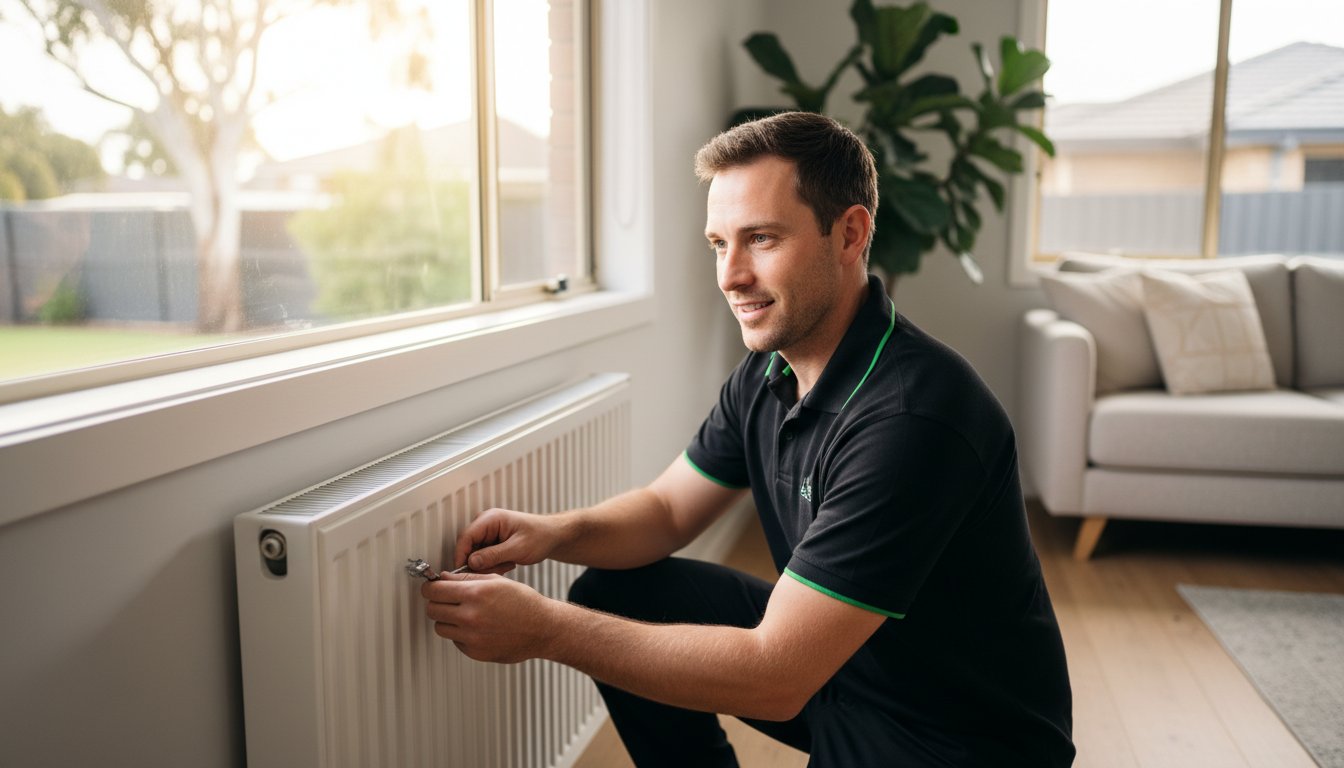
Air trapped in your system is a common culprit for inefficiency. If you notice your radiator panels or hydronic towel rails are cold at the top but warm at the bottom, they likely need bleeding. Use a dedicated bleed key to slowly release the air until a small amount of water appears. It’s a quick fix that restores full heating capacity. Pay attention to your Thermostatic Radiator Valves (TRVs) as well. During the summer, leave these set to the maximum position. This prevents the internal pin from sticking, which often causes radiators to stay cold when you finally need them in winter. If you find “cold spots” at the bottom of the panel despite bleeding, this usually indicates a buildup of magnetite sludge.
System Pressure and Water Levels
Your system needs the right amount of water to circulate heat effectively. Locate the pressure gauge on your boiler or heat pump interface. For most Melbourne homes, the ideal range is between 1.0 and 1.5 bar when the system is cold. If the needle drops below 1.0 bar, your system might struggle to fire up or circulate water to upstairs radiators. You can often top this up yourself using the filling loop, which is typically a silver braided hose located underneath the boiler. Open the valves slowly until the pressure reaches the desired level. However, if you find yourself needing to do this frequently, it’s a sign of a leak or a failing expansion vessel. In these cases, you should contact a professional to prevent further damage.
The Professional Technical Checklist: What Experts Verify
While DIY checks provide a foundation, a professional Professional Technical Checklist ensures your system meets rigorous safety and performance benchmarks. In Victoria, AS/NZS gas safety standards aren’t just suggestions; they’re legal requirements that demand a licensed expert’s certification. A technician uses specialized flue gas analyzers to measure combustion efficiency. This ensures every megajoule of gas is converted into warmth rather than wasted. They also verify the integrity of safety valves and expansion vessels, which act as the system’s “lungs” to manage pressure fluctuations safely.
Testing the concentration of corrosion inhibitors is a non-negotiable step in a hydronic heating maintenance checklist. A technician uses a chemical test kit to ensure the water’s pH and inhibitor levels stay within the manufacturer’s specification. This prevents the electrochemical reaction between different metals in your system, such as copper pipes and steel radiator panels. Neglecting this leads to pinhole leaks that are often invisible until they cause significant property damage. If your system hasn’t been professionally assessed lately, it’s wise to consider professional system servicing to protect your investment.
Gas Boiler and Burner Diagnostics
Technicians open the boiler casing to clean the primary heat exchanger. Carbon buildup here can reduce efficiency by over 10%. They perform a critical carbon monoxide test to ensure no lethal gases escape into your living space. Flue integrity is checked for signs of corrosion or blockage. Finally, ignition components and flame sensors are tested for reliability. These small parts often fail during the first cold snap of the year, leaving you without heat when you need it most.
Electric Heat Pump Specific Checks
Modern air-to-water heat pumps require specialized care that differs from traditional boilers. Technicians clear debris from the outdoor unit’s evaporator coils; restricted airflow forces the compressor to work harder and shortens its lifespan. They verify refrigerant charge levels and monitor the defrost cycle. If the defrost sensor fails, the unit will turn into a block of ice during a Melbourne frost, stopping all heat delivery. Checking the fan motor operation ensures the system runs quietly and efficiently throughout the winter season.
System Health & Efficiency: The Power Flushing Checklist
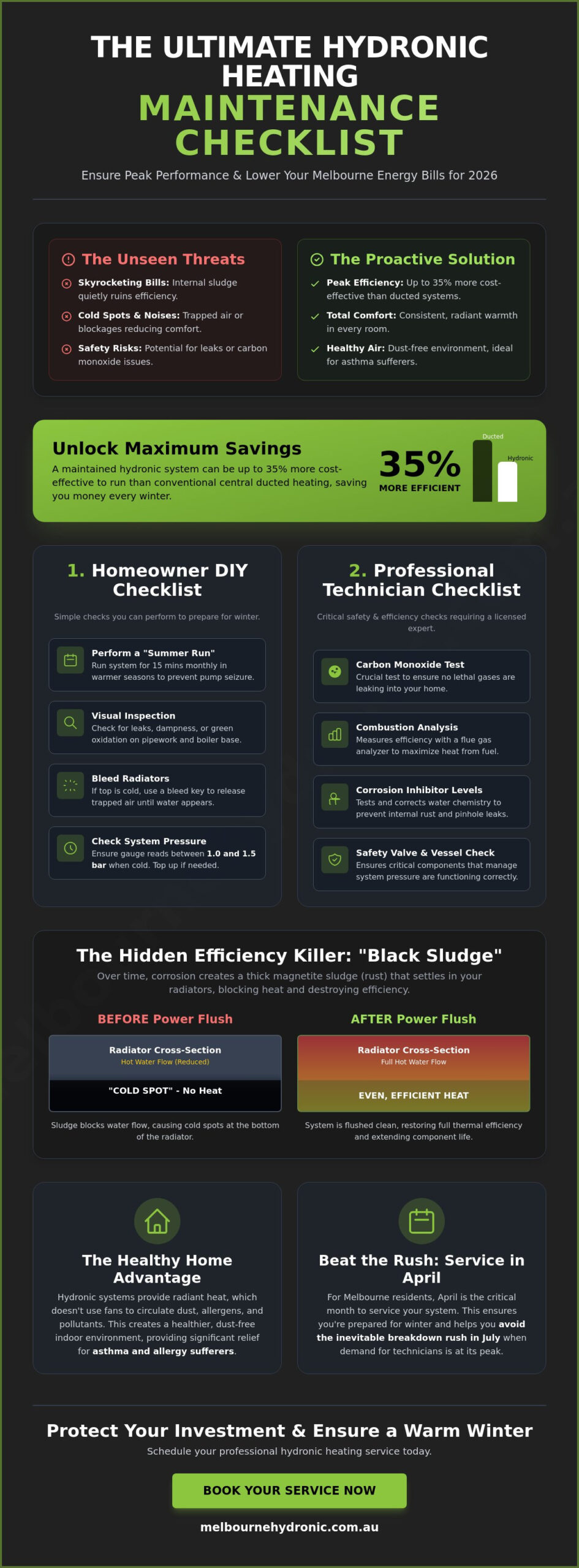
Your system’s internal hygiene is just as important as the external hardware. Over time, an oxide known as “Black Sludge” or magnetite can form within the pipework and radiator panels. This heavy, metallic debris settles in the lowest points of your system, creating a thick layer of insulation that prevents heat from reaching your living spaces. When this happens, your boiler or heat pump must work significantly harder to maintain the desired temperature. This inefficiency doesn’t just shorten the lifespan of your components; it directly contributes to rising energy costs in Victoria. Including a water quality check in your hydronic heating maintenance checklist is the only way to ensure your system retains its original thermal performance.
Protecting your warranty is another critical reason to prioritize internal cleaning. Most manufacturers of premium gas boilers and electric heat pumps stipulate that the system must be clean and treated with correct inhibitors to honor a warranty claim. If a heat exchanger fails due to sludge blockage, the repair costs can be substantial. Professional water treatment and power flushing act as an insurance policy for your home’s comfort. It’s a methodical process that restores the system to a “like-new” state, ensuring the water circulating through your floors and walls is clear and non-corrosive.
Warning Signs of Sludge Accumulation
Identifying a clogged system early can save you from a total mid-winter breakdown. Listen for “kettling” noises, which sound like a whistling or banging kettle coming from your boiler. This happens when sludge restricts water flow, causing the water remaining in the heat exchanger to overheat and turn to steam. You should also check your radiator panels. If they’re cold at the bottom but warm at the top, magnetite has likely settled at the base. Finally, if your home takes hours longer to reach a comfortable temperature than it did two years ago, your system is likely struggling with internal blockages.
The Power Flush Process
The Healthy Home Checklist: Asthma and Allergy Relief
Maintaining your system isn’t just about technical longevity; it’s about the air your family breathes. Traditional forced-air systems often act as a delivery mechanism for allergens, circulating dust, pollen, and pet dander through every room. Hydronic systems are the gold standard for asthma sufferers because they rely on radiant heat. This method warms objects and people directly without creating turbulent air currents. By adhering to a strict hydronic heating maintenance checklist, you ensure your home remains a sanctuary of clean air. This “No-Dust-Circulation” advantage is a primary reason why medical professionals often recommend radiant systems for patients with chronic respiratory conditions.
Moisture management is another vital part of the healthy home roadmap. Check the areas around your radiator panels and hydronic trench heating for any signs of dampness or condensation. While hydronic systems are sealed, a small leak can create localized humidity that encourages mould growth. Preventing these issues through regular inspection protects your respiratory health and ensures your home’s structural integrity. Consistent, gentle warmth also promotes better sleep quality. It prevents the “on-off” cycle of traditional heaters that can wake sensitive sleepers or cause night-time congestion.
Air Quality and Hygiene
Hidden dust reservoirs can accumulate in the narrow gaps behind radiator panels over several years. Part of your DIY cleaning routine should involve using a long-reach brush or compressed air to clear these spaces. This simple action maximizes the hygiene benefits of hydronic heating for allergy-prone families. If your system includes fan coils for targeted heating, you must check and clean the filters every six months. Clogged filters don’t just reduce airflow; they trap moisture and organic matter that can degrade indoor air quality. Clean filters ensure the air remains filtered and fresh throughout the winter months.
Comfort and Humidity Control
Forced-air heating often strips moisture from the air, leading to dry skin and irritated nasal passages. Radiant heat naturally maintains indoor humidity levels, which is far gentler on your respiratory system. To keep this balance, ensure your thermostats are serviced and calibrated. Accurate temperature control prevents the massive temperature swings that cause discomfort and waste energy. Integrating underfloor heating is especially effective at eliminating cold draughts at floor level. It provides a uniform heat profile from the ground up, ensuring a premium living experience without the dry, itchy eyes associated with conventional systems.
If you want to ensure your system is providing the healthiest environment possible for your family, book a health-focused system service today.
Scheduling Maintenance: The Melbourne Winter Timeline
Timing is everything when it comes to home comfort. In Melbourne, April is the critical month to finalize your hydronic heating maintenance checklist. By booking your service before the first frost hits, you secure the “Early Bird” advantage. This proactive approach helps you avoid the frantic July breakdown rush when technicians are at their busiest and wait times can stretch for weeks. A well-timed service ensures your system is primed for peak efficiency exactly when the Victorian temperatures begin to drop. It’s the difference between a relaxing winter and a stressful emergency repair call.
How often you need a professional depends on your specific setup. Gas boilers require an annual safety and efficiency check to comply with Victorian standards and ensure no carbon monoxide risks. Modern electric heat pumps also benefit from yearly inspections to maintain their high efficiency ratings and ensure the defrost cycle is functioning correctly. To make the most of your technician’s visit, prepare your home by clearing access to the boiler or outdoor unit. Ensure there’s a clear path to all radiator panels and towel rails. This simple step saves time and ensures a thorough inspection of every component in your system.
The Month-by-Month Roadmap
Following a seasonal schedule prevents unexpected mid-winter failures and keeps your energy bills predictable. We recommend this structured approach for Melbourne homeowners:
- February and March: Perform your DIY visual checks. Run the system for 15 minutes to circulate water and prevent pump seizure during the off-season.
- April: Book your professional hydronic heating service. This is the ideal window for technical diagnostics before the peak demand starts.
- May: Conduct a final test of all thermostats and TRVs. Ensure every room reaches its set temperature consistently before the first true cold snap of the year.
Record Keeping and Warranties
Maintaining a detailed service logbook is essential for preserving manufacturer warranties. If a component fails, proof of regular maintenance is often required for a successful claim. Choosing a provider with 30+ years of local experience ensures your system is handled with the technical precision required for Melbourne’s unique climate and architectural styles. If your unit is over 15 years old, it’s often more economical to request a quote for a boiler replacement rather than continuing with costly repairs on a declining system. Modern condensing boilers and heat pumps offer significantly higher efficiency, providing a premium living experience while lowering your long-term running costs.
Secure Your Winter Comfort for 2026
Taking control of your home’s heating doesn’t have to be overwhelming. By combining proactive DIY vigilance with a professional hydronic heating maintenance checklist, you’re doing more than just preventing breakdowns. You’re ensuring your system operates at peak technical precision, protecting your family’s respiratory health, and keeping energy costs under control. Whether you’re bleeding radiator panels or scheduling a deep system power flush, every step you take adds years to your system’s life and enhances your daily comfort.
As a family owned and operated Victorian business with over 30 years of local Melbourne experience, we understand the technical nuances of both traditional gas boilers and modern electric heat pumps. Our specialists are dedicated to providing the precision and care your premium system deserves. Don’t wait for the first frost to discover a hidden issue. Book Your 2026 Hydronic Service with Melbourne Specialists and enjoy the peace of mind that comes with expert maintenance. Your warm, healthy, and efficient home is just a service call away.
Frequently Asked Questions
How often should I have my hydronic heating system serviced in Melbourne?
You should have your hydronic heating system professionally serviced every 12 months to ensure safety and efficiency. Melbourne’s climate requires reliable performance during the cold months, so scheduling a visit in April is ideal. Annual checks help identify small issues before they become expensive mid-winter failures. Regular servicing also ensures your system complies with Victorian gas safety regulations and keeps your manufacturer warranty valid.
Can I bleed my own hydronic radiators, or do I need a plumber?
You can safely bleed your own hydronic radiators using a standard bleed key without needing a professional. This simple task removes trapped air that causes cold spots at the top of your panels. If you find yourself bleeding the same radiator frequently, it might indicate a larger pressure issue or a leak. In those cases, a technical inspection is necessary to prevent damage to your boiler or heat pump.
Why is my hydronic heating making a loud banging or knocking noise?
Loud banging or knocking noises, often called “kettling,” usually signal a buildup of magnetite sludge or trapped air. When debris restricts water flow in the heat exchanger, the water can overheat and turn into steam bubbles that collapse loudly. This is a primary indicator that you need to consult your hydronic heating maintenance checklist and book a professional power flush. Ignoring these sounds can lead to a cracked heat exchanger and a total system shutdown.
What is the ideal water pressure for a hydronic heating boiler?
The ideal water pressure for most residential systems is between 1.0 and 1.5 bar when the system is cold. You can verify this by checking the pressure gauge on your boiler or heat pump interface. If the pressure drops below 1.0 bar, the system may fail to fire or circulate water to your radiators. While you can top up the pressure yourself using the filling loop, a constant drop suggests a leak that needs expert attention.
Will maintaining my hydronic system really lower my gas or electricity bills?
Regular maintenance significantly lowers your energy bills by ensuring the system operates at its peak thermal efficiency. A clean system with balanced flow doesn’t have to work as hard to reach your desired temperature, which reduces fuel or electricity consumption. Removing internal sludge can restore the system to its original performance levels. This prevents the wasteful “over-firing” that occurs when components are struggling against blockages or poor calibration.
What happens if I skip my annual hydronic heating service?
Skipping your annual service increases the risk of carbon monoxide leaks and sudden system failures during peak winter. Without regular checks, small leaks can lead to internal corrosion and expensive component damage. You’ll likely see a steady increase in your energy bills as efficiency declines over time. Most importantly, failing to maintain a service record can void your manufacturer warranty, leaving you unprotected if a major part like a compressor or heat exchanger fails.
Are electric heat pump hydronic systems harder to maintain than gas boilers?
Electric heat pump systems aren’t necessarily harder to maintain, but they require different technical checks than traditional gas boilers. While they don’t involve gas combustion, they require evaporator coil cleaning and refrigerant level monitoring to stay efficient. Technicians also verify the defrost cycle functionality, which is critical for Melbourne’s frosty mornings. Both systems require a professional approach, but heat pumps have fewer moving parts and no risk of carbon monoxide emissions.
Does hydronic heating maintenance help with indoor allergies?
Maintaining your hydronic system is essential for managing indoor allergies because it ensures the air remains still and dust-free. Unlike ducted systems, radiant heat doesn’t blow allergens around your home. Keeping your radiator panels clean and ensuring your hydronic heating maintenance checklist includes filter checks for fan coils prevents dust reservoirs from forming. This creates a much healthier environment for asthma sufferers and families with sensitive respiratory systems.