How to Bleed a Hydronic Radiator Panel: A 2026 Melbourne Homeowner’s Guide
Imagine waking up at 2:00 AM to a persistent, metallic gurgling sound echoing through your hallway just as the Melbourne frost begins to bite. You touch the top of your heating unit, only to find it’s stone cold despite your gas boiler running at 98% efficiency. This common frustration means air is trapped in your system, but you don’t always need a licensed professional for this specific fix. Learning how to bleed a hydronic radiator panel is a simple, ten-minute skill that restores your home’s silent, dust-free comfort before the 2026 winter peak arrives.
We know you value the luxury of a healthy, radiant home and want to avoid the high energy costs associated with air-locked heaters. By following this expert guide, you’ll master the process of removing trapped air safely to bring your panels back to their optimal 75-degree operating temperature. We will cover the essential tools, the precise technique to protect your floors from water damage, and how these maintenance steps fit into Victoria’s shifting energy landscape and rental standards.
Key Takeaways
- Identify signs of trapped air like cold spots and gurgling to ensure your system is ready for the Victorian winter.
- Learn how to bleed a hydronic radiator panel safely by starting with the unit furthest from your boiler to maximize air removal.
- Understand why checking your manometer pressure after bleeding is essential to maintaining the longevity of your Bosch or Baxi boiler.
- Discover the difference between simple trapped air and system sludge to protect your home from the corrosive effects of magnetite.
- Gain the confidence to restore peak energy efficiency and silent, dust-free heating without the need for an immediate service call.
Why Bleeding Your Radiators is Essential for Melbourne Homes
Bleeding is the technical term for releasing air pockets trapped within your sealed heating circuit. When you learn how to bleed a hydronic radiator panel, you’re essentially opening a small radiator bleed valve to let out air that has displaced the hot water. In Melbourne’s high-performance systems, air typically enters through pump cavitation or when you top up the system with fresh Victorian tap water. This fresh water contains dissolved oxygen that is released as the system heats to its standard 75-degree operating temperature, eventually gathering at the highest points of your panels.
Air acts as a stubborn thermal insulator. Because air is lighter than water, it floats to the top of the panel, creating a barrier that prevents hot water from filling the entire unit. This results in the classic “cold top” symptom. Your heating source, whether it’s a 98% efficient gas boiler or a 400% efficient electric heat pump, will continue to consume energy to reach your thermostat’s set point. However, since the panel isn’t fully radiating heat, the system runs for longer cycles. This inefficiency doesn’t just spike your energy bills; it causes unnecessary mechanical wear on your pumps and valves.
Signs Your System Needs Attention Before Winter
Listen closely to your home as the temperature drops. If you hear persistent gurgling, metallic banging, or pipes clanking when the system fires up, air is likely moving through the lines. This is a frequent issue in double-storey Melbourne residences, where air naturally migrates to the upstairs bedrooms. A quick physical touch-test is your best diagnostic tool. If the bottom of the panel feels warm but the top remains stone-cold, you’ve confirmed an air blockage that requires immediate attention.
The Health Connection: Dust and Allergies
One of the primary reasons Melbourne families invest in this technology is for its pormentes, or dust-free, operation. Unlike ducted heating that forcefully circulates dust and allergens, hydronic panels provide gentle radiant heat. If you’re new to this premium comfort, our beginner’s guide to hydronic heating explains why this is the gold standard for asthma and allergy sufferers. Maintaining a fully bled system ensures this health benefit remains consistent, as a balanced system prevents the temperature fluctuations that can lead to dampness or uneven air quality in the home.
Tools You Need to Bleed a Hydronic Radiator
Gathering the right kit is the first step toward a warmer, quieter home. While the process is straightforward, having the correct equipment prevents messy accidents and protects your property’s value. The most critical item is a standard radiator key. These are small, inexpensive brass or steel tools designed to fit the square-shaped nut on most modern Victorian installations. If you’ve misplaced yours, a small flat-head screwdriver often works as a reliable substitute for many European-style valves found in Melbourne homes.
Protection is just as important as the tool itself. You’ll need a heavy-duty towel and a small container to catch any escaping water. For those living in premium Melbourne homes with heritage Jarrah or Victorian ash flooring, we recommend an advanced reservoir bleed tool. This specialized device clips onto the valve and catches the water in a small tank, ensuring not a single drop of black water touches your floorboards. If you’re unsure about your specific setup, you can always consult a local expert for advice on your system’s unique requirements.
Where to Find Your Bleed Valves
Most radiator panels feature a small bleed valve at one of the top corners. It typically looks like a small round plug with a square nut in the center. In some modern 2026 high-efficiency systems, you might encounter “automatic” air vents that handle this process for you. However, manual valves remain the standard for most residential panels. Before you begin learning how to bleed a hydronic radiator panel, ensure the entire heating system is turned off and the water has cooled. Working on a running system can introduce more air into the circuit or cause the pump to cavitate, potentially leading to expensive repairs.
Protecting Your Home During the Process
The water inside your heating system isn’t the clear tap water you might expect. Over time, internal components can produce magnetite, a fine, black metallic sludge. This liquid can permanently stain wool carpets or porous stone tiles if it’s allowed to spray. To prevent this, never fully remove the bleed screw from the valve body. A half-turn is usually enough to release the air. If you’re working in the narrow hallways of a classic Melbourne terrace house, take extra care to position your towel against the wall to catch any horizontal spray. Once the air is gone and a steady stream of water appears, close the valve firmly but don’t over-tighten it. After you’ve finished all panels, remember to check your boiler pressure to ensure the system remains within its safe operating range.
Step-by-Step Guide: How to Bleed Your Radiator Panel
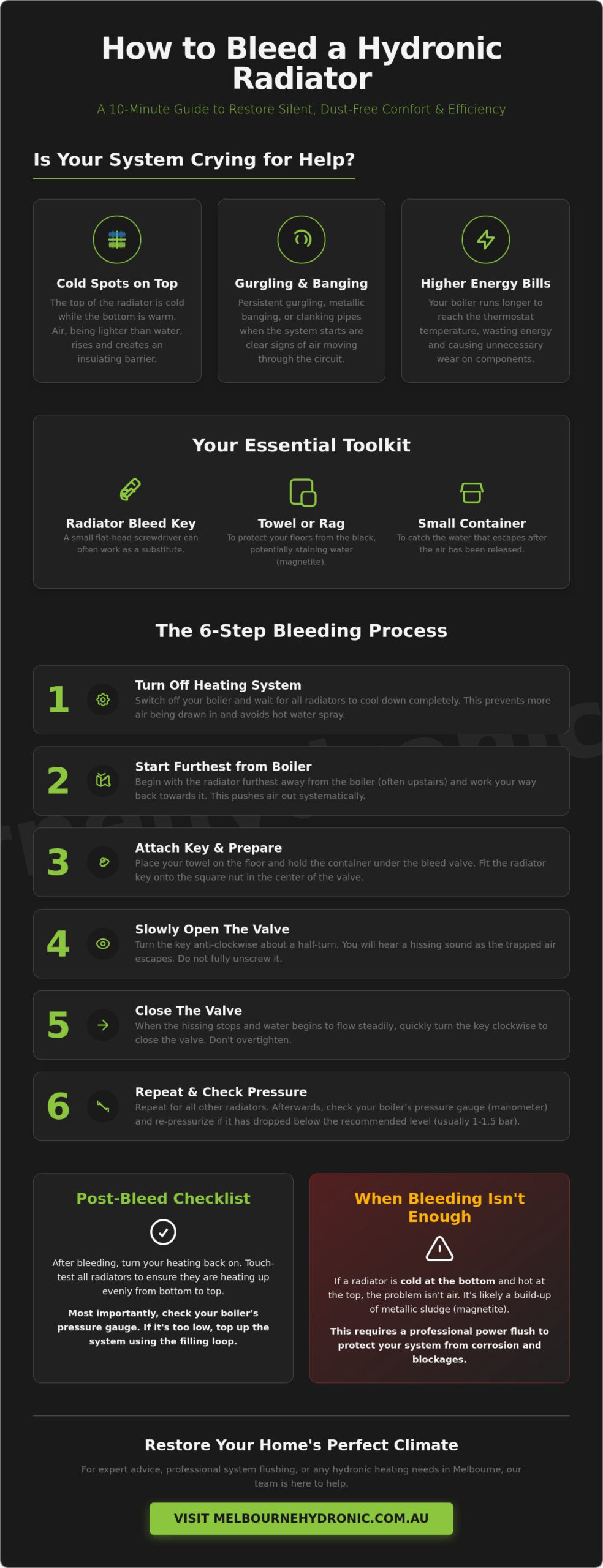
Once your tools are ready, it’s time to execute the procedure with precision. Before touching any valves, turn off your central heating system at the thermostat or boiler. Wait at least 60 minutes for the water to cool completely. Skipping this step risks serious burns, as water in these systems often reaches 75 degrees Celsius during peak operation. Cooling also allows the pump to stop, which prevents more air from being sucked into the circuit while you work.
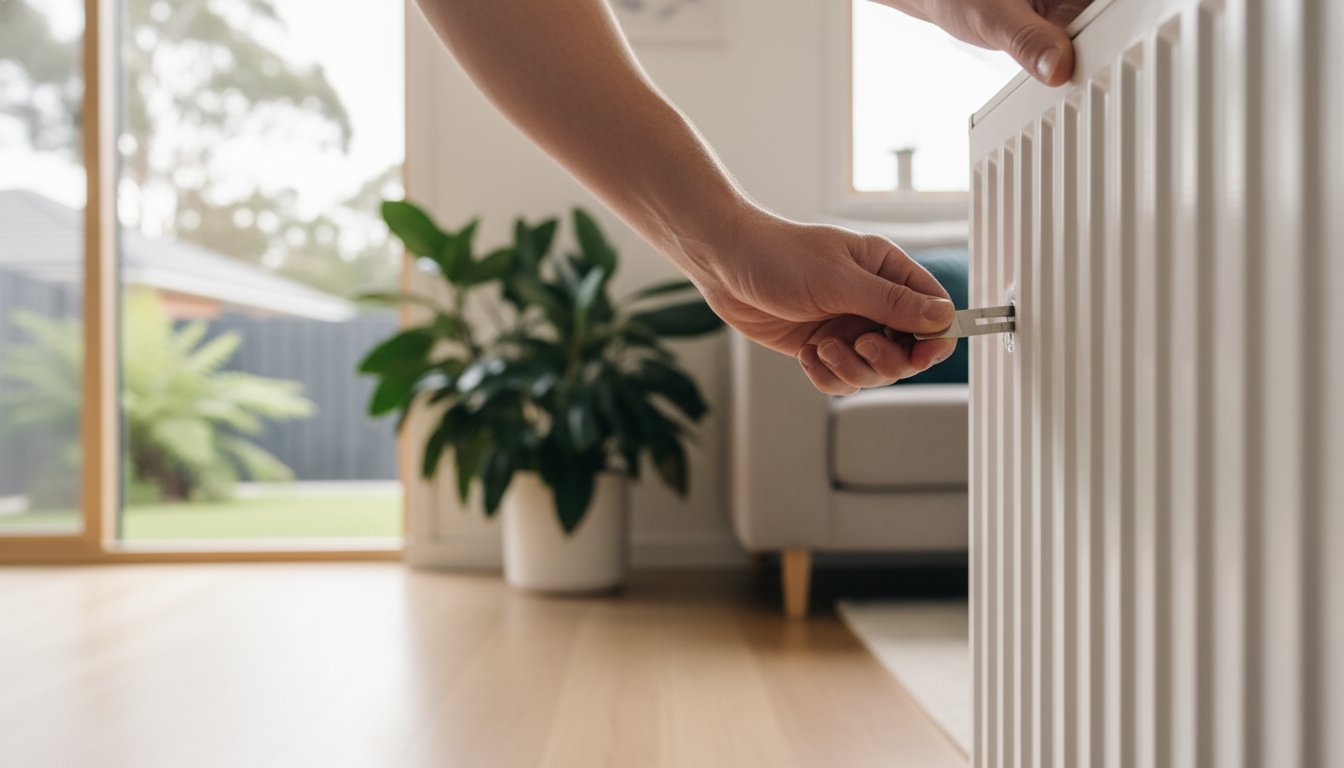
Start with the radiator furthest away from your boiler. In most Melbourne homes, this is usually located on the ground floor at the opposite end of the house. Insert your radiator key into the square bleed screw. Grip your towel or reservoir tool tightly against the valve to catch any spray. Turn the key slowly anti-clockwise. You don’t need much force; a half-turn is usually sufficient to begin the process. This is the core of how to bleed a hydronic radiator panel: you’ll hear a distinct hissing sound as the trapped air finally escapes.
Keep the valve open until the hissing stops and a steady, solid stream of water emerges. This indicates that all air has been purged from that specific panel. Close the valve immediately by turning the key clockwise. Tighten it until you feel firm resistance, but avoid using excessive force. Repeat this process for every radiator in your home, moving systematically toward the boiler.
The Order of Operations for Multi-Storey Homes
In double-storey Melbourne residences, logic dictates the flow. You must always finish the entire ground floor before moving to the upper level. Because air is lighter than water, it naturally migrates to the highest points in your system. If you’re managing a large renovation or a new extension, our guide to hydronic heating panels provides deeper insights into how complex piping layouts affect air distribution. Following this bottom-to-top sequence ensures you aren’t just chasing air bubbles around the house.
Safety Precautions and Common Mistakes
Patience is your best tool. Never attempt to bleed a system while the pump is active, as this can introduce more air or cause pressure fluctuations that trigger a boiler fault code. If you find a bleed screw is stuck or has been painted over during a recent home refresh, don’t force it. Applying too much torque can snap the brass pin, leading to a high-pressure leak that requires a professional emergency call-out. If the valve doesn’t budge with moderate pressure, it’s safer to contact a specialist to replace the vent assembly entirely.
Post-Bleed Checklist: Managing Boiler Pressure
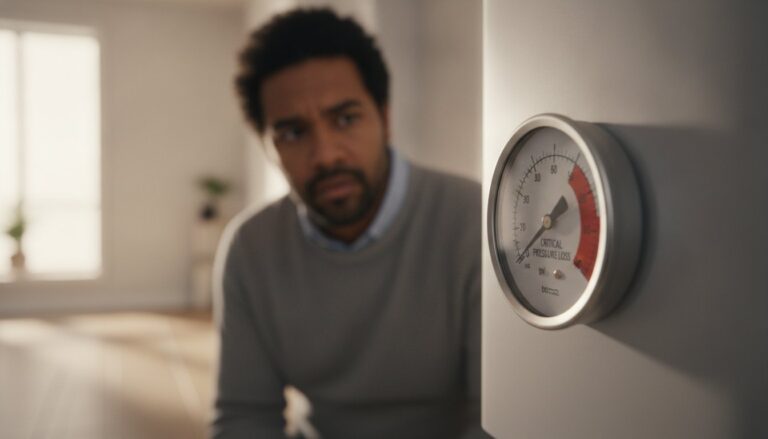
Bleeding the air out is only half the maintenance task. Every time you release a pocket of air, you’re removing volume from a sealed hydraulic circuit. This loss of volume results in a direct drop in system pressure. If the pressure falls below a certain threshold, your boiler or heat pump will enter a safety lockout mode to prevent internal damage. After you’ve mastered how to bleed a hydronic radiator panel, your final step is always to return to the main unit and check the manometer.
The manometer is the pressure gauge that tells you how much water is currently in the system. On popular Melbourne models like Baxi, Bosch, or Immergas, this is usually a small circular dial on the front or underside of the unit. Some 2026 models now feature a digital display instead of an analog needle. Regardless of the interface, you’re looking for the ‘Green Zone.’ For most residential installations in Victoria, the target pressure is between 1.0 and 1.5 bar when the water is cold. If the needle has dropped below 0.8 bar, your system is under-pressurised and won’t distribute heat effectively.
How to Re-Pressurise Your Hydronic System
To bring the pressure back up, you’ll need to use the filling loop. This is typically located directly beneath the boiler and consists of a flexible silver hose connected by two valves, often with black or blue handles. To add water, open both valves slowly and listen for the sound of flowing water. Watch the manometer needle rise steadily. Once it reaches 1.3 bar, close both valves firmly. It’s vital to ensure these are fully shut; leaving them even slightly cracked can lead to over-pressurisation, which will cause the safety valve to discharge water outside your home.
When the Pressure Won’t Stay Up
If you find yourself needing to top up the water pressure more than once or twice a year, you likely have a deeper mechanical issue. A needle that won’t stay in the green zone often indicates a failing internal expansion vessel or a hidden leak within your underfloor pipework. Frequent air build-up is also a symptom of a system that isn’t fully sealed. If your panels require constant attention, refer to our hydronic heating service guide to understand how a professional technician can pressure-test your entire home circuit. For immediate peace of mind before the winter rush, book a comprehensive system health check with our specialist team.
When Bleeding Isn’t Enough: Solving Stubborn Cold Spots
Sometimes, even after you’ve mastered how to bleed a hydronic radiator panel, your heater remains stubbornly lukewarm. If your diagnostics show that the panel is cold at the top, air was the culprit. However, if the panel is hot at the top but stone-cold at the bottom or in the center, you’re likely dealing with system sludge. This sludge is a dense byproduct of internal corrosion known as magnetite. It settles at the base of the radiator, creating a physical barrier that prevents hot water from circulating through the internal channels.
Magnetite is a black, metallic oxide that acts like liquid sandpaper within your heating circuit. As this debris circulates, it can cause catastrophic damage to the high-precision pumps in your Bosch boiler or the delicate heat exchangers in a 400% efficient heat pump system. Beyond sludge, a common mechanical issue involves the Thermostatic Radiator Valve (TRV). The small copper pin inside the valve can become stuck in the closed position after sitting idle throughout a long Melbourne summer. If the pin won’t pop up, the radiator won’t heat up, regardless of how many times you attempt to bleed it.
What is Hydronic Power Flushing?
Power flushing is a high-velocity cleaning process that uses specialized external pumps and magnetic filters to strip magnetite from your pipework. In older Melbourne suburbs like Carlton or Camberwell, where cast iron radiators or older steel panels have been in service for decades, this debris build-up is incredibly common. A professional power flush restores the silent, pormentes, or dust-free, flow that makes hydronic heating a premium choice. This process typically restores system efficiency by up to 15%, ensuring your boiler doesn’t work overtime to combat internal blockages.
Booking Your Annual Melbourne Hydronic Heating Service
While basic DIY maintenance is helpful, a professional annual service includes a critical inhibitor level check. This chemical treatment is added to the water to coat the inside of your pipes, preventing the chemical reaction that creates air and sludge in the first place. The Melbourne Hydronic Heating team brings over 30 years of local expertise to every Victorian home, ensuring your installation meets the high standards required for comfort and safety. We understand that a healthy home is a quiet, warm, and allergy-friendly one. Book your 2026 system service with our Melbourne team today to guarantee a worry-free winter and protect your investment for years to come.
Preparing Your Home for a Seamless Winter
Mastering the basics of how to bleed a hydronic radiator panel ensures your home remains a sanctuary of silent, dust-free warmth. You now have the skills to identify trapped air, manage your boiler’s manometer, and recognize when stubborn cold spots indicate a deeper magnetite issue. These simple maintenance steps protect your system’s efficiency and keep your energy bills manageable throughout the Victorian winter.
While DIY care is vital, complex systems require a seasoned eye to maintain peak performance and safety standards. As a family-owned Victorian business with over 30 years of local experience, we are specialists in high-efficiency boilers and modern heat pump technology. Don’t let minor air bubbles turn into major repairs. Book a Professional Hydronic Service in Melbourne & Geelong to ensure your system is fully optimized for the year ahead. Your comfort is our priority, and we’re here to help you transition into a cozy, worry-free season.
Frequently Asked Questions
How often should I bleed my hydronic radiators in Melbourne?
You should check your radiators once a year, typically in autumn before the first frost hits. Most Melbourne systems only require bleeding if you notice cold spots or hear gurgling noises. If you find yourself needing to do this more than twice a year, your system may have a slow leak or a faulty expansion vessel that needs professional attention.
Can I bleed a radiator while the heating is turned on?
No, you must always turn your heating system off and allow it to cool for at least 60 minutes. Bleeding a radiator while the pump is running can actually draw more air into the system. Additionally, the water inside can reach 75 degrees Celsius, posing a significant risk of scalding if it sprays out under pressure.
Why is the water coming out of my radiator black?
Black water indicates the presence of magnetite, which is a fine metallic sludge caused by internal corrosion. While it looks alarming, it’s a common byproduct in older Victorian systems. If the water is thick or gritty, it’s a clear sign that your system requires a professional power flush to protect your boiler and maintain efficiency.
What happens if I don’t bleed my radiators?
Neglecting this task leads to air pockets that block heat distribution, forcing your boiler to work harder and increasing your energy bills. Over time, trapped air contributes to internal corrosion and the buildup of magnetite. This can eventually lead to pump failure or damage to your heat exchanger, resulting in expensive emergency repairs during the peak of winter.
My radiator is still cold at the bottom after bleeding—what’s wrong?
A radiator that is cold at the bottom but warm at the top usually indicates a buildup of sludge rather than trapped air. Learning how to bleed a hydronic radiator panel only solves issues at the top of the unit. If the bottom remains cold, heavy magnetite has settled at the base and is blocking the flow, which requires a professional service to resolve.
Do I need a special tool to bleed my radiators, or can I use a screwdriver?
Most modern panels in Melbourne use a standard brass radiator key with a square socket. However, many European-style valves are designed with a slot that allows you to use a flat-head screwdriver. It’s always best to use a dedicated key if possible, as it provides a more secure grip and reduces the risk of rounding off the valve nut.
How do I know if my boiler pressure is too low after bleeding?
Check the manometer gauge on your boiler; if the needle is below 1.0 bar, the pressure is too low. Bleeding air removes volume from the system, which naturally causes the pressure to drop. You’ll need to use the filling loop to top it back up to the 1.3 to 1.5 bar range to ensure the system operates correctly and doesn’t trigger a fault code.
Should I bleed the radiators every time I turn on the heating for winter?
You don’t need to bleed them every time you use the heater, only once at the start of the season or when symptoms occur. A healthy, sealed system should hold its pressure and remain air-free for long periods. If you’ve mastered how to bleed a hydronic radiator panel, a quick check in April or May is usually enough to guarantee a silent and warm home for the rest of the year.