How to Balance Hydronic Radiators: A Practical Homeowner’s Guide
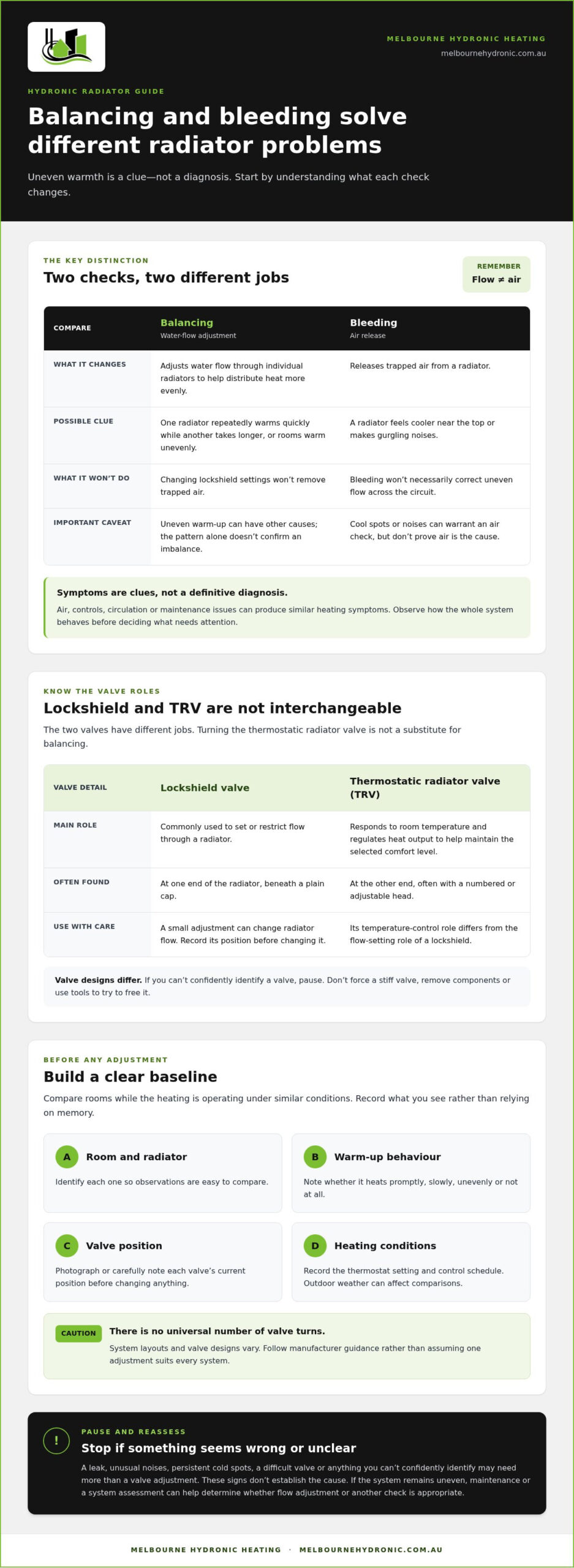
What if the radiator that heats first is part of the reason another room stays cold? If you’re trying to work out how to balance hydronic radiators, uneven warmth can make it tempting to keep turning valves until the system feels right. But balancing isn’t the same as bleeding: bleeding releases trapped air, while balancing adjusts water flow through the radiators.
Effective balancing starts with observing how the system heats, not relying on a universal number of valve turns. This guide explains what balancing can change, what it can’t fix, and how to make simple checks cautiously without making performance worse or overlooking another fault. You’ll learn what to watch for, why a radiator that stays cool may need more than an adjustment, and when professional maintenance or power flushing may be the better next step. Melbourne Hydronic Heating services hydronic systems across Melbourne and Geelong, where system layouts and controls can vary. The aim is practical: help you understand uneven heating and know when it’s time for expert support.
Key Takeaways
- Learn how to balance hydronic radiators by observing how each room warms, making small adjustments, and reassessing rather than relying on a set number of valve turns.
- Record existing valve positions and note which radiators heat slowly or unevenly before changing anything.
- Balancing adjusts water flow; trapped air, controls, circulation, or maintenance issues may need different checks.
- Use symptoms as clues, not a definitive diagnosis, when deciding whether a valve adjustment is appropriate.
- System design and layout can affect results. Servicing or power flushing may help address maintenance issues affecting warmth in Melbourne or Geelong.
How to balance hydronic radiators and recognise an imbalance
Hydronic radiator balancing means adjusting water flow through individual radiators so heat is distributed more evenly throughout the home. If one radiator warms quickly while another takes much longer, flow may be uneven. That pattern alone, however, doesn’t confirm that balancing is the cause.
Look for a recurring difference rather than judging the system during a single start-up. A living room may warm promptly while a bedroom stays cool, or some radiators may heat inconsistently while the system is running. These clues help you describe the problem, but air, controls, circulation or maintenance issues can produce similar symptoms. The principle of sharing flow appropriately across a system is outlined in Hydronic balancing.
What radiator balancing changes in a hydronic system
Water flows through the heating circuit, and the amount reaching each radiator affects how readily it releases heat into a room. Balancing changes flow through individual radiators to improve heat distribution across the system. A common adjustment point is the lockshield valve, usually covered by a cap and intended to regulate flow.
A lockshield isn’t the same as a thermostatic radiator valve (TRV). A TRV responds to room temperature and regulates heat output to help maintain the selected comfort level. The lockshield is commonly used to set or restrict radiator flow. Because their roles differ, turning the TRV isn’t a substitute for balancing.
How balancing differs from bleeding a radiator
Bleeding releases trapped air from a radiator; balancing adjusts water flow between radiators. Air is one possible cause of poor heating. For example, a radiator that feels cooler near the top or makes gurgling noises could warrant an air check, but neither clue proves that air is present or rules out another fault.
Bleeding may help if trapped air is affecting a radiator, but it won’t necessarily correct uneven flow across the circuit. Changing lockshield settings won’t remove air either. Understanding how to balance hydronic radiators starts with noticing how the whole system behaves, not assuming every cool radiator needs the same fix. If an imbalance remains after appropriate checks, a system assessment can help determine whether flow adjustment or maintenance is the more suitable next step.
What to check before adjusting hydronic radiator valves
A clear baseline helps you spot patterns and keep track of each valve’s original setting. Before making an adjustment, note which rooms feel cold and which radiators warm slowly, heat unevenly or stay cool. Check the radiator and heating system manufacturers’ instructions where available. Valve layouts and recommended procedures vary, so don’t assume one approach suits every system.
Identify the radiator valves without forcing them
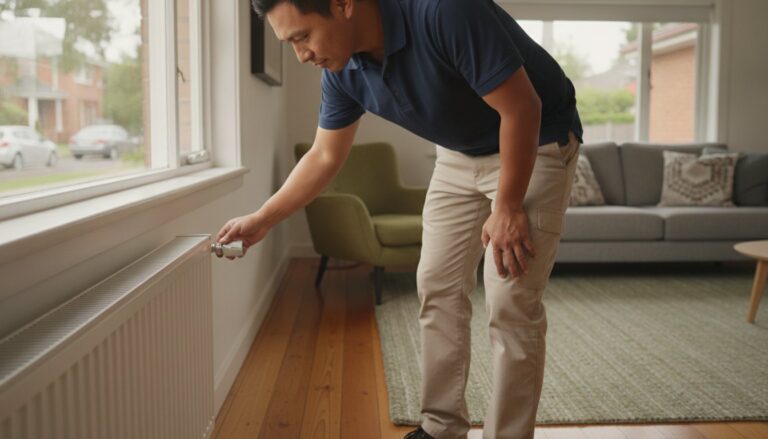
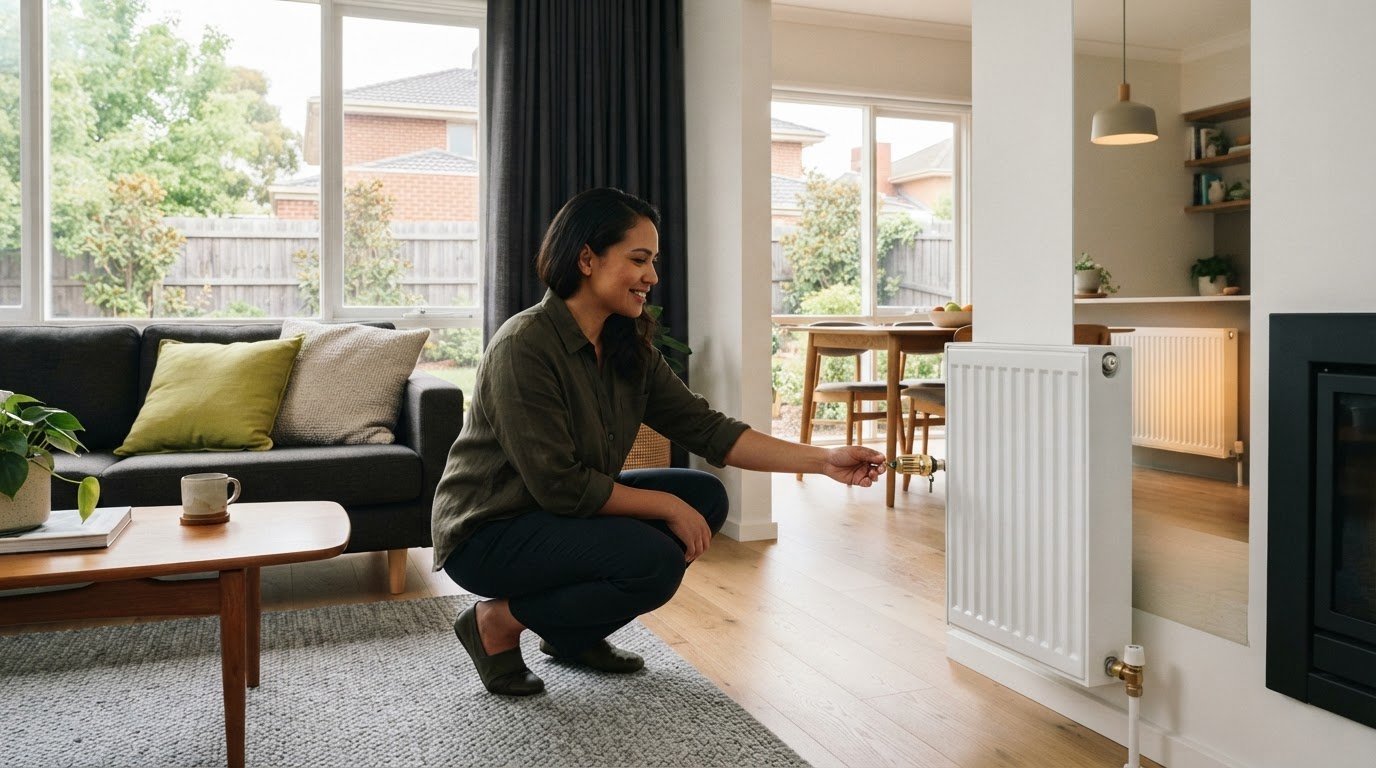
A thermostatic radiator valve (TRV) is often fitted at one end of a radiator and may have a numbered or adjustable head. The lockshield is commonly at the other end, beneath a plain cap. Designs differ, and covers can hide a valve’s function. If you can’t identify the valves confidently, pause. Don’t force a stiff valve, remove components or use tools to try to free it.
Record room temperatures and warm-up patterns
Compare rooms while the heating is operating under similar conditions. Note the thermostat setting and control schedule, then record which radiators begin warming first, which take longer and whether any areas remain cool. Outdoor weather and changes to system controls can affect your observations, so don’t compare a mild day with a much colder one as if conditions were identical.
A simple checklist is enough to start:
- Room and radiator: Identify each one so observations are easy to compare.
- Warm-up behaviour: Record whether it heats promptly, slowly, unevenly or not at all.
- Valve position: Photograph or carefully note each valve’s current position before changing anything.
- Conditions: Include the thermostat setting and any relevant control changes.
Take particular care with the lockshield. A small adjustment can change the flow through that radiator, and without a record it can be difficult to tell what changed. Follow manufacturer guidance rather than relying on a universal number of turns.
Stop if you notice a leak, unusual noises, persistent cold spots or anything you can’t confidently identify. These signs don’t establish the cause, and adjusting a valve may not address the underlying issue. If the system remains uneven or a valve is difficult to operate, hydronic system maintenance can help assess it before further changes are made.
How to balance hydronic radiators step by step
Balancing is a process of observation and controlled adjustment, not a matter of turning every valve by the same amount. The right response depends on the system, radiator layout and valve design. Follow the manufacturer’s instructions where available, and treat these stages as a cautious overview rather than a universal setting formula.
- 1. Observe. Run the heating under consistent conditions and refer to your notes. Look for radiators that repeatedly warm more slowly or rooms that remain less comfortable than others.
- 2. Identify. Confirm which valve is the lockshield and which is the thermostatic radiator valve (TRV). If you can’t distinguish them or a valve appears damaged or stuck, don’t adjust it.
- 3. Adjust minimally. Choose one radiator, record its starting position and make only a small change to its lockshield. Don’t change several valves at once, or you won’t know which adjustment affected the result.
- 4. Allow the system to respond. Let the heating operate long enough for the change to become observable. There’s no single waiting time that suits every system, so follow system guidance and avoid judging the result immediately.
- 5. Reassess. Compare the radiator’s warm-up pattern and room comfort with your original observations. Record what changed before deciding whether another adjustment is appropriate.
Make small, recorded lockshield adjustments
Write down or photograph the lockshield’s starting position before touching it. Make one modest change, then note what you did and which radiator you changed. Valve response can vary between radiators and systems, so a setting that appears to help one radiator may not suit another. Don’t rely on a universal turn count or temperature target; use the system’s own guidance.
Allow time for the system to respond and reassess
Keep the thermostat and heating controls consistent while assessing the change. Compare the same rooms and radiators you observed before, paying attention to warm-up behaviour and comfort rather than expecting every radiator to feel identical. If the result worsens or remains unclear, restore the recorded setting if you can do so safely, then stop experimenting. Repeated guesswork can make the original pattern harder to understand.
These steps can help you make a careful, observable adjustment, but they can’t resolve every cause of uneven heating. If the pattern persists after a cautious attempt, system servicing can help identify whether the issue relates to flow, controls, circulation or another maintenance need. When learning how to balance hydronic radiators, make a measured change and reassess clearly rather than turning valves repeatedly.
Can you balance hydronic radiators yourself, or is it another fault?
A cautious valve adjustment may be a reasonable first check if radiators repeatedly warm at different rates, but similar symptoms can have other causes. Use what you observe to guide the next check, not to diagnose the system by appearance alone. Balancing changes flow distribution; it can’t repair a leak, faulty control, blocked pipework or equipment failure.
When radiator balancing may be a reasonable first check
If the heating operates normally but one radiator consistently warms more slowly than others, flow imbalance may be worth investigating. Start with your observations, follow the system and radiator manufacturers’ instructions, and make careful changes only to a valve you can identify confidently. Don’t force stiff fittings or treat a change in one radiator as proof that you’ve found the cause.
| What you notice | A sensible next check |
|---|---|
| Radiators warm at noticeably different rates | Compare their behaviour under consistent heating conditions; flow distribution may be worth checking. |
| A radiator is cool or heats unevenly | Consider whether air or a local control issue may be involved. The symptom alone doesn’t confirm either cause. |
| Several radiators stay cold or performance worsens | Stop adjusting valves and arrange a system assessment for circulation or maintenance concerns. |
| You see a leak or hear unusual noises | Don’t attempt to balance around the problem. Seek professional advice. |
Signs the issue may need professional system assessment
Recurring cold radiators, persistent unusual noises, leaks or worsening performance are reasons to stop experimenting. Sludge buildup, including magnetite, or circulation problems may affect more than one radiator and can require a maintenance assessment. Balancing alone won’t clear blocked pipework or repair a failed component. If changes don’t improve comfort, restore recorded valve settings where safe and avoid repeated guesswork.
Melbourne Hydronic Heating provides hydronic servicing and repairs across Melbourne and Geelong. For further guidance on faults and maintenance, read the hydronic heating service and repair guide. If uneven heating persists, arrange hydronic system servicing to help identify whether the issue calls for adjustment or broader maintenance.
Keep hydronic radiator performance reliable in Melbourne and Geelong
Hydronic systems vary from home to home, so an adjustment that suits one radiator circuit may not suit another. System design, pipe layout, radiator type, heating controls and heat-source settings can all affect how quickly radiators warm and how evenly they heat rooms. That’s why how to balance hydronic radiators is best approached as a system-specific process, not a fixed recipe.
Why property and system differences matter
An older home, a renovated property and a system with a different pipe layout may each behave differently. Radiator size and design can influence how warmth feels in a room, while thermostat settings and heat-source operation affect the system’s overall response. Even homes with similar radiators may need different checks because of their controls and layouts. For more context on radiator panels and their role in a hydronic system, explore the hydronic radiator panels guide.
Keep notes on which rooms feel less comfortable and how radiators behave under consistent heating conditions. Those observations help distinguish a persistent pattern from a one-off change in weather or control settings. They’re useful clues, not a substitute for checking the system as a whole.
What a hydronic maintenance visit can help assess
If careful checks haven’t improved the pattern, repeated trial-and-error valve changes may make it harder to identify what’s happening. A system-level review can assess radiator performance alongside the layout, controls and heat source, and consider whether a maintenance issue may be affecting circulation. The appropriate next step depends on the system and its symptoms.
Melbourne Hydronic Heating provides hydronic servicing and repairs across Melbourne and Geelong, drawing on more than 30 years of hydronic heating experience. If your observations point to a problem beyond a cautious adjustment, explore the hydronic heating service guide for information about maintenance and repairs. It’s a practical next step when radiator checks haven’t restored the even warmth you’re looking for.
Restore even warmth with careful checks and expert support
Balanced hydronic heating starts with observation, not guesswork. Note which radiators warm slowly or unevenly, record their valve positions, and make only cautious, system-guided adjustments. Remember that bleeding releases trapped air, while balancing adjusts water flow. If uneven heating continues, the cause may involve controls, circulation or maintenance rather than radiator settings alone.
Knowing how to balance hydronic radiators can help you make informed initial checks, but it’s just as useful to recognise when to stop. Leaks, persistent cold radiators or unusual noises call for a closer system assessment, not more trial-and-error valve changes.
Melbourne Hydronic Heating provides hydronic servicing, repairs and power flushing across Melbourne and Geelong. If your checks haven’t restored comfortable, even warmth, explore hydronic heating service and repair support. Arrange a system assessment to help identify the next step towards reliable warmth at home.
Frequently Asked Questions
How do you balance hydronic radiators?
Balance hydronic radiators by observing how they heat, then making cautious, recorded adjustments to the lockshield valves to improve water flow distribution. Identify the valves first and follow the system or radiator manufacturer’s instructions. Adjust one radiator at a time, allow the system to respond, then compare its warm-up pattern with your notes. There’s no universal number of turns that suits every system, so stop if the result is unclear or performance worsens.
Should all radiators be the same temperature when balanced?
No. Balanced radiators don’t necessarily feel identical or reach the same temperature at the same moment. Radiator design, room size, system layout and heat demand can all affect how warmth feels in each space. The practical aim is more even, comfortable heating across the home, not matching surface temperatures. Compare room comfort and warm-up behaviour under consistent heating conditions, and use the system manufacturer’s guidance rather than an assumed temperature target.
Does balancing hydronic radiators mean bleeding them?
No. Balancing adjusts water flow through radiators, usually using lockshield valves, while bleeding releases trapped air from a radiator. Air may contribute to uneven heating, but symptoms such as cool areas or noises don’t confirm the cause on their own. Bleeding can help if air is present, but it won’t necessarily correct uneven flow between radiators. Treat these as different checks, and follow the system’s instructions before taking action.
Can I balance hydronic radiators myself?
You may be able to make cautious checks yourself if you can identify the valves and your manufacturer’s instructions support adjustment. Record each valve’s original position, change only one setting at a time, and reassess before making another change. Don’t force stiff fittings or remove valve components. If you notice leaks, unusual noises, persistent cold radiators or worsening performance, stop adjusting and arrange a system assessment instead.
How long does it take to balance hydronic radiators?
There’s no set timeframe because radiator layout, system design, controls and heat-source settings affect how the system responds. Allow it to operate long enough for any change to become observable before reassessing, and keep the thermostat and controls consistent while comparing results. Avoid making several adjustments in quick succession. If the pattern remains unclear, return to your recorded settings where safe and seek guidance rather than continuing by guesswork.
Why is one hydronic radiator hot while another stays cold?
Uneven radiator temperatures can relate to water-flow distribution, but other possibilities include trapped air, a radiator control issue, circulation problems or a maintenance fault. A hot radiator beside a cold one doesn’t prove that balancing is the answer. Note whether the issue affects one radiator or several, and whether it recurs under similar heating conditions. If checks don’t clarify the pattern, a system assessment can help identify the cause.
When should I call a hydronic heating technician in Melbourne?
Arrange a professional assessment if radiators remain cold after cautious checks, heating performance worsens, or you notice a leak or unusual noise. Persistent uneven warmth may involve circulation or maintenance issues that valve adjustments won’t resolve. Melbourne Hydronic Heating provides hydronic servicing, repairs and power flushing across Melbourne and Geelong. A system-level review can help determine an appropriate next step for your home.