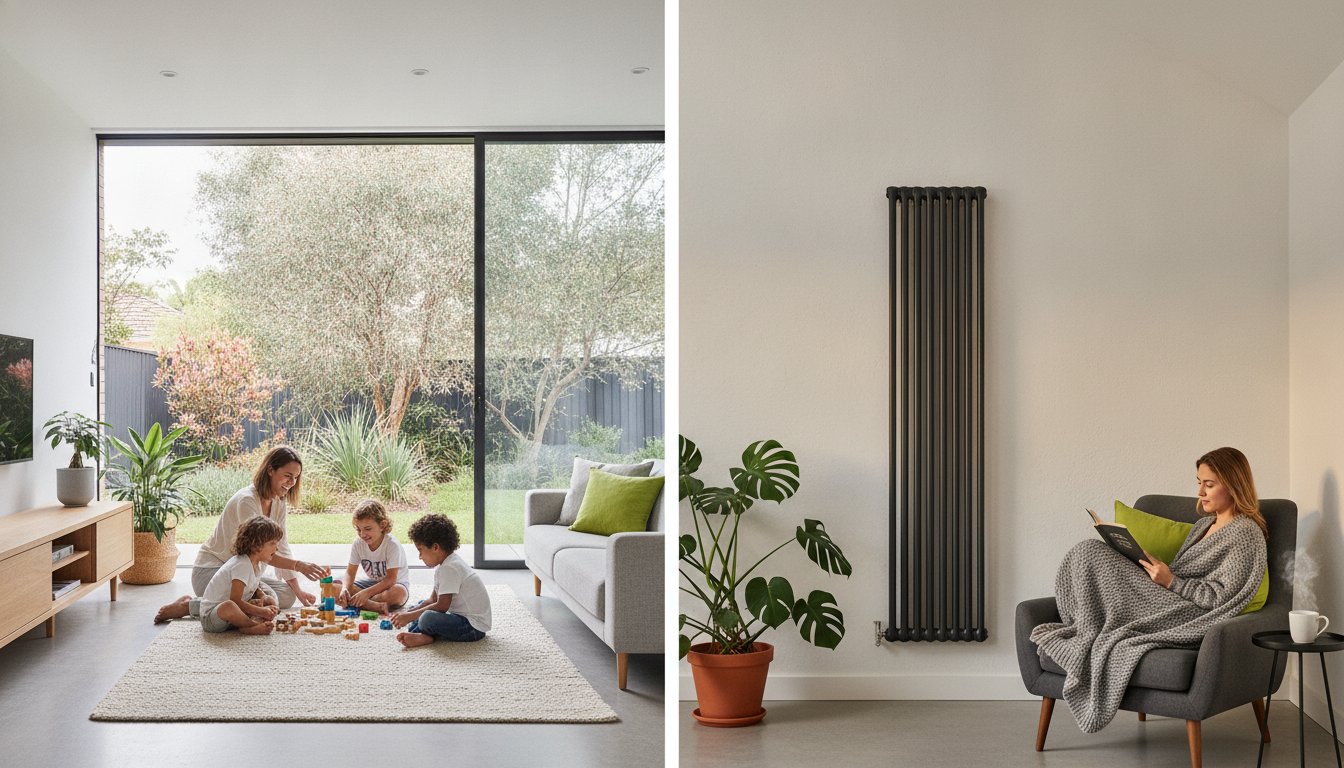
Underfloor Heating vs Radiators: Which is Best for Your Melbourne Home in 2026?
What if the most expensive part of your Melbourne winter isn’t the freezing outdoor temperature, but the inefficient way your home tries to fight it? If you live in a draughty Victorian home with high ceilings, you’ve likely spent years dealing with uneven heat and the sneezing fits triggered by traditional ducted systems. You aren’t alone in wanting a more sophisticated, health-conscious way to stay warm while gas prices continue to surge across Victoria.
Deciding between underfloor heating vs radiators melbourne families often consider involves more than just picking a heater; it’s about investing in a 25-year asset. We promise to provide a definitive comparison of comfort, installation, and long-term efficiency to help you choose the ideal hydronic solution. We’ll preview how electric heat pumps integrate with these systems to slash energy bills and provide a cleaner, allergen-free environment. Whether you’re retrofitting a heritage cottage or building a modern masterpiece, this guide identifies the system that best matches your architectural style and comfort goals.
Key Takeaways
- Hydronic systems provide silent, radiant warmth that significantly improves indoor air quality by eliminating the dust circulation associated with traditional ducted heating.
- Your home’s foundation plays a decisive role, as concrete slabs offer excellent thermal mass for floor coils while timber floors often suit radiator panel retrofits.
- Integrating an electric heat pump ensures your system is future-proof and highly efficient as Victoria transitions toward all-electric energy standards in 2026.
- When weighing the pros of underfloor heating vs radiators melbourne residents should consider practical lifestyle factors like furniture placement and the utility of heated towel rails.
- Heritage Victorian homes often benefit from the quick response times of radiators, whereas modern open-plan extensions achieve peak comfort through consistent underfloor heat.
Hydronic Comfort: Comparing Radiant Panels and Floor Heating
Understanding the science behind radiant heat is the first step in solving Melbourne’s unique winter challenges. Unlike traditional ducted systems that rely on convection, blowing hot air that quickly rises to your high Victorian ceilings, hydronic systems emit radiant energy. This energy travels in straight lines to warm objects and people directly. It’s the same sensation as standing in a patch of sunlight on a crisp morning. In large, open-plan Melbourne homes, this prevents the “cold spot” phenomenon where the center of a room remains chilly while the vents are pumping at full capacity.
For families dealing with asthma or seasonal allergies, the choice is clear. Hydronic systems are significantly more hygienic because they don’t use fans. There is no mechanical air movement to circulate dust, pollen, or pet dander throughout your living spaces. By choosing a silent, still-air heating method, you’re not just investing in warmth; you’re creating a healthier indoor environment that supports respiratory well-being during the damp winter months.
The “Feel” Factor: Uniformity vs. Zoned Warmth
When weighing up underfloor heating vs radiators melbourne homeowners often focus on how the heat is distributed. Underfloor heating systems provide a perfectly uniform vertical temperature gradient. Your feet stay warm while the air at head height remains slightly cooler, which is the biological ideal for human comfort. It offers a psychological sense of “barefoot luxury” that makes even the largest tiled or polished concrete areas feel inviting.
Radiators offer a different, more localized experience. They create cozy “warm zones” where you can physically feel the heat radiating from the panel. This is often preferred in bedrooms or reading nooks where you want a distinct sense of “hugging” warmth. Because Melbourne’s winter humidity can fluctuate, the penetrating nature of radiant panels helps maintain a consistent, dry warmth that prevents that “cloggy” feeling often associated with gas heaters.
Responsiveness and Heat-Up Times
The decision often comes down to your daily schedule. Hydronic underfloor systems installed in concrete slabs have high thermal mass. This means they take longer to heat up, sometimes several hours, but they also retain heat for much longer. This “thermal lag” is excellent for homes that are occupied all day, providing a steady, unbreakable baseline of warmth.
Radiators are the winners for “on-demand” comfort. They respond quickly, making them ideal for home offices or guest rooms that only need heating at specific times. We often design systems that use a hybrid approach, combining the efficiency of underfloor coils in main living areas with the responsiveness of radiator panels in upstairs bedrooms. This balance ensures your heat pump operates at peak efficiency without wasting energy on empty rooms.
Installation Realities: Retrofitting vs. New Builds in Melbourne
When deciding between underfloor heating vs radiators melbourne homeowners must first look beneath their feet. The physical structure of your house often dictates which system is the most practical. Melbourne is famous for its architectural diversity, ranging from double-brick Victorian terraces in Albert Park to sprawling modern builds in the outer suburbs. Each requires a different approach to installation to ensure you don’t compromise the integrity of your home’s design or your daily lifestyle.
A significant factor often overlooked is how you use your space. Underfloor systems are invisible, which is a major win for minimalist interiors where every centimeter of wall space counts. However, radiators offer a unique practical benefit many locals love: they serve as excellent secondary dryers for school uniforms or damp towels on a misty July morning. Choosing the right path is a key part of planning sustainable home heating that works for your specific floorplan.
Radiators: The King of the Melbourne Retrofit
If you’re living in a heritage home with original Baltic pine floorboards and ornate cornices, radiators are usually the superior choice. We use non-invasive pipework techniques that thread through subfloor spaces or behind skirting boards, meaning we don’t have to tear up your beautiful history. You can choose traditional cast iron styles to match a period aesthetic or sleek flat panels for a contemporary touch. Radiators are typically more cost-effective for renovations because they require less structural upheaval and can be installed room-by-room. If you’re unsure how a system might fit your layout, our team can provide a professional design consultation to map out the most efficient pipe runs.
Underfloor Heating: The New Build Standard
For new builds or major extensions with concrete slabs, hydronic underfloor heating is the gold standard. We install the poly-pipe coils directly into the structural slab or a thinner screed layer before the final floor finish goes down. This method is incredibly compatible with Melbourne’s favorite finishes, including large-format tiles, stone, and even specially rated engineered timbers. While it requires more forward planning for manifold locations and zone control, the result is a completely silent, draught-free environment. It’s the ultimate “set and forget” solution for modern open-plan living where you want consistent warmth without any visible hardware on the walls.
Energy Efficiency and 2026 Running Costs
The energy landscape in Victoria is undergoing a historic transformation. With the state government’s gas substitution roadmap in full effect, 2026 marks a critical turning point for Melbourne homeowners. From January 1, 2027, all new homes will be prohibited from connecting to the reticulated gas network. This shift makes electric heat pumps the primary heat source for any modern hydronic installation. When comparing underfloor heating vs radiators melbourne residents must understand that efficiency is directly tied to water temperature.
Electric heat pumps operate most efficiently when they don’t have to work hard to reach high temperatures. A system’s Coefficient of Performance (COP) measures this output. For every 1kW of electricity consumed, a high-quality heat pump can produce 3 to 4kW of heat. According to the Australian Government’s guide to heating, choosing the right system configuration is vital for long-term savings. Underfloor systems typically run at lower temperatures, around 35 to 45°C, allowing the heat pump to maintain a higher COP. Radiator panels traditionally require higher temperatures to be effective, which can make them 10% to 15% more expensive to run than their underfloor counterparts.
Maximizing Heat Pump Performance
Underfloor heating is the natural partner for heat pump technology because of its massive surface area. It doesn’t need scorching water to keep a room comfortable. If you prefer radiators, the 2026 best practice is to “oversize” the panels during the design phase. By installing larger radiators, you can achieve the same room temperature using cooler water. This keeps your heat pump in its most efficient operating range. Integrating a solar PV system allows you to run your heating during the day for free. It pays off. Smart thermostats and weather compensation sensors further reduce bills by automatically adjusting the system based on outdoor temperature changes; to explore more about high-standard climate control and system design, visit Urban Climate Solutions.
New Melbourne homes must now meet 7-star NatHERS requirements, focusing heavily on thermal performance and energy load. Hydronic systems are a powerful tool for meeting these strict standards. To encourage the switch, the Victorian Energy Upgrades (VEU) program offers significant rebates. For instance, homeowners can receive a rebate of up to $3,560 for replacing a gas ducted heater with an efficient electric alternative. While the initial investment for a heat pump is higher than a gas boiler, the long-term ROI is undeniable. These systems are 25-year assets that insulate you from rising gas tariffs while providing a sustainable, future-proof home. This global movement toward energy efficiency is exemplified by specialized installers like Alfa-Thermo, who focus on maximizing the performance of modern heat pump technology.
Living with a heating system involves more than just the temperature on a thermostat. It’s about how that system interacts with your daily routine and interior design. When comparing underfloor heating vs radiators melbourne families often find the “invisibility” of floor coils a major aesthetic benefit. It allows for complete freedom in furniture placement without the need to work around fixed panels. Conversely, modern designer radiator panels have evolved into sophisticated statement pieces. They offer a refined European look that can anchor a room’s style while providing that classic, cozy presence many homeowners still crave.
Beyond the look, radiators provide unique functional advantages during Melbourne’s notoriously grey winter months. They are incredibly useful as secondary heat sources for drying damp towels or warming up school uniforms on a misty morning. While you shouldn’t drape heavy, soaking wet items directly over them, the gentle warmth from hydronic towel rails and panels is a practical lifesaver for busy households. It’s a level of utility that underfloor systems, hidden beneath the floor finish, simply cannot provide.
Zoning and Personal Comfort
Zoning is where hydronic technology truly outshines traditional ducted air systems. Radiators can be fitted with individual Thermostatic Radiator Valves (TRVs). This allows you to set the master bedroom to a crisp 18°C for better sleep while keeping the nursery at a steady 22°C. In large Melbourne family homes, this granular control prevents energy waste in unoccupied rooms. The operation is entirely silent; there’s no rattling of ceiling vents or the constant “whoosh” of air that often disturbs light sleepers. If you’re planning a renovation, you can consult our team for a customized zoning plan that fits your family’s schedule.
Durability and Future-Proofing
A professionally designed hydronic system is a genuine 25-year asset. While air-based split systems often require replacement after a decade, hydronic components are built for longevity. This durability significantly boosts property resale value, as savvy Melbourne buyers recognize the premium comfort and lower long-term running costs. To protect this investment, scheduling a regular hydronic heating service melbourne is essential. This maintenance, which includes power flushing to remove debris and manifold servicing, ensures the system operates at peak efficiency for generations. Unlike air-based systems that lose efficiency as filters clog, a well-maintained hydronic system remains a consistent performer throughout its long life.
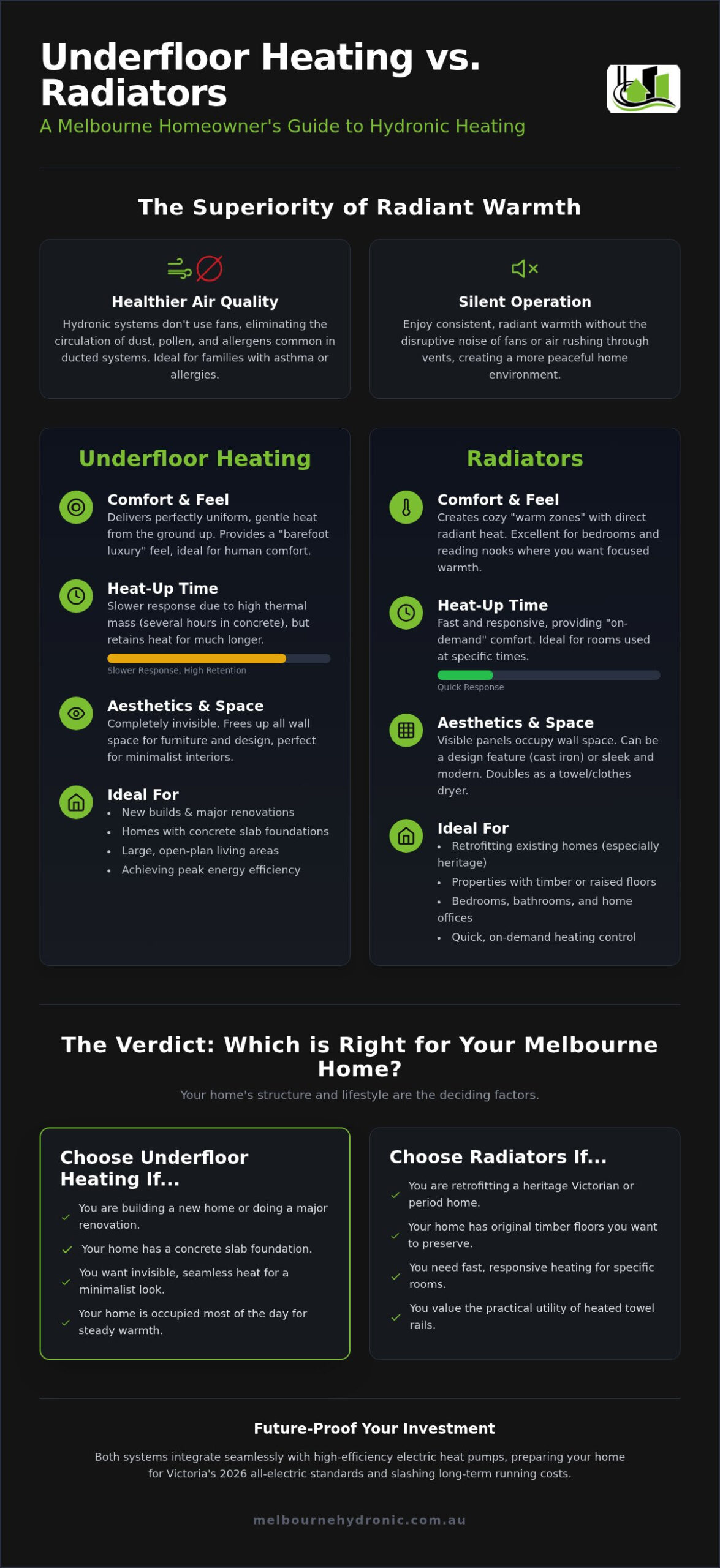
The Verdict: Choosing for Your Property Type
The final decision on underfloor heating vs radiators melbourne families make usually rests on the specific architectural bones of their home. Every property type in Victoria presents a different set of thermal challenges. A heritage weatherboard cottage in Geelong has vastly different insulation needs compared to a glass-fronted modern build in Toorak. By matching the system to the structure, you ensure the highest possible return on your comfort investment.
For Victorian and Edwardian terraces, radiator panels are almost always the logical choice. These homes typically feature raised timber floors and intricate heritage details that you don’t want to disturb. Radiators provide the quick, intense heat needed to counteract high ceilings and original, uninsulated walls. In contrast, modern open-plan extensions built on concrete slabs are the perfect candidates for underfloor heating. The slab acts as a giant thermal battery, absorbing heat from the floor coils and releasing it steadily throughout the day.
Geelong coastal homes face the additional challenge of salt air and high winds. While the internal hydronic circuit is sealed and protected, we pay special attention to the placement and protection of the external electric heat pump. For multi-storey residences, we often recommend a hybrid approach. This involves installing underfloor heating in the ground-floor living areas for consistent luxury, while using radiator panels upstairs for responsive, zoned warmth in the bedrooms.
Summary Decision Matrix
Choosing the right system involves balancing your lifestyle priorities with your renovation scope. Use this quick guide to identify your primary needs:
- Speed of response: Radiators win. They heat up in minutes, whereas concrete slabs can take hours to reach temperature.
- Aesthetic impact: Underfloor wins. It is completely invisible, freeing up every inch of wall space for furniture or art.
- Installation cost: Radiators are generally more budget-friendly for retrofits in existing homes with subfloor access.
- Evenness of heat: Underfloor heating provides a superior vertical temperature gradient, ensuring no cold spots in large rooms.
Next Steps for Your Melbourne Home
Selecting the perfect system requires more than just a surface-level comparison. It demands a deep understanding of local microclimates and Victorian building standards. You should start by reading our comprehensive guide on hydronic heating to understand the full scope of modern system capabilities. When you’re ready to move forward, preparing your site plan and noting your floor finishes will help your installer provide a precise design. With over 30 years of local experience, our team specializes in creating bespoke systems that match Melbourne’s unique architectural landscape and the 2026 energy standards.
Future-Proofing Your Home Comfort
Your home’s heating is a generational investment that defines your daily comfort and energy independence. Whether you choose the rapid, zoned warmth of radiator panels or the consistent, barefoot luxury of underfloor coils, the transition to all-electric heat pump technology is the smartest move for the 2026 energy landscape. When weighing up underfloor heating vs radiators melbourne residents must consider both their property’s floor structure and their long-term lifestyle goals. Both systems offer a silent, allergen-free alternative to traditional air-based heating that protects your family’s health.
As a family-owned and operated business with over 30 years of experience across Victoria, we specialize in designing high-efficiency systems that stand the test of time. We understand the nuances of Melbourne’s microclimates and the technical precision required for seamless heat pump integration. Don’t leave your comfort to chance. You can Book a Professional Design Consultation with Melbourne Hydronic Heating today to ensure your system is perfectly tailored to your home’s unique architecture. We look forward to helping you create a warm, healthy, and sustainable environment for your family to enjoy for decades to come.
Frequently Asked Questions
Is underfloor heating more expensive to run than radiators in Melbourne?
Generally, underfloor systems are more economical for long-term use. They operate at lower water temperatures, typically between 35 and 45 degrees Celsius, which allows electric heat pumps to reach their highest efficiency levels. Radiators require higher temperatures to be effective, which can make them slightly more expensive to run. However, the final cost depends on your home’s insulation and whether you use smart zoning to heat only the rooms you are currently occupying.
Can I install underfloor heating under my existing timber floors?
Yes, it is possible through specialized retrofitting methods, but it requires careful planning. You must ensure the timber is kiln-dried and specifically rated for use with hydronic systems to prevent gapping or warping. For many heritage homes in Melbourne with original Baltic pine floorboards, we often find that radiator panels are a more practical and less invasive choice. They provide exceptional warmth without the need to disturb your home’s historic structural timber.
How long does it take for underfloor heating to warm up a cold room?
The response time depends entirely on the installation method. Systems embedded in a thick concrete slab have high thermal mass and may take several hours to reach temperature. In-screed or “dry” systems are much faster, often providing noticeable warmth within 45 to 60 minutes. Because of this lag, we recommend using underfloor heating as a consistent baseline of warmth, whereas radiators are better suited for homeowners who need heat on demand.
Do radiators take up a lot of space in small Melbourne terrace houses?
Modern hydronic panels are remarkably slim and designed to fit into tight urban floor plans. We often install vertical designer models that utilize wall height rather than width, which is perfect for narrow terrace hallways. You can also place panels under windows to reclaim otherwise dead space. While they do occupy some wall area, their ability to provide rapid, localized heat makes them a favorite for compact Victorian-era renovations where every centimeter counts.
Can I run both underfloor heating and radiators from the same heat pump?
Absolutely. We specialize in designing hybrid systems that utilize a single electric heat pump to power both circuits. This setup uses a mixing valve to deliver lower-temperature water to your floor coils while providing the warmer water needed for your radiator panels. It is an ideal solution for multi-storey Melbourne homes. You can enjoy the luxury of heated tiles in the downstairs living areas and the quick responsiveness of radiators in the upstairs bedrooms.
What maintenance do hydronic radiators require compared to floor heating?
Both systems are incredibly durable, but they have different needs. Radiators may occasionally need “bleeding” to remove trapped air, and the valves should be checked annually for smooth operation. Underfloor systems require periodic manifold inspections to ensure the flow meters are balanced. For both setups, a professional power flush every few years is essential. This process removes debris from the pipework, ensuring your system remains efficient and your heat pump stays protected.
Is hydronic heating worth the investment for a Melbourne renovation?
It is a 25-year asset that adds significant premium value to your property. When weighing up underfloor heating vs radiators melbourne investors recognize that the superior comfort and health benefits are major selling points. As Victoria transitions away from gas, an electric-powered hydronic system future-proofs your home. It eliminates the noise and dust of ducted systems while providing a level of consistent, radiant warmth that traditional heaters simply cannot match.
Are radiators safe for households with young children and pets?
Hydronic radiators are very safe for families. Unlike old-fashioned steam heaters or electric bar fires, modern hydronic panels don’t reach scorching temperatures that cause instant burns. The heat is gentle and radiant. For households with very young children or pets, we can adjust the maximum water temperature at the heat source. This ensures the panels remain warm to the touch without ever becoming a safety hazard in your living spaces or bedrooms.