

Common Hydronic Heating Problems: The 2026 Melbourne Troubleshooting Guide
Why is your premium heating system suddenly sounding like a percussion ensemble just when Melbourne’s winter hits its peak? It’s incredibly frustrating when the silent, healthy warmth you rely on is replaced by cold spots or noisy pipes. You aren’t alone if you’ve noticed your energy bills rising or felt a bit of anxiety about the longevity of your boiler. Dealing with common hydronic heating problems doesn’t have to mean an immediate, expensive overhaul. Many issues are simply cries for help from a system that needs a professional touch or a simple adjustment to restore its peak efficiency.
We know you value the comfort and well-being that a perfectly tuned system provides for your family. This 2026 guide is designed to give you clarity by identifying the root causes of your heating headaches. You’ll learn which maintenance tasks you can safely manage at home and when the technical precision of a local specialist is required. We’ll also look at how modern solutions, like power flushing or transitioning to high-efficiency heat pumps, can lower your consumption and secure your home’s comfort for the years ahead.
Key Takeaways
- Learn to identify “Cold Bottom” syndrome and why unusual boiler noises like “kettling” are early warning signs of system inefficiency.
- Understand how magnetite sludge and air pockets create cold spots, and why corrosion inhibitors are essential for protecting your pipes from internal decay.
- Discover simple DIY steps to address common hydronic heating problems, such as checking system pressure and thermostat settings before calling a technician.
- Explore the specific maintenance needs of gas boilers versus modern electric heat pumps to ensure your system remains reliable throughout the 2026 winter.
- See how professional power flushing and thermal imaging can act as a “reset button,” restoring quiet operation and lowering your energy bills.
Common Symptoms: How to Tell Your Hydronic System is Underperforming
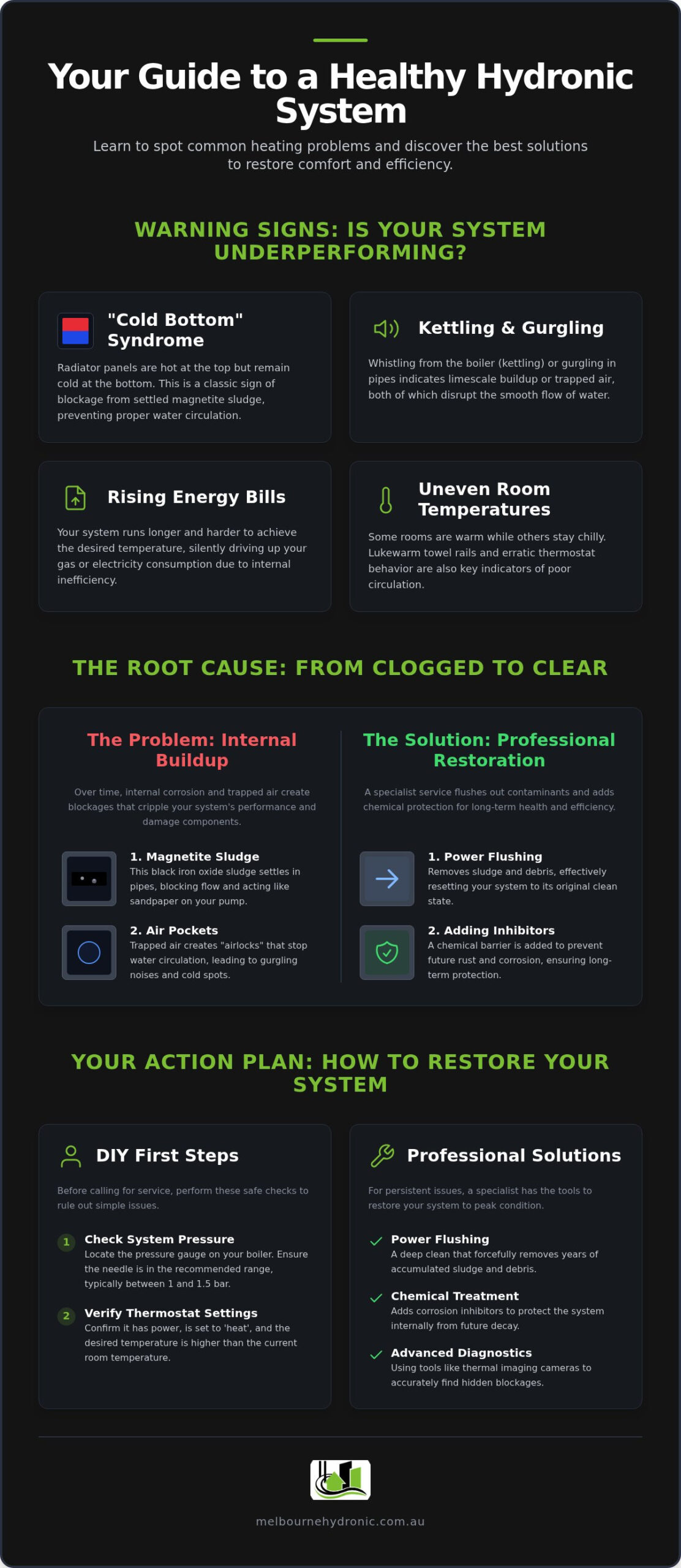
Your home’s heating system should be felt, not heard. When your comfort begins to slip, it’s often due to a handful of common hydronic heating problems that manifest in very specific ways. One of the most frequent complaints we see in Melbourne homes is “Cold Bottom” syndrome. This occurs when the top of your radiator panel feels hot, but the bottom remains stone cold. It’s a classic sign that magnetite sludge has settled at the base, effectively blocking the flow of warm water and forcing your system to work overtime.
Then there’s the unmistakable sound of “kettling.” If your boiler sounds like a whistling tea kettle, it’s struggling. This usually indicates a buildup of limescale or debris on the heat exchanger, which restricts water flow and causes localized overheating. Similarly, a lukewarm hydronic towel rail in an otherwise warm bathroom often points to a localized airlock. These small pockets of trapped air prevent hot water from circulating, leaving you with damp towels and a chilly start to your morning. With over 30 years of experience across Melbourne and Geelong, we’ve found that ignoring these early signs often leads to more expensive repairs later.
Rising energy bills are the ultimate silent symptom of an underperforming system. In 2026, with energy costs remaining a top priority for Victorian households, an inefficient system is a significant financial burden. If your gas boiler or electric heat pump is running longer cycles just to reach a modest temperature, it’s likely fighting internal resistance from sludge or air. This inefficiency doesn’t just hit your wallet; it places unnecessary strain on every component, from the pump to the heat exchanger.
Visual and Audible Warning Signs
Keep a close eye on your manifold connections and radiator valves. Even a tiny, persistent drip can lead to a drop in system pressure, eventually causing a total lockout. Listen for gurgling or banging sounds within the pipework; these aren’t just quirks of an older home. They’re often “air-bound” sections where bubbles disrupt the flow. We also see “ghosting” with modern thermostats, where the unit loses communication with the boiler or heat pump. This leads to erratic temperature swings that drive up energy consumption and leave rooms feeling inconsistent.
The Impact on Home Comfort and Health
The fundamental principles of Hydronics dictate that water must move freely to transfer energy efficiently. When circulation is poor, you’ll notice uneven heating that can negatively affect humidity levels and overall air quality. For asthma sufferers, these cold spots can encourage dampness and dust mite activity, making a well-maintained system a health priority rather than just a luxury. Consistent warmth depends entirely on stable system pressure and clean water. If you’re constantly adjusting the thermostat to compensate for a lack of heat, your system is likely bleeding energy and compromising your family’s well-being.
The Science of Circulation: Why Air and Magnetite Sludge Cause Cold Spots
Understanding why your system underperforms requires looking beneath the surface. In many Melbourne homes, the circulation of hot water is hindered by a chemical process that turns internal pipework into a bottleneck. While we often think of hydronic systems as “closed,” they’re still susceptible to oxygen ingress and chemical reactions over time. These reactions lead to some of the most common hydronic heating problems, specifically the formation of magnetite, which can compromise even the most premium installations.
Magnetite sludge is essentially black iron oxide. It forms when oxygen in the water reacts with the steel components of your radiators or the metal in your pipework. In our local Melbourne and Geelong climate, where systems might sit idle for several months of the year, this process can accelerate if the water chemistry isn’t managed. Corrosion inhibitors are designed to create a protective barrier to stop this process, but if these chemicals aren’t topped up during your regular maintenance, the internal decay begins. This is exactly why you feel those stubborn cold spots at the bottom of your radiators; the heavy sludge has settled, literally blocking the hot water from reaching the panel surface.
Magnetite: The Silent Killer of Hydronic Efficiency
Magnetite sludge is the primary cause of system friction. As this metallic grit circulates, it acts like liquid sandpaper on your pump’s internal bearings and chokes the narrow channels of your heat exchanger. This doesn’t just reduce your heat output. It leads to premature component failure, often resulting in a complete system lockout during the peak of winter. A proactive professional system service can identify these levels before they cause permanent damage to your boiler or heat pump.
Airlocks and System Balancing
While sludge settles at the bottom of the system, air naturally migrates to the highest points of your home. This creates airlocks in upstairs radiators or towel rails, preventing the water from completing its circuit. It’s a different beast than a balancing issue, where water simply takes the path of least resistance and leaves the furthest rooms in the house feeling chilly. Modern hydronic heating panels rely on precise flow rates to deliver the silent, radiant warmth they’re famous for. When air enters the system, it disrupts this delicate balance, forcing your pump to work harder while delivering significantly less heat. Keeping your system pressurized and air-free is essential for maintaining the quiet, efficient operation you expect.
Troubleshooting Heat Sources: Gas Boilers vs. Electric Heat Pumps
While the sensation of a cold home is universal, the root cause depends entirely on what’s powering your system. Identifying common hydronic heating problems requires a different approach depending on whether you’re running a traditional gas unit or a modern heat pump. In 2026, many Melbourne homeowners find themselves at a crossroads: do they continue repairing an ageing boiler, or is it time to embrace the Victorian government’s shift toward electrification? Understanding the specific failure points of each technology is the first step in making an informed decision for your home’s comfort.
Most modern systems are equipped with diagnostic displays. When your system shuts down, it will usually flash an alpha-numeric error code. These aren’t meant to be ignored; they’re your system’s way of narrow-casting the issue, whether it’s a flame failure in a boiler or a flow rate error in a heat pump. Keeping your manual handy or looking up the specific code can save you hours of guesswork and help you provide vital information when you call a specialist.
Gas Boiler Specific Troubleshooting
Gas boilers are mechanical workhorses, but they rely on several critical components that can wear out over time. Common faults often involve the exhaust fan, the air pressure switch, or the rubber diaphragm that manages pressure changes. One of the most frequent calls we receive involves a system “lockout” after a power surge or a sudden drop in pressure. You should regularly check your filling loop to ensure the needle sits at the 1.5 bar mark; this is the golden rule for stable operation. If the pressure is too low, the boiler simply won’t fire. However, if you smell gas or suspect a pilot light assembly issue, step away. DIY gas repairs are illegal and dangerous in Victoria; always leave internal gas work to a licensed professional.
Modern Heat Pump Maintenance
Unlike boilers, electric heat pumps rely on moving massive volumes of air. This means airflow is the single most important factor for efficiency. We often find that common hydronic heating problems with heat pumps stem from simple obstructions, like overgrown garden foliage or debris blocking the external fan unit. In Melbourne’s frosty Geelong mornings, you might notice your unit emitting steam or making a different humming sound; this is usually just the natural defrost cycle. However, if the unit remains iced over, it may indicate a sensor calibration issue or a refrigerant leak. While heat pump hydronic heating is incredibly efficient, it manages pressure and flow differently than gas systems, requiring a technician who understands the nuances of air-to-water technology. If your gas boiler is over 12 years old, the 2026 Victorian rebates for heat pump transitions make it a strategic time to consider a replacement rather than another costly repair.
DIY Troubleshooting: Safe Steps to Restore Your Comfort
Before you pick up the phone, several safe, non-technical checks can often resolve minor issues. Addressing common hydronic heating problems often starts with the simplest components. While we always advocate for professional intervention when gas or complex electrical work is involved, empowering yourself with basic troubleshooting can save time and restore warmth to your Melbourne home quickly. Start with a methodical approach to ensure you don’t overlook the obvious.
- Check the thermostat: It sounds basic, but dead batteries or a bumped setting are frequent culprits. Ensure it’s set to “Heat” and the target temperature is higher than the current room temperature.
- Monitor the pressure: Locate the pressure gauge on your boiler or heat pump. As we noted previously, it should ideally sit around 1.5 bar. If it’s near zero, the system won’t fire.
- Look for obstructions: For heat pumps, check that the external fan isn’t blocked by autumn leaves or garden debris. For boilers, ensure the flue is clear.
- The power cycle: Sometimes, the electronics simply need a reset. Turn the system off at the isolation switch, wait 60 seconds, and turn it back on to clear minor software glitches.
How to Bleed a Radiator Safely
If you’ve identified cold spots at the top of your radiator, you likely have trapped air. To fix this, you’ll need a radiator key and a dry cloth to catch any drips. Always ensure the heating is turned off and the radiators are cool before you begin. Start with the radiators on the ground floor and work your way up to the highest point in the house. Insert the key into the bleed valve, usually located at the top corner, and turn it slowly anti-clockwise. You’ll hear a hissing sound as the air escapes. As soon as a steady stream of water appears, close the valve tightly.
There is a critical step many homeowners miss: bleeding your radiators removes water from the system, which causes the pressure to drop. Once you’ve finished, you must check your pressure gauge and use the filling loop to bring the system back to 1.5 bar. If the radiators remain cold after bleeding, you may be dealing with the sludge issues mentioned earlier. In this case, it’s best to book a professional system health check to prevent further damage.
Thermostat and Control Diagnostics
Modern wireless thermostats are convenient, but they aren’t immune to interference. If your system isn’t responding, check for wireless signal obstructions like thick walls or other electronic devices. In 2026, many Melbourne systems use smart scheduling; double-check that your winter schedule hasn’t been overridden or that “Holiday Mode” isn’t accidentally active. Setting a consistent, efficient temperature rather than constantly cranking it up and down will help maintain a steady pressure and lower your energy consumption.
Professional Restoration: When to Call a Melbourne Specialist
While basic maintenance can resolve superficial issues, many common hydronic heating problems are rooted deep within the system’s chemistry and circulation. When your DIY efforts don’t restore the quiet, consistent warmth you expect, it’s time to bring in professional diagnostic tools. Professional restoration isn’t just about fixing a visible leak. It’s about returning the entire system to its original engineering specifications to ensure long term reliability and health.
Thermal imaging is a game changer for modern diagnostics. It allows us to visualize heat distribution across your floors and radiator panels in real time. By seeing exactly where the flow stops, we can pinpoint blockages caused by magnetite sludge without ever having to cut into your pipework or lift floorboards. This non-invasive approach saves time and prevents unnecessary damage to your home’s interior. Following a comprehensive hydronic heating service melbourne checklist ensures every component, from the expansion vessel to the heat exchanger, is inspected. This proactive approach is the only way to protect your manufacturer’s warranty and ensure your system remains a safe, premium asset for your family.
What is Power Flushing and Why Does it Work?
Think of a power flush as the ultimate reset button for your hydronic system. It involves connecting a specialized pumping station to your circuit to circulate a high velocity, but low pressure, stream of chemically treated water. This specific combination is designed to be powerful enough to dislodge heavy debris but gentle enough to protect older pipework and delicate radiator internals.
This process dislodges the stubborn magnetite sludge and metallic grit that accumulates over years of operation. By clearing these internal obstructions, a power flush can improve your system’s overall heating efficiency by up to 15%. It restores full heat to dead radiator panels and significantly reduces the strain on your boiler or heat pump. This service effectively quietens noisy systems and prevents the premature failure of expensive components like pumps and heat exchangers.
Choosing a Local Expert in Melbourne and Geelong
Hydronic heating is a specialized field that requires a deep understanding of thermodynamics and water chemistry. While a general plumber might understand basic pipework, they often lack the diagnostic equipment and specific training needed to balance a complex radiant system. We bring over 30 years of industry experience to every home in Melbourne and Geelong. We understand the local climate challenges and the technical nuances of both legacy gas boilers and the latest electric heat pump technology. Choosing a specialist ensures your home’s comfort is managed with technical precision and local pride. Don’t wait for a total system lockout to address your concerns. Book your 2026 system health check with Melbourne Hydronic Heating today to ensure a warm, quiet, and efficient winter.
Secure Your Home’s Comfort for the Seasons Ahead
Your hydronic system is an investment in your family’s well-being and daily comfort. By understanding the common hydronic heating problems that can arise, from magnetite sludge buildup to simple airlocks, you’re better equipped to maintain a healthy, efficient environment. We’ve explored how a methodical approach to troubleshooting helps you identify whether a simple DIY reset or a professional intervention is necessary to restore that signature silent warmth.
As a family-owned and operated team with over 30 years of experience across Melbourne and Geelong, we pride ourselves on delivering technical precision with a personal touch. Whether your system requires specialist power flushing equipment to clear internal debris or a modern heat pump calibration, we’re here to ensure your environment remains premium and cost-effective. Don’t let minor inefficiencies turn into major repairs. It’s time to restore your home’s comfort—book a professional hydronic service today. We look forward to helping you achieve the clean, quiet, and reliable heating your home deserves.
Frequently Asked Questions
Why is my hydronic heating radiator cold at the bottom?
A radiator that is hot at the top but cold at the bottom usually indicates a buildup of magnetite sludge that has settled at the base of the panel. This heavy, metallic debris blocks the circulation of hot water, preventing the radiator from heating up fully. While bleeding the radiator addresses air at the top, it won’t fix a cold bottom. You will likely need a professional power flush to remove the sludge and restore efficiency.
How often should I bleed my hydronic radiators?
You should only bleed your radiators when you notice they are cold at the top while the system is running. It isn’t a task that needs to be done on a set schedule. In fact, bleeding radiators too frequently can lead to common hydronic heating problems like low system pressure. If you find yourself needing to bleed them often, it’s a sign that air is entering the system through a leak or a failing component.
What should the pressure be on my hydronic boiler?
Most modern Melbourne systems require a static pressure of approximately 1.5 bar when the water is cold. If the needle on your gauge drops below 1.0 bar, your boiler or heat pump may enter a safety lockout mode to prevent damage. Conversely, if the pressure exceeds 3.0 bar, the safety relief valve will discharge water. Always check your pressure after bleeding radiators to ensure it remains within this optimal operating range.
Why is my hydronic heating system making a loud banging noise?
Loud banging or “kettling” sounds are typically caused by trapped air or a buildup of limescale and sludge on the heat exchanger. When water flow is restricted, it can overheat and turn into steam, creating localized pressure bubbles that sound like banging. This is one of the common hydronic heating problems that requires immediate attention, as it puts significant mechanical stress on your boiler’s internal components and can lead to premature failure.
Can I use a standard plumber to fix my hydronic heating?
While a standard plumber handles general water and gas lines, hydronic systems require a specialist technician with specific training in radiant heat distribution and water chemistry. Specialists use advanced diagnostic tools like thermal imaging and power flushing stations that general plumbers don’t carry. Using an inexperienced contractor can lead to incorrect system balancing or the use of wrong inhibitors, which may void your manufacturer’s warranty and lead to long term issues.
How long does a hydronic power flush take to perform?
A professional power flush typically takes between 4 and 8 hours to complete. The exact duration depends on the number of radiator panels in your home and the severity of the magnetite buildup. A technician will stay on site to monitor the chemical cleaning process and ensure each circuit is thoroughly cleared. This comprehensive service acts as a total system reset, ensuring your heating operates at maximum efficiency for the coming years.
Is it worth repairing an old gas hydronic boiler in 2026?
In 2026, the decision to repair often depends on the age of your unit and the availability of parts. If your boiler is over 12 years old, the Victorian government’s shift toward electrification makes a heat pump transition highly attractive. With Solar Victoria rebates of up to $1,400 available for eligible households, investing in a modern electric heat pump often provides better long term value and significantly lower running costs than repairing an obsolete gas unit.
Why are some rooms in my house warmer than others with hydronic heating?
Uneven temperatures between rooms are usually caused by an unbalanced system. Hot water naturally follows the path of least resistance, often flowing through the closest radiators and bypassing those further away. A specialist can resolve this by adjusting the lockshield valves on each panel to ensure an even distribution of flow. This process, known as balancing, ensures every room in your home reaches the desired temperature simultaneously without wasting energy or compromising comfort.