
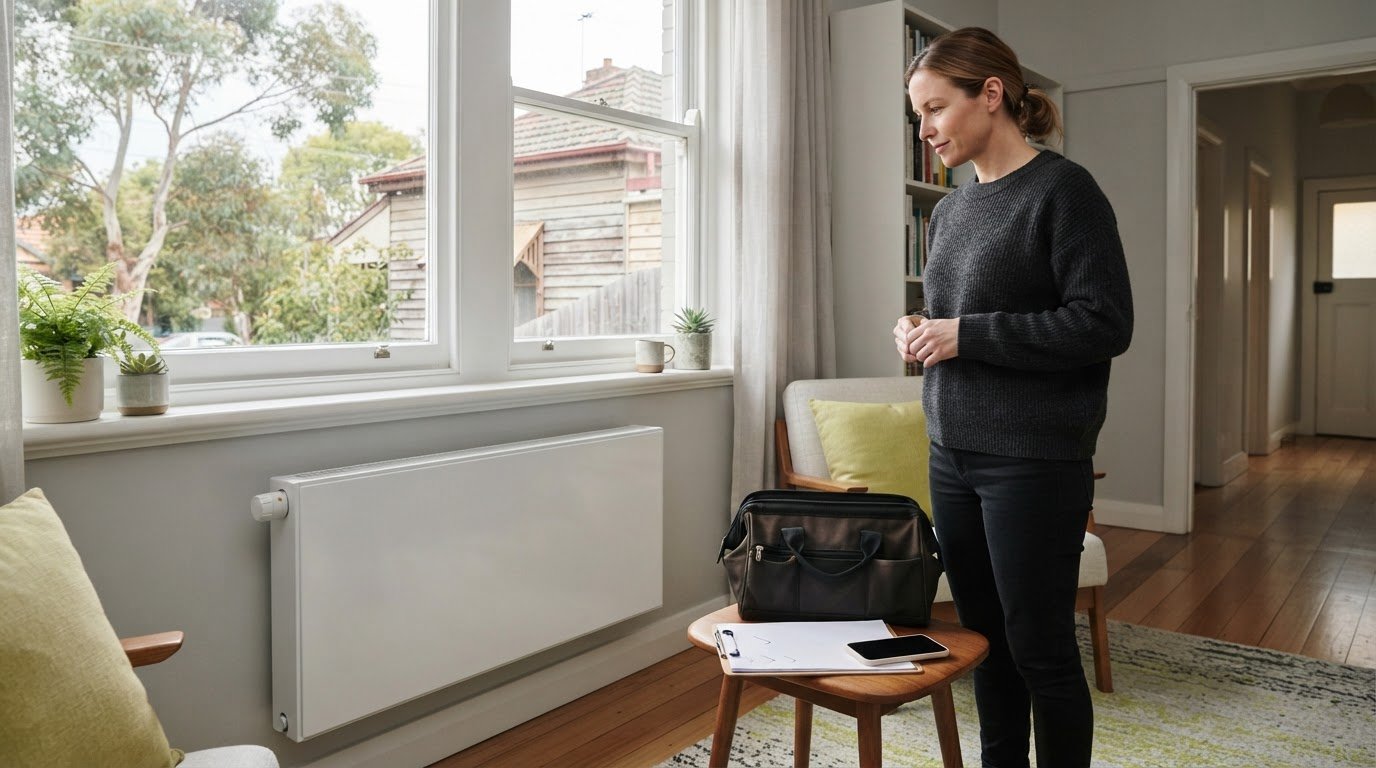
What to Check Before Calling for Hydronic Repair in Melbourne
If you’re unsure what to check before calling for hydronic repair Melbourne specialists, start with safe observations rather than dismantling equipment or adjusting components. A few clear notes can help explain what’s happening without risking further damage.
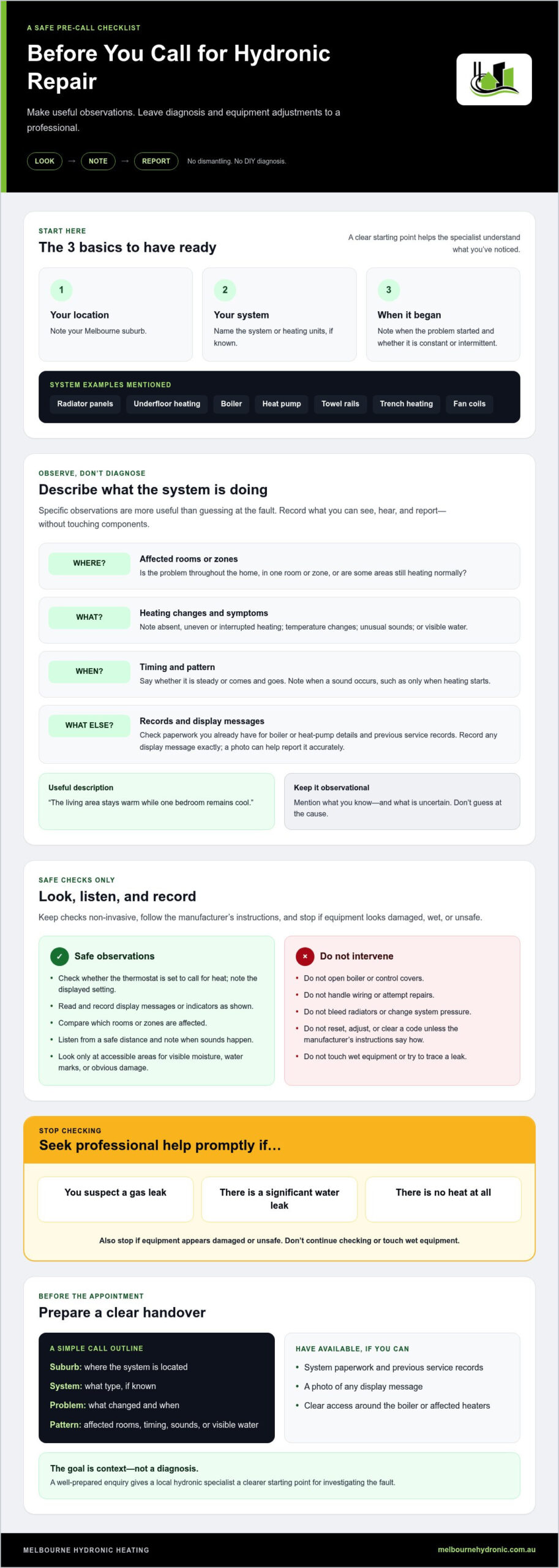
Note when the issue began, whether all rooms are affected, and what type of system you have, such as radiator panels, underfloor heating, a boiler or a heat pump. Record unusual noises, temperature changes or visible leaks, but leave technical checks to a professional.
This checklist will help you recognise signs that need prompt attention, gather useful system and symptom details, and prepare the area around the boiler or affected heaters. If you suspect a gas leak, see a significant water leak, or have no heat at all, stop checking and seek professional help promptly. A well-prepared enquiry gives a local hydronic specialist a clearer starting point for investigating the fault.
Key Takeaways
- Use the checklist for what to check before calling for hydronic repair Melbourne specialists, without trying to diagnose the fault yourself.
- Follow safe, non-invasive checks in order, and stop if the equipment looks damaged or unsafe.
- Describe whether the problem affects the whole system, one room or comes and goes to give the repairer useful context.
- Know which signs call for prompt professional attention rather than further homeowner checks.
- Use a simple call script and have relevant system records or photos of display messages ready to help plan the visit.
What to check before calling for hydronic repair in Melbourne
You don’t need to identify the cause of a hydronic fault before making an enquiry. Clear observations can help a specialist understand the issue and prepare to investigate it. If you’re wondering what to check before calling for hydronic repair Melbourne, focus on what you can see, hear and report, not on adjusting or opening equipment.
Start with three basics: your property’s suburb, the type of system or heating units you have, and when the problem began. Then describe what has changed. Is there no heat, uneven warmth, unusual noise or heating that cuts in and out? These details help separate what you’ve observed from the technical diagnosis a specialist needs to make.
Quick checklist: observations, not diagnosis
- Location: Note your Melbourne suburb.
- System: Record whether you have radiator panels, underfloor heating or another hydronic emitter, if known.
- Timing: Note when the issue started and whether it is constant, intermittent or associated with a recent change.
- Pattern: List affected rooms or zones and any areas that still heat normally.
- Symptoms: Describe absent, uneven or interrupted heating, unusual sounds, or visible water without touching components.
- Boundary: Don’t guess at the fault. Leave technical diagnosis and equipment adjustments to the specialist.
Record what the hydronic system is doing
Be specific. For example, say that the living area stays warm while one bedroom remains cool, rather than reporting only that “the heating isn’t working.” Note whether a sound occurs continuously or only when the heating starts, and whether the change in performance is steady or intermittent. If you see water, record where it is and whether it appears to be increasing. Don’t touch wet equipment or try to trace a leak.
Identify the system and recent service history
Check paperwork you already have for the boiler or heat pump type and any previous service records. You can also note whether heat comes from radiator panels, underfloor heating, towel rails, trench heating or fan coils. Hydronic systems circulate heated water to provide warmth; Hydronics offers a general explanation of the approach. For more context on maintenance and repair, see this hydronic heating service and repair guide.
You don’t need to find every detail. Share what you know and mention what’s uncertain. A clear account of the symptoms, system type and service history gives the specialist a useful starting point without requiring you to investigate the equipment.
Safe hydronic heating checks to make before calling a repairer
Simple observations can clarify the problem, but they can’t confirm a boiler, pump or electrical fault. Keep checks non-invasive, follow the manufacturer’s instructions, and stop if equipment looks damaged, wet or otherwise unsafe. Don’t open covers, handle wiring or attempt repairs.
Check the thermostat and heating settings
- Confirm the heating request. Check that the thermostat is set to call for heat and note the displayed setting. If you’re unsure how to use the control, consult its manufacturer instructions rather than changing unfamiliar settings.
- Read the display. Record any error message or indicator exactly as shown. A photo can help you report it accurately, but don’t try to interpret or clear the code unless the manufacturer’s instructions say how.
- Compare affected areas. Note whether heating is absent throughout the home or only in selected rooms or zones. This is useful context, not proof of what has failed.
- Notice when the issue occurs. Record whether the problem is continuous or intermittent, and when any new or persistent noise happens. Observe from a safe distance.
- Look only at accessible areas. Without moving equipment or removing panels, check for visible moisture, water marks or other obvious signs of damage near accessible system components.
Look for warning signs without dismantling equipment
Keep this check visual and observational. Don’t touch wet equipment or try to trace the source of water. Never remove boiler or control covers, alter wiring, bleed radiators or change system pressure as part of this checklist. If you see damage or a leak, stop and report what you noticed to a suitable professional.
Safety boundary: Looking, listening and noting what the display shows are observations. Repairing, resetting, opening or adjusting equipment are interventions. A visual check cannot establish whether a boiler, pump or electrical component is faulty, so leave diagnosis and technical work to a qualified specialist. For gas-heating safety guidance in Victoria, consult Energy Safe Victoria’s guidance for heating your home with gas.
These are the practical limits of what to check before calling for hydronic repair Melbourne homeowners can do safely: confirm the controls and record visible or audible clues, then leave equipment adjustments to a professional. For further information about hydronic repair and servicing, review hydronic repair and servicing options.
What symptoms and system details help diagnose hydronic repairs?
A useful repair enquiry describes the pattern, not a suspected cause. Similar symptoms can have different explanations, and a technician needs to assess the system before identifying the fault. Report what you’ve noticed and leave the diagnosis to the specialist.
Symptom patterns help describe a fault, but they don’t prove its cause.
Use the table to organise the details you can share. Include when the issue began and whether anything changed around that time, but don’t test or adjust system components to gather more information.
| What you notice | Useful details to report |
|---|---|
| Heating is absent or reduced throughout the home | When normal heating last occurred, whether the problem is constant, and any visible message on the boiler, heat pump or control. |
| One room or area is colder than others | Name the affected room, identify the radiator panel or underfloor zone if known, and note whether other areas heat normally at the same time. |
| Heating works intermittently | Describe when it stops or returns, how often you notice the change, and whether it appears linked to a particular time or recent change. |
If radiators or underfloor heating are not warming evenly
Be precise about which rooms feel colder and which heating emitters are affected. Note whether the uneven heating is new and whether other zones still provide heat at the same time. If you’re unsure what a radiator panel is called, this guide to hydronic heating panels explains the terminology. You don’t need to inspect or handle the units to describe the problem.
If the boiler, heat pump or controls show a change
Copy any display message exactly, including numbers or symbols, rather than interpreting or clearing it. Note when heating was interrupted and when it last operated normally. If your system uses a heat pump, mention it as the heat source when making the enquiry. The service team can consider that detail alongside the symptoms you report.
Keep your account factual: “The bedrooms stopped warming yesterday, but the living area still heats” is more useful than guessing that a pump or control has failed. These details help a hydronic specialist understand the enquiry and plan an assessment, while leaving technical checks to the professional.
When should Melbourne homeowners stop checking and call for hydronic repair?
Not every hydronic fault can be resolved with a homeowner check. Observations can help you describe the problem, but they can’t confirm its cause or make an unsafe system safe. Stop checking if you’re concerned about immediate safety, and don’t keep operating or approaching equipment that appears damaged.
Signs that should end DIY checking
Visible water leakage, unusual moisture around equipment or apparent damage are reasons to step back and seek professional advice. Don’t touch wet components, continue checking near water and electrical equipment, or remove covers to trace the source. If there’s immediate danger, move away from the affected area and contact the appropriate emergency service. A routine repair enquiry isn’t a substitute for emergency help.
If you suspect a gas leak or notice another serious safety concern, stop interacting with the system and seek appropriate urgent assistance. Don’t try to restart, reset or inspect equipment you believe may be unsafe. Share only what you observed from a safe distance.
When a non-urgent service enquiry is still worthwhile
Some issues may not appear immediately dangerous but still warrant professional investigation. Contact a hydronic specialist if recurring uneven heating, intermittent operation or unusual noises keep affecting comfort or reliability. Repeated resets or worsening symptoms are reasons to stop experimenting and explain the pattern to a professional. A symptom alone doesn’t establish which component, if any, needs repair.
For what to check before calling for hydronic repair Melbourne, use a clear safety threshold: record routine performance concerns, but stop if you see a leak, damage or another apparent hazard. Note when the issue began, which areas are affected and whether it is worsening. Those details help the specialist understand your enquiry without you needing to investigate the equipment.
For broader information about hydronic system maintenance and repair, explore this hydronic heating service and repair guide. If you’re ready to discuss a recurring concern, enquire about hydronic repair and describe the symptoms you’ve observed.
How to prepare for a hydronic repair appointment in Melbourne
A little preparation can make your repair enquiry clearer and help the specialist plan the visit. You don’t need to diagnose the fault. Gather the details you already have, keep relevant documents and photos accessible, and make sure the system can be reached safely.
Use a clear call checklist
Before you call, jot down the essentials. If you’re reviewing what to check before calling for hydronic repair Melbourne homeowners can use this short script to keep the conversation focused:
- Suburb and contact details: State the property’s suburb and your preferred contact details. Confirm that the system and affected areas will be accessible.
- System type: Mention whether the home has radiator panels, underfloor heating or another hydronic setup, and whether the heat source is a boiler or heat pump, if known.
- Symptoms and affected areas: Describe what’s happening, which rooms or zones are affected, and whether other areas still heat normally.
- Timing: Say when the issue began, whether it is constant or intermittent, and when the system last operated normally.
- Messages and history: Read out any visible display message exactly. Note previous service visits or recent changes without guessing at the cause.
Keep accessible system paperwork and service records nearby. A clear photograph of a display message can help you share its exact wording, but don’t remove covers or approach unsafe equipment to take one.
Know what to expect from a specialist assessment
Depending on the symptoms and system, an assessment may involve inspecting the heat source, controls and distribution system. Clear, safe access to relevant equipment and affected heating areas can make the inspection more practical. Move everyday items out of the way if you can do so safely, but don’t shift heavy equipment or touch components.
The information you provide helps the specialist understand the enquiry and plan the visit, but it can’t confirm a diagnosis or repair outcome in advance. The system needs to be assessed before the cause and appropriate next steps are known.
For a repair or service enquiry, contact Melbourne Hydronic Heating with your suburb and the symptoms you’ve recorded. You can also confirm whether your specific area is currently covered when you get in touch.
Take the Next Step Towards Reliable Hydronic Heating
A helpful repair enquiry starts with observations, not a DIY diagnosis. Note your system type, when the issue began and which rooms are affected. Check controls and visible displays only when safe, and stop if you see a leak, equipment damage or another safety concern.
Knowing what to check before calling for hydronic repair Melbourne homeowners can share a clearer picture of the problem without opening or adjusting equipment. Symptom patterns and service records give a specialist useful context, but only an assessment can establish the cause and appropriate next steps.
Melbourne Hydronic Heating is a family-owned hydronic specialist with more than 30 years of industry experience, providing repair and maintenance services across Melbourne and Geelong. Confirm current coverage for your suburb, then contact Melbourne Hydronic Heating to discuss your repair.
With a few clear notes and the right specialist, you can take the next step towards restoring dependable warmth at home.
Frequently Asked Questions
What should I check before calling for hydronic heating repair?
Before calling, note which rooms are affected, when the issue began, and whether it’s constant or intermittent. Record unusual sounds, visible signs, thermostat settings and any displayed message. Have the system type and available service history ready, if known. This is what to check before calling for hydronic repair Melbourne specialists: observations that help explain the problem, not diagnose it. Don’t dismantle equipment or adjust system components.
Can I fix a hydronic heating problem myself before calling a repairer?
Limit DIY checks to observing symptoms and checking basic thermostat settings according to the manufacturer’s instructions. Don’t open the boiler or heat pump, handle electrical parts, alter system pressure or attempt repairs. A cold room or unusual noise can have several possible causes, so don’t assume a specific component has failed. If equipment looks damaged or you feel unsafe, stop checking and seek professional advice.
Is a leaking hydronic heater an emergency?
A visible or active hydronic leak should be treated promptly, not ignored. Keep away from wet equipment, particularly if water is near electrical components, and don’t open or attempt to repair the system. If you think there’s immediate danger, move away and contact the appropriate emergency service. Otherwise, stop using affected equipment only if you can do so safely, then contact a hydronic specialist for guidance.
Why are some hydronic radiators cold while others are warm?
Uneven hydronic heating can have several possible causes, and cold radiators beside warm ones don’t prove which one applies. Note which radiators or rooms are affected, whether this happens every time, and whether other zones still heat during the same period. Share those observations with the specialist. Don’t bleed radiators or alter system settings unless the manufacturer or a qualified technician has advised you to do so.
What information should I give a Melbourne hydronic repairer when I call?
Tell the repairer your suburb, system type if known, symptoms, when they started and which rooms or zones are affected. Mention any displayed message, unusual noise, visible leak or previous service visit. If you’re unsure whether the system uses a boiler or heat pump, say so rather than guessing. Ask the business to confirm whether your specific Melbourne or Geelong location is currently within its service coverage.
Should I turn off my hydronic heating before a repair appointment?
There isn’t one instruction that suits every system or fault. Follow the manufacturer’s guidance, and don’t operate equipment that appears damaged or unsafe. If you notice a leak, an electrical concern or another immediate safety issue, keep clear and seek appropriate advice. When you contact a specialist, explain what you observed and ask what steps, if any, are suitable while you wait for the system to be assessed.
Do I need to know whether my hydronic system uses a boiler or heat pump?
It’s helpful to know, but you can still make an enquiry if you’re unsure. Check accessible labels or existing system paperwork only if you can do so safely. You can also describe the equipment and share any visible display messages. A hydronic specialist can assess the system and confirm its type. Don’t remove covers or handle components to identify the heat source. To discuss a repair in Melbourne or Geelong, contact Melbourne Hydronic Heating with the details you’ve recorded.