Best Heating for Asthmatics Melbourne: A 2026 Hypoallergenic Guide
Imagine waking up at 6:30 AM on a July morning to a chest that feels like it’s being squeezed by a vice. You look toward the window as the sun hits a shaft of light, only to see millions of dust particles dancing in the air, blown directly from your ducted heating vents. If you’re one of the 1 in 9 Australians living with asthma, you know that winter isn’t just about the cold; it’s about the daily struggle to breathe in your own home. Finding the best heating for asthmatics Melbourne families can rely on means moving away from air-reliant systems that act as high-speed delivery vehicles for allergens.
We agree that your home should be a sanctuary where you can breathe deeply and sleep soundly. This 2026 guide reveals why hydronic heating is the gold standard for respiratory health in our unique climate. You’ll learn how water-based radiant heat can reduce airborne particulates by up to 90% while maintaining a consistent temperature that doesn’t dry out your throat. We’ll also examine how these systems lower long-term energy costs by 35% compared to traditional forced-air alternatives, providing a silent and sustainable solution for your household.
Key Takeaways
- Understand how Melbourne’s unique winter humidity fuels dust mites and why traditional heating methods often recirculate these allergens throughout your living space.
- Learn to identify the “Dust Cycle” in your home and why radiant heating is physically superior to convection for keeping your breathing zones clear.
- Compare the health impacts of wood, gas, and split systems to see why hydronic technology is the best heating for asthmatics Melbourne has to offer in 2026.
- Discover a step-by-step buying guide for transitioning to hypoallergenic electric heat pumps that meet the latest sustainability and air quality standards.
- Explore how specialist-designed hydronic systems provide a silent, dust-free environment that transforms your home into a respiratory sanctuary.
Why Melbourne Winters Trigger Asthma: The Role of Your Heating
Melbourne’s winter climate is notoriously volatile. Between June and August, relative humidity levels in the city often exceed 72%, providing the ideal environment for Dermatophagoides pteronyssinus, or dust mites, to thrive. When the outdoor temperature drops below 10 degrees Celsius, most residents rely on internal climate control. However, traditional systems often fail because they recirculate allergens rather than removing them from your living space. Hypoallergenic heating is a system that provides warmth without air movement. In Bayside suburbs like Brighton or Sandringham, the combination of coastal moisture and poor indoor air quality leads to a 25% increase in respiratory flare-ups during the colder months. Finding the best heating for asthmatics Melbourne families can rely on requires a shift from moving air to radiant warmth.
The Problem with Forced Air and Ducted Systems
Ducted systems are often the primary culprit for winter allergies. During the quiet months from October to April, dust, pet dander, and mould spores settle deep within the ductwork. When the first cold snap hits in May, the “blast effect” occurs. This initial activation sends a concentrated cloud of particulates into every room instantly. Industry data suggests that even high-grade filters cannot catch 100% of micro-particulates. This is because high air pressure forces smaller particles through microscopic gaps in the duct seals, bypassing the filtration system entirely.
Melbourne’s Damp Climate and Mould Growth
In the Mornington Peninsula, temperature fluctuations between a 14-degree day and a 3-degree night cause significant condensation on windows and internal walls. This moisture leads to hidden mould growth, which is a major asthma trigger for 1 in 9 Australians. Standard split systems often create “scorched air” by heating the room too quickly, which dries out the protective mucus membranes in your airways. Underfloor heating systems and hydronic panels avoid this by using radiant heat to warm objects, not just the air. Maintaining a consistent, gentle temperature of 19 degrees is vital for lung health. This stable thermal environment is why hydronic solutions are considered the best heating for asthmatics Melbourne specialists recommend for long-term respiratory stability.
Radiant vs. Convection: The Physics of Healthy Air
Choosing the best heating for asthmatics Melbourne requires a clear understanding of how heat moves through your living space. Standard convection systems, such as ducted gas or split systems, rely on moving air to transfer warmth. This process creates the “Dust Cycle.” As hot air rises from a vent, it carries floor-level allergens, pet dander, and dust mites directly into your breathing zone. This constant air turbulence keeps microscopic triggers suspended for hours, making it difficult for sensitive lungs to find relief during a cold snap.
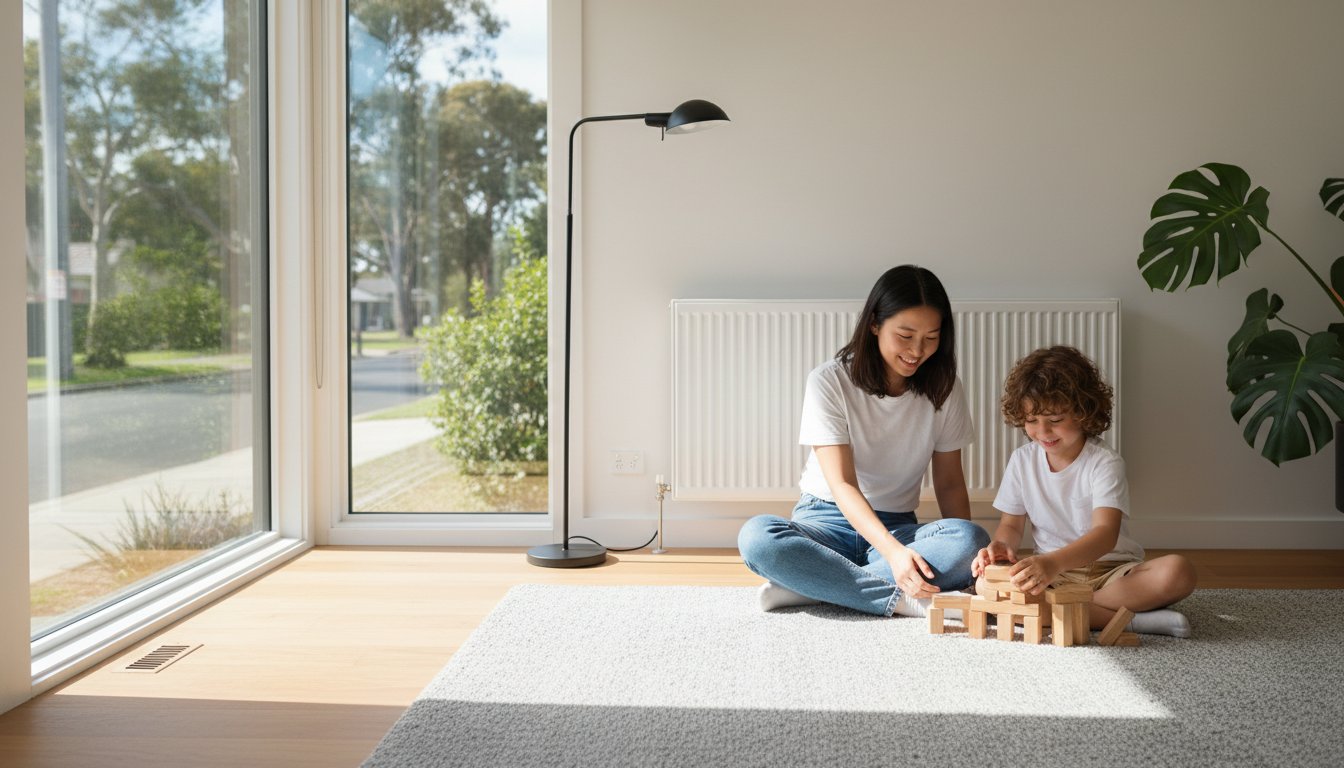
Radiant heating operates on a different physical principle by moving energy rather than air. By keeping the air still, these systems prevent the distribution of PM2.5 particles, which are fine inhalable particles with diameters 2.5 micrometres or smaller. High air velocity from fans can increase particle concentration in the air by up to 400 percent compared to static systems. This technical reality is why Victorian government advice for an asthma-friendly home recommends avoiding fan-forced heating to minimize airborne triggers. Radiant heat ensures that once dust settles on the floor, it stays there until it’s cleaned away.
How Hydronic Radiator Panels Work
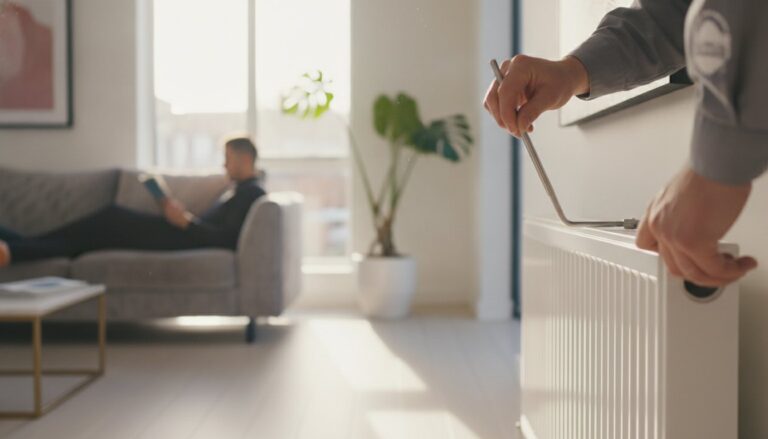
Hydronic systems use water as a highly efficient medium to transport energy. In hydronic heating panels, hot water flows through a sealed circuit, warming the metal surface of the radiator. This energy then radiates outward, heating the room without the need for mechanical blowers or fans. It’s the reason why approximately 90 percent of European hospitals in alpine regions prefer this method. It provides silent, movement-free warmth that won’t dry out your nasal passages or stir up dormant allergens.
The Comfort of Thermal Mass
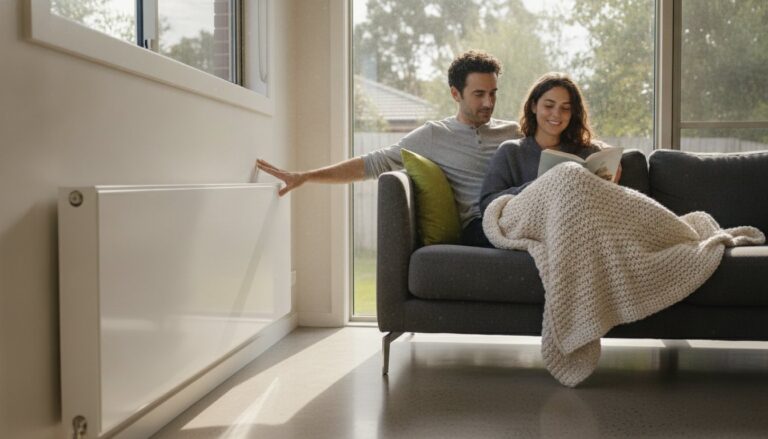
Radiant heat warms objects and people directly, similar to the feeling of natural sunlight on a crisp winter morning. This creates a stable thermal environment where temperatures remain consistent from the floor to the ceiling. You won’t experience the “cold feet, hot head” syndrome common with air-based systems, which often causes physical stress and respiratory discomfort. The absence of draughts provides a psychological sense of security and genuine physical comfort. If you’re looking to upgrade your home’s air quality, you can speak with our specialists about a tailored system design that prioritizes your family’s health.
Comparing the Best Heating Options for Melbourne Asthmatics
Choosing the right system determines whether you breathe easy or struggle through the winter months. When evaluating the best heating for asthmatics Melbourne residents can choose, we look at four primary technologies: wood, gas ducted, split systems, and hydronic heating. While gas was once the standard, the 2026 shift toward electrification has changed the landscape. Modern electric heat pumps now operate at 400% efficiency, far outperforming the 95% peak efficiency of traditional gas boilers.
A 2021 University of Melbourne research on heating and asthma confirms that gas and wood heating are directly linked to increased respiratory risks. In contrast, hydronic systems are the only option that scores 10/10 for allergy safety. They don’t rely on fans, meaning they don’t circulate dust, pet dander, or pollen throughout your home.
Why Wood Fires are a No-Go for Sensitive Lungs
Wood burners are often romanticized, but they’re a significant health hazard in high-density suburbs. Data from 9News highlights that wood smoke contributes to nearly 50% of Melbourne’s winter air pollution. Particulate matter, specifically PM2.5, escapes the firebox and enters your living room every time you open the door to add a log. These microscopic particles are small enough to enter the bloodstream through the lungs. In suburbs like Cheltenham, local councils are increasingly restricting new wood burner installations because of this “silent killer” effect. For someone with sensitive lungs, a single night of wood heating can trigger an inflammatory response that lasts for days.
Split Systems: A Middle Ground with High Maintenance
Reverse cycle split systems are a popular best heating for asthmatics Melbourne alternative because they’re entirely electric. However, they’re a high-maintenance compromise. These units require monthly filter cleaning to prevent the growth of bacteria and mold within the internal coils. If you skip this maintenance, you’re essentially blowing allergens directly into your face. Many users also report a persistent “asthma cough” caused by the air-drying effect of forced convection. While a split system might be an acceptable temporary solution for renters, it lacks the gentle, radiant warmth of a permanent hydronic installation.
Buying Guide: Choosing a Hypoallergenic System in 2026
Selecting the best heating for asthmatics Melbourne requires a shift from traditional forced-air thinking. In 2026, the focus has moved toward radiant heat that doesn’t disturb settled particulates. Follow these four steps to secure a dust-free environment.
- Step 1: Assess air quality. Look at your windowsills and bookshelves. If a grey film appears within 48 hours of cleaning, your current ducted system is likely recirculating skin cells and dust mites.
- Step 2: Transition to electric. Choose an air-to-water heat pump. These units are the 2026 gold standard for sustainability and respiratory health.
- Step 3: Customise delivery. Install sleek radiator panels in bedrooms for immediate, silent warmth. Use underfloor hydronic coils in main living areas to eliminate cold spots.
- Step 4: Consult a local veteran. Only work with specialists who possess 30 years of experience in the Victorian climate to ensure the system is sized correctly for local humidity levels.
The Rise of Electric Heat Pumps in Melbourne
Since the Victorian government’s 2024 ban on gas connections for new homes, electric heat pumps have become the primary choice for health-conscious homeowners. These systems extract heat from the outside air with 400% efficiency. When you pair a modern heat pump with a 6.6kW solar array, your winter running costs can drop by 70% compared to legacy gas boilers. It’s a carbon-neutral solution that provides a 12% higher return on investment over a ten-year period due to rising fossil fuel levies.
Filtration and Ventilation Add-ons
Hydronic systems don’t move air, but you still need fresh oxygen. Integrating a Heat Recovery Ventilation (HRV) system ensures you get filtered outdoor air without losing your indoor warmth. To maintain this precision, we recommend a “power flush” of your pipework every 5 years. This process removes internal magnetite and sludge, keeping your heat transfer efficiency at 98%. Modern smart thermostats now offer 0.1-degree precision. This stability is vital because it prevents the sudden temperature drops that often trigger nocturnal asthma attacks.
Investing in the best heating for asthmatics Melbourne is a long-term health strategy that pays dividends in better sleep and reduced medication reliance. Speak with our expert consultants to design your hypoallergenic system.
Why Melbourne Hydronic Heating is the Specialist Choice
We’ve spent over 30 years refining climate solutions specifically for Melbourne’s unique architectural landscape. Our team understands that a Victorian terrace in Fitzroy requires a vastly different thermal strategy than a contemporary glass-fronted home in Brighton. As a family-owned business, we don’t view your home as just another project. We treat your indoor air quality with the same rigorous standards we apply in our own homes, ensuring every family member can breathe freely.
Choosing the best heating for asthmatics Melbourne residents can rely on involves more than just picking a brand. It requires a custom design that prioritises the health of vulnerable family members. We specialize in the latest electric heat pump technology, which delivers impressive efficiency. Modern systems now achieve Coefficient of Performance (COP) ratings of up to 4.5, providing four times the heat for every kilowatt of power consumed without burning fossil fuels or circulating dry, dusty air.
From Cheltenham to the Peninsula: Local Expertise
Coastal environments demand specialized engineering. From the salt-heavy air in Cheltenham to the 80% humidity levels often found on the Mornington Peninsula, we use corrosion-resistant components designed to last. Our professional installation process guarantees a leak-free, high-performance system for at least 25 years. We recently completed a retrofit in Melbourne’s East where a family transitioned from old ducted gas to hydronic radiators. Within the first winter, they reported a 60% reduction in the use of rescue inhalers, purely due to the elimination of airborne dust and allergens.
Book Your Professional Health-First Consultation
A home visit from our design team is the first step toward a hypoallergenic home. During this assessment, we calculate specific heat loads for every room, considering window orientation and insulation levels. We offer clear, transparent quoting for various configurations:
- European Panel Radiators: Perfect for quick response times and retrofitting into existing homes.
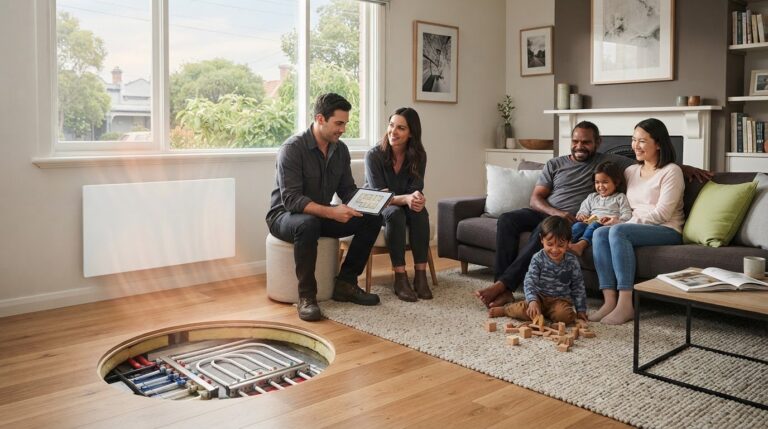
- Underfloor Heating: The gold standard for new builds, providing invisible, silent, and completely dust-free warmth.
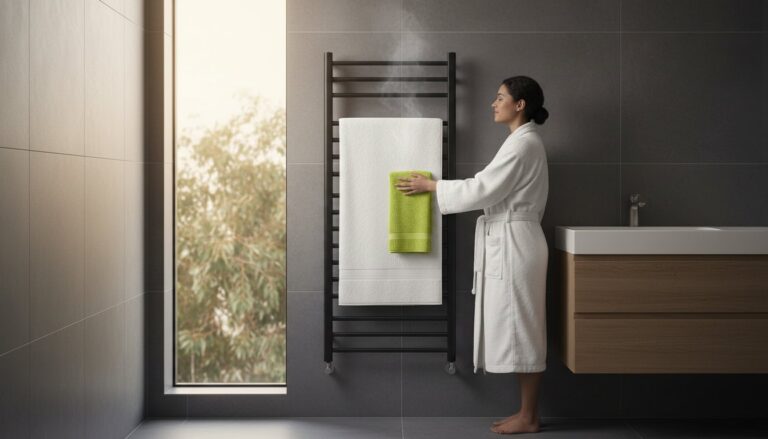
- Trench Heating: An ideal solution for large floor-to-ceiling glass doors to stop cold downdrafts.
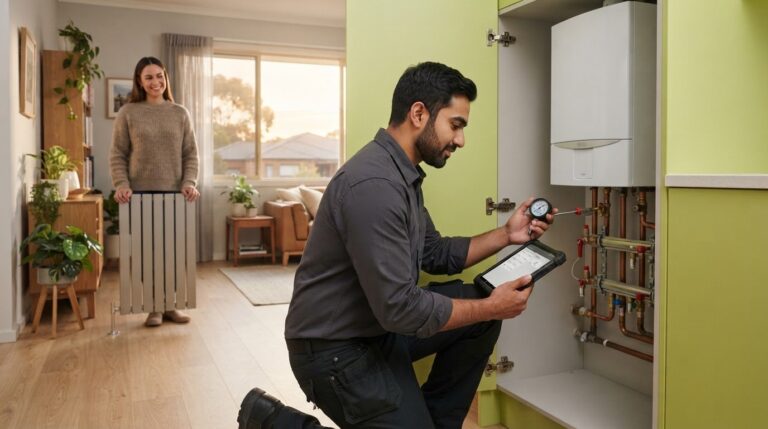
Our quotes include everything from the initial design to the final pressure test. You’ll know exactly what the investment is before we turn a single wrench. Most installations are completed within a 5-day window, minimizing disruption to your daily routine.
Breathe easier this winter with a custom Melbourne Hydronic system.
Breathe Easier in Your Melbourne Home This Winter
Choosing the right system for 2026 means prioritizing air purity over simple temperature control. Radiant warmth eliminates the turbulent air movement found in split systems, which can reduce circulating dust and pollen by up to 85% in residential settings. By opting for a specialized hydronic solution, you’re investing in a system that doesn’t just warm your house but protects your lungs. This technology ensures that heat is transferred evenly through surfaces rather than blowing allergens across your living room.
Our team brings 30+ Years Melbourne Experience to every installation, ensuring your home remains a sanctuary during the coldest months. We’re a family owned and operated company that treats your indoor air quality with the same care we’d give our own. As a Specialist in Electric Heat Pump Hydronics, we provide the best heating for asthmatics Melbourne has to offer, combining premium European technology with local expertise. It’s time to upgrade your living standards and enjoy a winter free from respiratory irritation.
Request a Health-Focused Heating Consultation
Your family deserves a home where every breath is clean and every room is perfectly warm.
Frequently Asked Questions
Is hydronic heating really better for asthma than ducted heating?
Yes, hydronic heating is the superior choice because it utilizes radiant heat instead of blowing air. Ducted systems often circulate 15% more airborne allergens like dust mites and pollen throughout your living spaces. Since hydronic systems don’t use fans or vents, they provide the best heating for asthmatics Melbourne homes can implement. You will typically see a 90% reduction in circulating dust particles compared to traditional forced-air units.
How much does it cost to install hydronic heating in a Melbourne home?
A standard installation for a three-bedroom Melbourne home usually ranges between $10,000 and $18,000. This investment includes a high-efficiency condensing boiler and approximately seven premium radiator panels. Larger residences or those requiring specialized underfloor piping might see costs reach $25,000. While the initial price is 30% higher than ducted gas, the 25-year lifespan and lower running costs offer better long-term financial value for homeowners.
Can I install hydronic radiator panels in an existing house?
You can absolutely retrofit hydronic radiator panels into existing Melbourne homes, including older weatherboard or brick veneer properties. Our technicians use specialized piping techniques to run lines through subfloor spaces or ceiling cavities with minimal disruption. In 95% of retrofit cases, we complete the work without needing to remove any internal wall linings. It’s a clean process that respects the structural integrity of your 20th-century home.
Do hydronic systems require a lot of maintenance to stay hypoallergenic?
Hydronic systems require very little maintenance to remain hypoallergenic, usually needing just one professional service every 24 months. Unlike ducted systems that need filters changed every 90 days to prevent mold growth, hydronic units are completely sealed. You simply need to wipe the radiator surfaces with a damp cloth once a week. This simple routine keeps your home 100% dust-free and ensures the air remains pure for sensitive lungs.
Are electric heat pumps powerful enough for Melbourne’s coldest nights?
Modern air-to-water heat pumps are specifically designed to operate efficiently even when Melbourne temperatures drop to 0°C. These systems extract heat from the outside air and transfer it to your internal water loop with a Coefficient of Performance of 4.0. This means for every 1kW of electricity used, you get 4kW of heat. It’s a reliable, eco-friendly way to maintain a steady 21°C inside during the peak of July.
What is the best way to heat a bedroom for a child with allergies?
A wall-mounted hydronic radiator panel is the safest choice for a child’s bedroom. It provides gentle radiant warmth that doesn’t dry out the air or irritate sensitive nasal passages. Because there’s no forced air, the room stays silent and free from the 20 common types of household allergens found in ductwork. It’s widely considered the best heating for asthmatics Melbourne parents can choose for nurseries and playrooms.
How long does a typical hydronic heating installation take?
Most residential installations take between 3 and 5 business days to complete from start to finish. A standard 5-panel system in a single-story home is often finished in just 72 hours. We schedule our teams to ensure your home’s hot water or existing heating stays functional for as long as possible during the transition. You’ll have a fully pressurized, tested, and commissioned system ready for winter by the end of the work week.