Choosing the Best Heating Radiator for Your Melbourne Home in 2026
What if the very system keeping your family warm is also the secret cause of those persistent winter coughs and itchy, dry skin? With 1 in 9 Australians currently living with asthma, the traditional reliance on dust-heavy ducted air is becoming a health liability rather than a comfort. You’ve likely felt the frustration of an A$500 monthly energy spike while listening to a noisy heater rattle through the night. It’s a common Melbourne experience, but it doesn’t have to be yours. Choosing a premium heating radiator allows you to reclaim your home’s air quality and aesthetic appeal simultaneously.
In this guide, we provide a comprehensive comparison of hydronic radiator types and sizing techniques tailored for our local 2026 climate projections. You’ll discover how to pair silent, stylish panels with modern heat pumps to reduce energy consumption by up to 35%. We’ll walk you through the health benefits of radiant heat and show you how to select a system that complements your interior design without the bulky, unattractive footprint of 1990s technology.
Key Takeaways
- Discover how a modern heating radiator creates a healthier, allergen-friendly home by eliminating the “dust-storm” effect common in ducted systems.
- Learn why radiant heat is uniquely suited to combat Melbourne’s damp winters, providing superior comfort and efficiency compared to air-based alternatives.
- Compare the heat retention and aesthetic benefits of steel panel, cast iron, and designer radiators to find the ideal fit for your home’s architecture.
- Understand the importance of professional heat load calculations to ensure your system is perfectly sized for Melbourne’s unique ceiling heights and window placements.
- Explore how a turnkey “Design, Supply, Install” service backed by 30 years of local expertise can provide a seamless and premium heating upgrade.
Understanding the Modern Heating Radiator in Melbourne
A hydronic heating radiator is a precision-engineered emitter that circulates hot water through a sealed loop to create a consistent thermal veil. Unlike split systems that blow dry, dusty air around the room, these units rely on radiant energy. Melbourne’s winter humidity often averages above 75 percent, making damp cold a persistent issue for local homeowners. Radiant heat penetrates objects and people directly, providing a deeper sense of warmth that forced air simply can’t replicate. When we examine the history of the heating radiator, it’s clear the technology has evolved from heavy, inefficient cast iron to the sleek, high-output panels we install today.
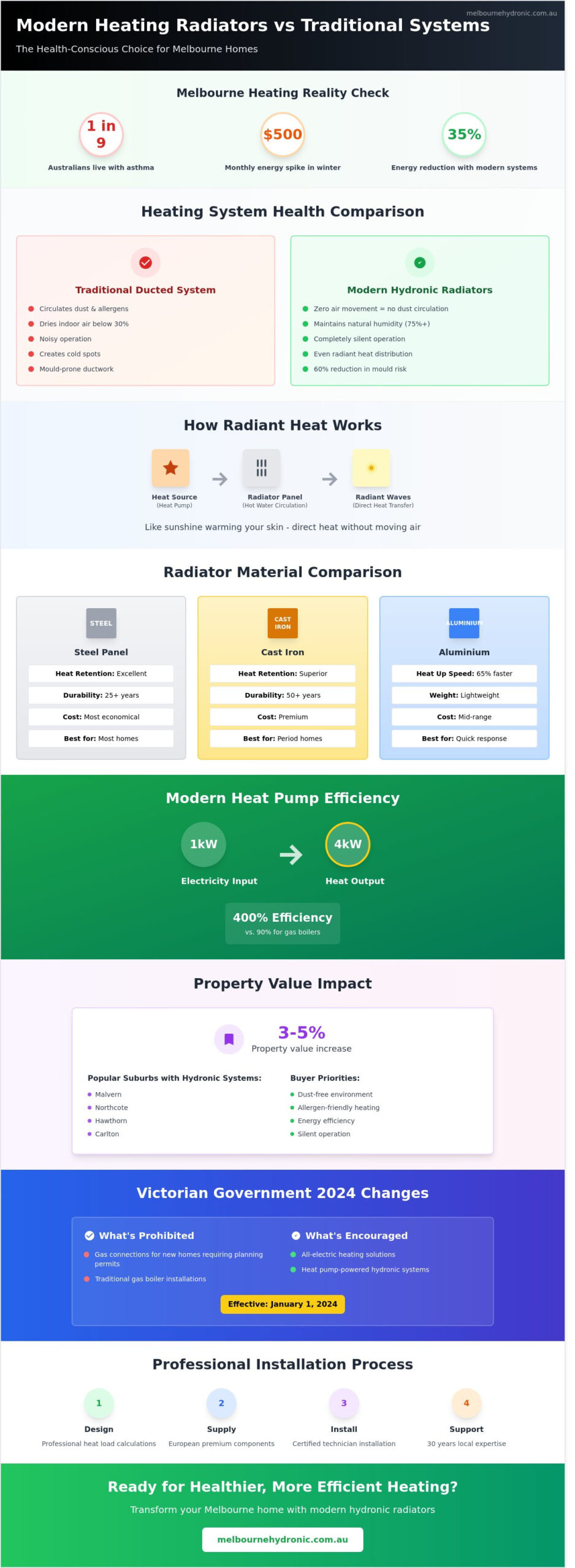
The energy landscape in Victoria is undergoing its most significant transformation in decades. Since January 1, 2024, the Victorian Government has prohibited gas connections for new homes requiring a planning permit. This move accelerates the 2026 shift toward all-electric living. While traditional natural gas boilers have served Melbourne for 50 years, modern air-to-water heat pumps are the new gold standard. These electric systems can achieve efficiencies of 400 percent, meaning they turn 1kW of electricity into 4kW of heat. This makes the modern heating radiator a future-proof choice for families looking to decarbonize without sacrificing comfort.
Hydronic vs. Electric Radiators: What is the Difference?
Don’t confuse a professionally installed hydronic system with those portable, oil-filled electric heaters found in retail stores. A hydronic system is a permanent, central investment that uses a single heat source to warm the entire home through a network of pipes. It’s a silent, closed-loop process. Real estate trends in suburbs like Malvern and Northcote show that premium hydronic installations can increase property values by 3 to 5 percent. Buyers specifically look for these systems because they offer a dust-free, allergen-friendly environment that portable electric units, which are expensive to run and prone to failure, just can’t provide. For a detailed comparison of your heating options, explore our comprehensive radiator heater guide for Melbourne homes that covers both hydronic and electric systems for 2026.
The Anatomy of a Premium Radiator
A high-performance heating radiator consists of three main parts: the exterior panels, internal convector fins, and a thermostatic radiator valve (TRV). Material choice determines how your home feels. Steel panels are the most common for their durability and heat retention. However, aluminium radiators are gaining popularity because they heat up roughly 65 percent faster than steel due to their lower water content. We rely on European engineering from brands like DeLonghi and Stelrad because their manufacturing standards ensure the units last for 25 years or more. These premium components work together to provide silent, flicker-free warmth that respects the architectural integrity of your home.
The Health Advantage: Why Radiators are the Best Choice for Asthma
Standard ducted systems rely on forced convection. They push air through vents, often dragging dust, pet dander, and microscopic pollen along with it. In a city where 11% of the population suffers from asthma, this “dust-storm” effect can turn a living room into a health hazard. A hydronic heating radiator operates on a different principle. It uses radiant heat to warm objects and people directly, similar to the way the sun warms your skin on a crisp morning. Because there’s no fan or moving air, allergens stay settled on the floor where they can be vacuumed away rather than being inhaled.
The Victorian Government emphasizes the importance of selecting asthma-friendly heating options that don’t circulate particulates or combustion gases. Hydronic systems are the gold standard for this requirement. They provide a consistent, gentle warmth that maintains natural indoor humidity. While split systems often drop indoor humidity below 30%, causing dry eyes and skin irritation, radiators keep the air comfortable and breathable throughout the Melbourne winter.
Allergy-Friendly Heating for Melbourne Families
Radiant heat eliminates the need for complex ductwork where mould and bacteria often thrive in dark, damp corners. Since a heating radiator has no filters to clog or fans to fail, it remains a clean heat source for decades. This consistent thermal mass also prevents the cold spots and condensation on walls that lead to mould. Maintaining a stable wall temperature can reduce the risk of mould spores by up to 60% in older Melbourne weatherboards.
Silent Operation and Sleep Hygiene
Sleep quality depends heavily on a stable, quiet environment. While a split system or ducted heater cycles on and off at roughly 50 decibels, a hydronic radiator is completely silent. It operates at 0 decibels. This silence prevents the micro-awakenings that disrupt deep REM sleep cycles. The steady temperature also mimics the body’s natural circadian rhythm needs, providing a “sun-like” psychological comfort that forced air simply cannot match. If you’re looking to improve your home’s wellness profile, you can explore our range of healthy heating solutions designed for local homes.
Comparing Radiator Types: Finding Your Perfect Match
Choosing the right heating radiator involves balancing thermal performance with the architectural DNA of your home. Most Melbourne homeowners select from three primary categories: Steel Panel, Cast Iron, or Designer models. Each type varies in its thermal mass, which is the material’s ability to store and release heat over time. While steel panels heat up rapidly, cast iron units retain warmth for hours after the system switches off. To find the right fit, you must calculate the specific heat loss of your room based on window size, ceiling height, and insulation quality. A poorly insulated room with 3-metre ceilings requires a significantly higher BTU output than a modern, double-glazed apartment.
Safety is a priority for specific environments. In nurseries or aged care settings, we recommend Low Surface Temperature (LST) radiators. These specialised units feature a cool-to-touch outer casing that stays below 43°C. This design prevents contact burns while the internal heat exchanger continues to deliver consistent warmth. It’s an essential consideration for protecting vulnerable residents without sacrificing comfort.
Steel Panel Radiators: The Versatile All-Rounder
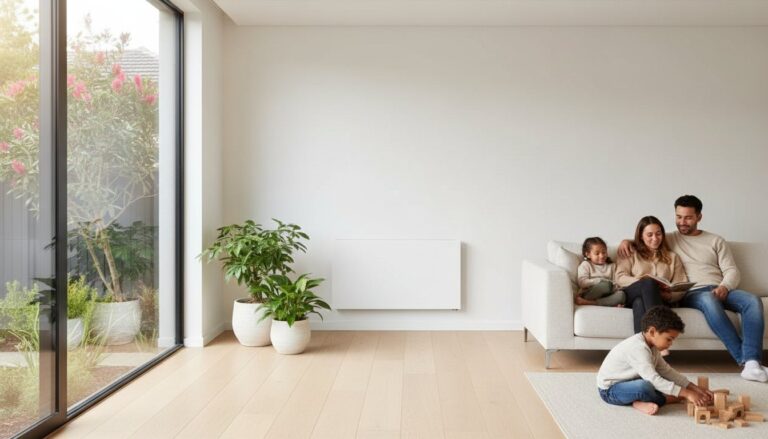
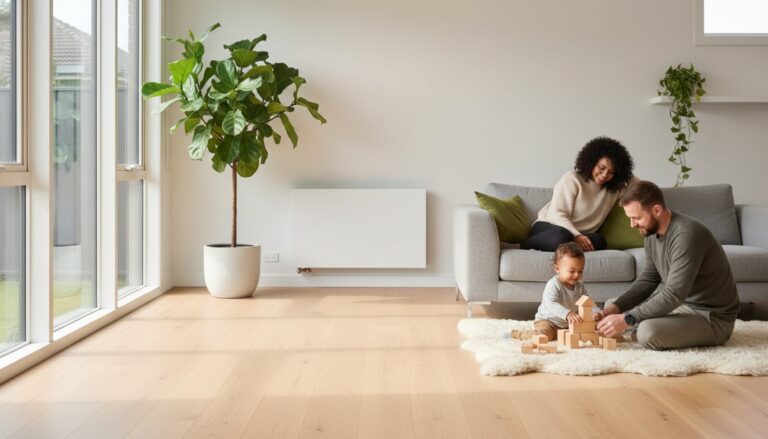
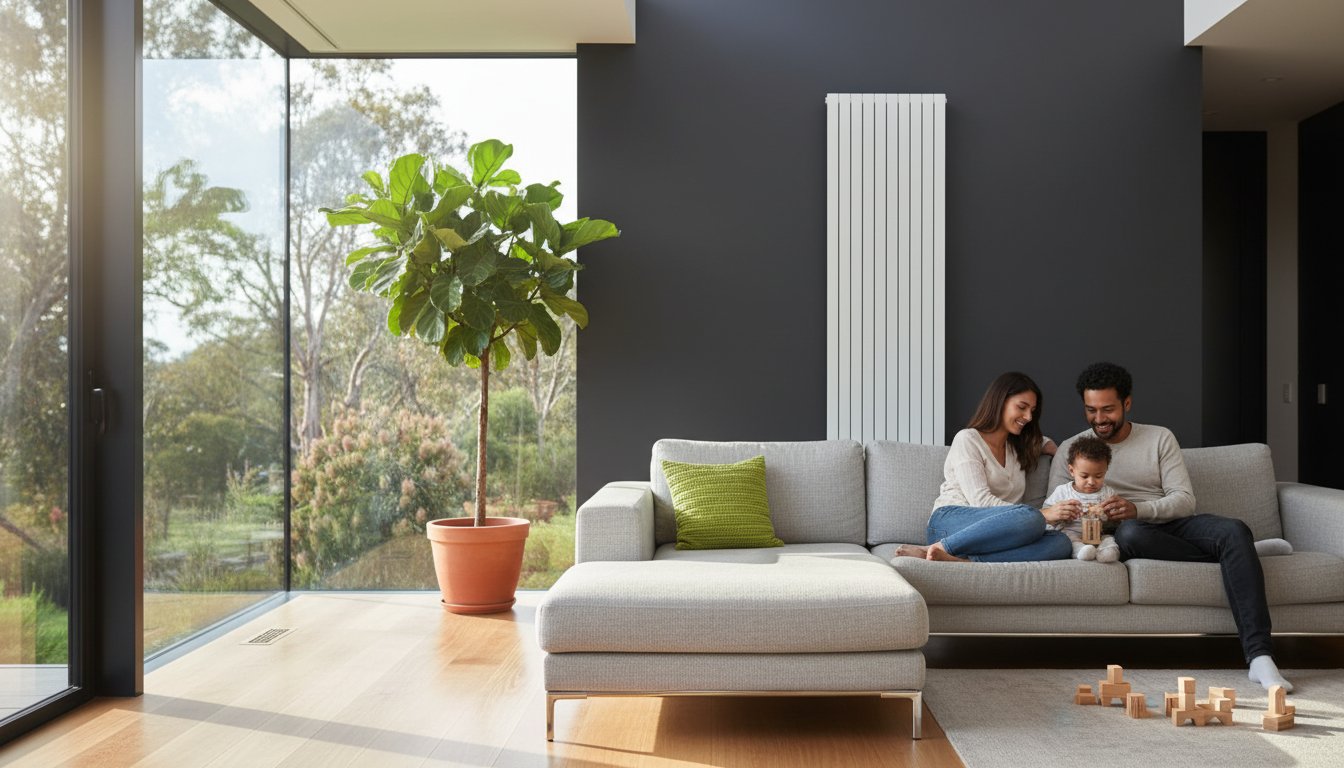
Steel panel radiators, especially premium European brands like DeLonghi, account for approximately 70% of hydronic installations in Melbourne renovations. Their popularity stems from an exceptional heat output-to-size ratio. They’re the most energy efficient heating choice for modern living because they respond almost instantly to thermostat adjustments. You can choose vertical orientations to save horizontal wall space or standard horizontal panels for a discreet look under windows. Their low water content makes the entire system more agile and easier to control.
Cast Iron and Tubular: Perfect for Victorian Heritage
Maintaining the aesthetic integrity of 19th-century Victorian and Edwardian homes requires a traditional touch. Cast iron radiators provide the heavy thermal mass needed to combat the drafts often found in older builds. Once they reach temperature, they emit a deep, radiant warmth that won’t dissipate the moment a door opens. For those seeking a “retro-modern” look in a converted warehouse or industrial-style space, tubular steel designs offer the same chunky profile with a slightly more contemporary finish.
Designer and Trench Heating
Modern Bayside architecture often features floor-to-ceiling glass that leaves no room for traditional wall-mounted units. Trench heating solves this by placing the heating radiator inside a floor recess covered by a walk-on grille. This creates a thermal curtain that stops cold air from entering through the glass. In luxury bathrooms, hydronic towel rails are a standard inclusion. These units do more than dry towels; they provide enough ambient heat to keep the room dry and reduce mould growth, contributing to a healthier, allergen-friendly home environment.
Sizing and Placement: A Melbourne Homeowner’s Checklist
Selecting the right heating radiator isn’t just about aesthetics; it’s a matter of thermal engineering. A precise “Heat Load Calculation” is the first step our technicians take before any installation. This process accounts for your home’s unique orientation, wall materials, and insulation levels. In Melbourne’s older suburbs like Carlton or Hawthorn, Victorian-era homes often feature 3.3-metre ceilings and original timber-frame windows. These architectural gems require significantly more output than a modern apartment in Southbank. Without this calculation, you risk installing a system that’s expensive to run or fails to reach a comfortable 21°C on a July morning.
Strategic placement is equally vital for a healthy, dust-free environment. We typically install units on the coldest wall of a room, usually directly beneath a window. This placement creates a thermal curtain; the rising warm air from the radiator intercepts the falling cold air from the glass. This prevents the “cold feet” sensation common in houses with standard ducted systems. To give you full control, we equip each unit with Thermostatic Radiator Valves (TRVs). These allow you to set the master bedroom to 18°C for better sleep while keeping the living area at a cozy 22°C.
Calculating Your Room’s Heat Requirement
For a standard Melbourne home with 2.4-metre ceilings, a reliable rule of thumb is 100 Watts of power per square metre. However, if you’re living in a heritage home with high ceilings and no wall insulation, this requirement often jumps to 140 Watts per square metre. Bigger isn’t always better; an oversized system leads to “short-cycling,” which wears out your boiler faster and increases energy bills. If you’ve invested in double glazing, you can typically reduce your radiator’s required output by 25% to 30%, as the glass retains heat far more effectively than single-pane windows.
Strategic Placement for Maximum Comfort
To ensure every heating radiator performs at peak efficiency, avoid “heat traps.” Placing a unit behind a heavy sofa or floor-length curtains can waste up to 20% of its output by absorbing the heat before it circulates. During a renovation, we can hide pipework within the wall cavities for a sleek, minimalist look. In a retrofit scenario for an existing home, we often run pipes through the floor space or along neat skirting profiles to minimize structural disruption.
Ready to find the perfect fit for your home? Request a professional heat load assessment from our local Melbourne experts today.
Designing Your System with Melbourne Hydronic Heating
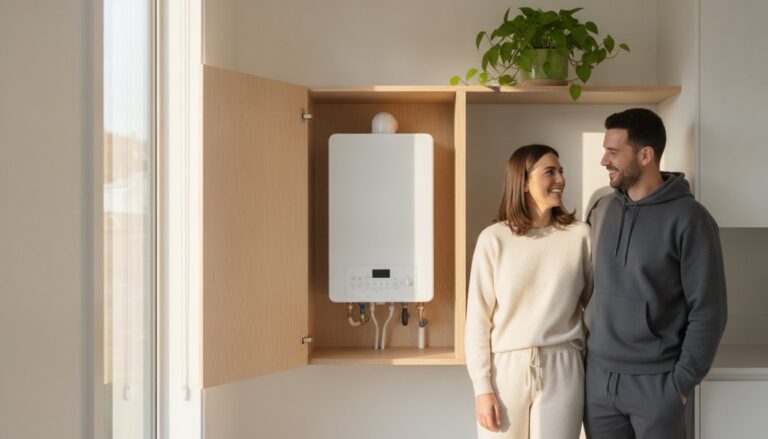
Melbourne Hydronic Heating brings over 30 years of local experience to every project across Victoria. We don’t just sell components; we provide a complete “Design, Supply, Install” turnkey service. This means our team handles everything from the initial heat load calculations to the final pressure testing of your heating radiator network. By integrating modern, energy-efficient electric heat pumps, we help homeowners achieve a Coefficient of Performance (COP) of up to 4.0. This translates to four units of heat for every one unit of electricity used, significantly lowering running costs compared to traditional gas systems.
Why a Professional Design Matters
Professional design prevents common DIY mistakes like inefficient pipe layouts or incorrectly sized pumps that lead to uneven heating. Our experts tailor every system to the specific microclimates and architecture of Melbourne suburbs. Whether you’re retrofitting a drafty Victorian cottage in Fitzroy or heating a sprawling new build in Mornington, the layout is customized for maximum thermal mass efficiency. Every project strictly adheres to Energy Safe Victoria standards, ensuring your family’s safety and your home’s compliance with local building codes. A well-designed system doesn’t just work better; it lasts longer and costs less to operate.
Beyond Installation: Servicing and Support
Maintaining your system is vital for long-term performance and keeping your energy bills low. Annual servicing ensures your boiler and circulation pumps operate at peak health, preventing unexpected failures during the peak of winter. A critical part of our maintenance program is power flushing. We recommend this deep-clean process every 5 years to remove the magnetite and sludge that naturally accumulate inside your heating radiator panels. This buildup can reduce efficiency by 15% or more if left untreated. Regular maintenance protects your investment and ensures the air in your home remains dust-free and healthy for years to come.
- 30+ years of expertise in Melbourne’s unique climate.
- Full compliance with Energy Safe Victoria regulations.
- Expert power flushing to restore system efficiency.
- Integration with the latest European heat pump technology.
Ready to upgrade your home comfort? Book a consultation with our Melbourne specialists today and experience the difference that three decades of expertise makes.
Secure a Healthier, Warmer Future for Your Melbourne Home
Investing in a high-quality heating radiator is a strategic move for your home’s comfort and your family’s well-being. Modern hydronic systems are the premier choice for the 1 in 9 Australians living with asthma because they provide radiant warmth without circulating dust, pet dander, or allergens. By following our 2026 checklist for sizing and placement, you’ll ensure every room maintains a steady temperature while significantly reducing energy waste. It’s about more than just surviving the Melbourne winter; it’s about creating a silent, dust-free sanctuary that adds long-term value to your property.
Melbourne Hydronic Heating offers over 30 years of experience across Victoria. We’re a family-owned and operated team of specialists dedicated to asthma-friendly heating solutions that don’t compromise on style. We understand the specific architectural needs of local homes and provide the technical precision required for a seamless installation. You’ll benefit from a system that balances premium European engineering with local expertise, ensuring your investment pays off in both luxury and daily health. When choosing between different radiator heater systems for your Melbourne home, consider the long-term benefits of hydronic technology for superior comfort and efficiency.
Get a Custom Hydronic Radiator Quote for Your Melbourne Home
Your journey toward a more comfortable, energy-efficient lifestyle starts today. We look forward to helping you design a system that fits your home and your health needs perfectly.
Frequently Asked Questions
Are hydronic radiators cheaper to run than electric heaters in Melbourne?
Yes, hydronic radiators are significantly more cost-effective, typically reducing your monthly running costs by 35% compared to standard electric convection heaters. While an electric heater converts 1 unit of energy into 1 unit of heat, a modern gas-fired condensing boiler or electric heat pump system achieves much higher thermal efficiency. In a typical Melbourne winter, this translates to hundreds of dollars saved on your quarterly utility bills.
Can I install heating radiators in an existing timber-floor home?
You can definitely install a heating radiator system in an existing timber-floor home through a process called retrofitting. Our technicians access the subfloor space to run high-quality insulated piping beneath your floorboards, connecting to each room with minimal disruption to your daily life. About 45% of our installations occur in established Melbourne period homes where preserving original Victorian or Edwardian timber flooring is a top priority.
How long does it take for a hydronic radiator to heat up a room?
A standard steel panel radiator reaches its optimal operating temperature in approximately 10 to 15 minutes. You’ll feel the gentle, radiant warmth across the room within 30 minutes of the system engaging the thermostat. Because this system warms objects and surfaces rather than just blowing dry air, the room stays comfortable for much longer even after the system cycles off.
Do heating radiators require a lot of maintenance?
Hydronic systems are remarkably low-maintenance, requiring only a simple professional service once every 12 months to ensure peak performance. This annual check focuses on the heat source and system pressure rather than the radiator panels themselves. Unlike ducted systems that need expensive duct cleaning every 2 years to remove allergens, a sealed hydronic system remains clean and efficient for decades.
What is the best radiator brand available in Australia?
We recommend DeLonghi and Korado as the premier brands for the Australian market due to their 25 year manufacturer warranties and superior heat output. These European-manufactured panels meet the strict EN442 quality standards, ensuring they don’t leak or corrode over time. In 2023, DeLonghi remained our most requested brand for Melbourne renovations because of its elegant aesthetic and reliable thermal engineering.
Can I use a heat pump to power my existing radiator panels?
You can power existing panels with an air-to-water heat pump, provided the heating radiator units are sized correctly for lower water temperatures. Modern high-temperature heat pumps can reach 60 degrees Celsius, which is sufficient for most existing setups in Melbourne homes. Transitioning to a heat pump can improve your energy efficiency by up to 300% compared to traditional gas boilers.
Are radiators safe for homes with small children and pets?
Radiators are one of the safest heating options for families because they have no exposed flames, sharp moving parts, or scorching surfaces. The surface temperature of a standard panel typically stays around 60 degrees Celsius, which is hot enough to heat the room but won’t cause instant burns upon a quick touch. They also provide a dust-free environment, which reduces asthma triggers for the 1 in 9 Australian children living with respiratory sensitivities.
How much does a full hydronic radiator system cost to install in Melbourne?
A complete installation for a standard three-bedroom Melbourne home typically costs between A$12,000 and A$18,000. This investment covers the high-efficiency boiler or heat pump, premium European panels, and all specialized insulated piping required for the layout. While the initial cost is higher than split systems, the 25 year lifespan and lower running costs offer a much stronger long-term return on investment.