
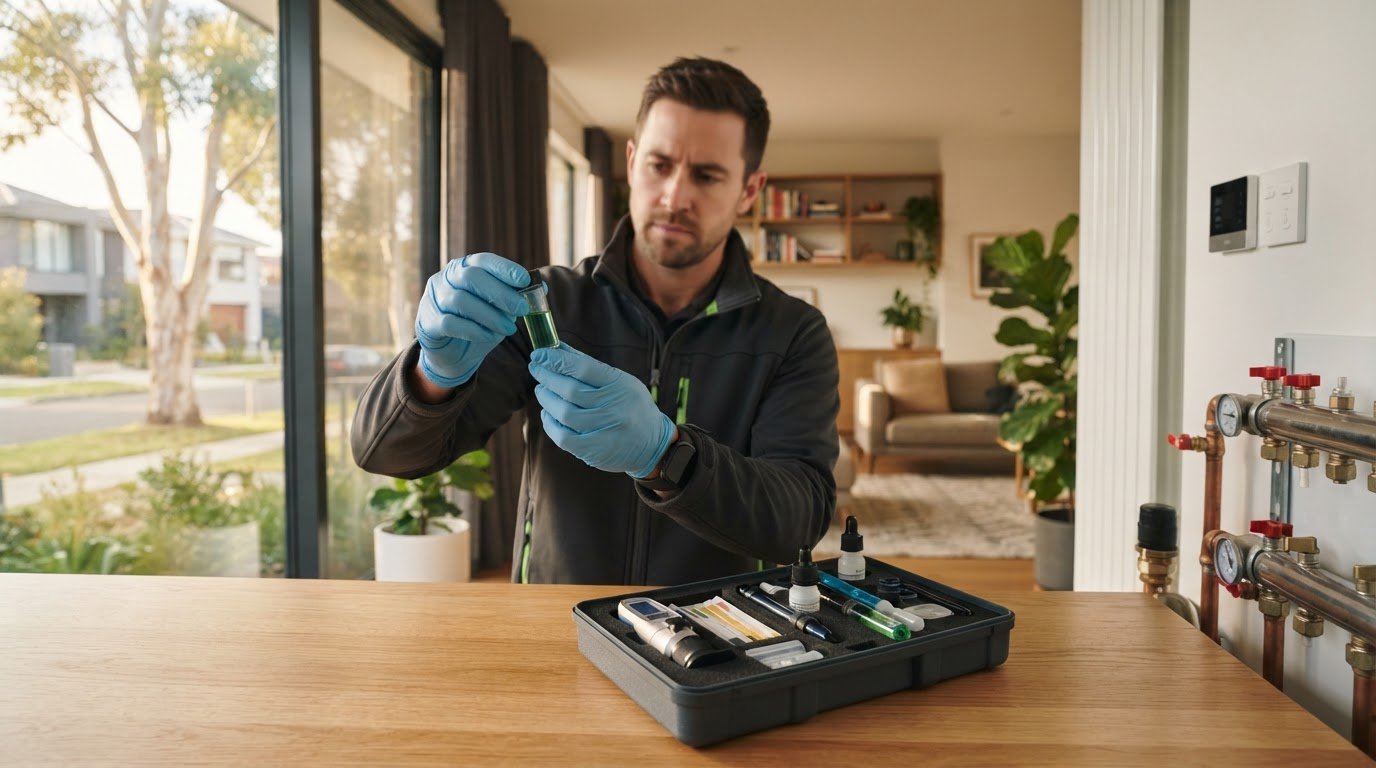
Hydronic System Glycol Testing and Replacement in Melbourne
Replacing the glycol isn’t always the right first step. If you’re searching for hydronic system glycol testing and replacement Melbourne, first find out whether the fluid has been tested and shown to need attention. Glycol can help protect a hydronic system from freezing and corrosion, but poor heating may also point to air, low pressure, leaks or sludge rather than a fluid problem.
A professional assessment can check the fluid’s type and condition, including its freeze protection and pH, then consider whether another system issue may be contributing. This guide explains what testing and a replacement assessment can involve, when a change may be considered, and what to ask before arranging service in Melbourne or Geelong. Melbourne Hydronic Heating is a family-owned specialist with over 30 years of industry experience. Contact the business to confirm whether glycol testing or replacement is available for your system.
Key Takeaways
- Glycol can help provide freeze protection and corrosion inhibition, but its condition is only one part of hydronic system health.
- Testing may assess fluid properties such as concentration, freeze protection, pH or inhibitor condition. Results should be interpreted against the fluid manufacturer’s guidance and your system requirements.
- A compatible top-up or replacement should follow an assessment. If fluid is being lost, investigate the cause rather than simply topping it up.
- For an assessment in Melbourne or Geelong, note your boiler or heat pump make, any known fluid details and the system’s maintenance history.
- Before arranging hydronic system glycol testing and replacement Melbourne, confirm that the provider can assess your glycol type and system configuration.
Hydronic system glycol testing in Melbourne: what it checks and why it matters
Not every hydronic system contains glycol, and uneven heating doesn’t automatically mean the fluid needs replacing. For homeowners researching hydronic system glycol testing and replacement Melbourne, the first step is identifying what fluid is already in the system and whether it suits the equipment and its intended use.
Glycol testing assesses fluid properties to help determine whether the fluid remains suitable for the system and its maintenance requirements. It can inform a maintenance decision, but it cannot diagnose every cause of poor heating or confirm that the whole system is in good condition.
What glycol does inside a hydronic heating system
In a glycol-treated system, fluid circulates through pipework and heat emitters, such as radiators or underfloor circuits, and passes through a boiler or heat pump to carry heat around the property. Depending on its formulation, glycol may provide freeze protection. Inhibitors in some products may also help limit corrosion. These functions are not interchangeable, and protection varies by product.
Fluid and equipment compatibility matter. The right product depends on the system design, the boiler or heat pump requirements and the fluid manufacturer’s specifications. Don’t assume different glycol products can be mixed or substituted. For background on one glycol compound, see ethylene glycol properties. Fluid manufacturer documentation and equipment guidance should inform decisions about your system.
When Melbourne hydronic owners might ask about glycol
A glycol question may come up after hydronic system work, when a leak is suspected, or when heating performance changes. These situations call for investigation, not an automatic top-up or replacement. If a leak is affecting fluid levels, for example, the cause and the fluid already in the system need to be understood before deciding what to do.
Being in Melbourne or Geelong doesn’t by itself establish whether a system needs glycol. Suitability depends on the system and equipment requirements, which should be checked against manufacturer guidance. Poor heating can also have causes unrelated to glycol, so fluid condition is only one part of a wider assessment. For context on broader maintenance and faults, read the Melbourne hydronic heating service guide.
How a hydronic glycol test assesses fluid condition
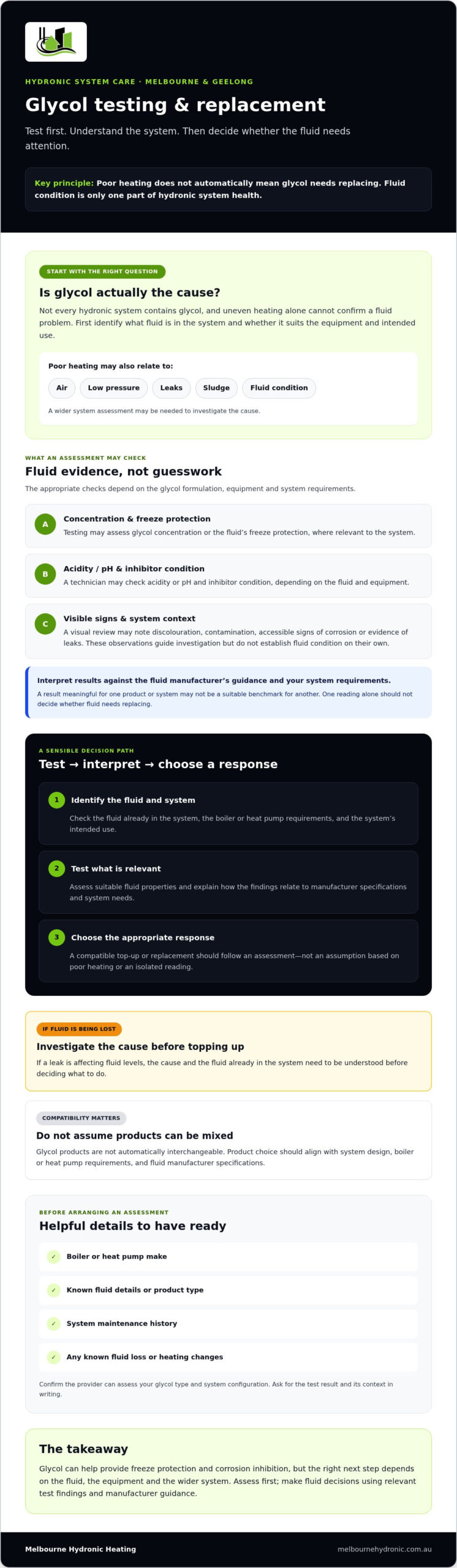
There isn’t one universal hydronic glycol test. The appropriate checks depend on the fluid formulation, the equipment and what the system is designed to do. Testing should provide evidence about fluid condition that can be interpreted alongside system requirements, rather than turning an isolated reading into a replacement decision.
What a technician may inspect or measure
Where relevant to the system, an assessment may include glycol concentration or freeze protection, along with checks of acidity or inhibitor condition. A qualified technician should confirm which tests are suitable and how results will be interpreted using the fluid and equipment guidance. Glycols are used in HVAC systems for purposes that can include freeze and corrosion prevention, as described in this overview of the purpose of glycols in HVAC.
A visual review can provide useful context. A technician may look for discolouration or contamination in the fluid, signs of corrosion around accessible components, or evidence of leaks. These observations can guide further investigation, but they do not establish fluid condition on their own.
Why test results need system-specific interpretation
Different glycol formulations and equipment requirements affect what a result means. A reading that is relevant to one product or system may not be a suitable benchmark for another. Avoid relying on general online thresholds. The technician should compare findings with the relevant manufacturer specifications and explain any limits or uncertainties.
One reading alone shouldn’t determine whether hydronic fluid needs replacing. A screening check may flag something for follow-up, but it isn’t a complete diagnosis of a boiler, pump or circulation fault. If rooms heat unevenly, the cause may require checks beyond the fluid. Testing can inform the next step, while system performance and other possible faults need separate consideration.
For a useful maintenance record, ask for the test result and its context in writing. Note the fluid product and type, if known, what was checked, and the recommended next step. If you’re considering hydronic system glycol testing and replacement Melbourne, this information can help a hydronic specialist assess the issue. Melbourne Hydronic Heating offers hydronic system servicing and maintenance. Contact the business to confirm whether it can assess your glycol type and system. Explore hydronic system servicing and maintenance.
Glycol top-up, testing, or replacement: how to choose the right response
Testing, topping up and replacing fluid address different needs. Testing helps establish what is in the system and whether it appears suitable. A top-up restores fluid only when a shortfall has been identified and the correct compatible product is known. Replacement is a broader intervention to consider when assessment indicates that the existing fluid is unsuitable or degraded. The right response depends on evidence, system requirements and the cause of any fluid loss, not an assumed schedule.
When testing may be the sensible first step
If fluid condition is uncertain, testing may be a useful starting point, provided the system can be assessed safely. Before arranging an assessment, gather service records, fluid labels or product details, and notes about recent repairs or system changes. This information can help the technician identify what may be in the system and which checks are relevant.
Test findings should guide the recommendation. Depending on the results and manufacturer guidance, they may support continued use, a compatible top-up, further investigation or replacement. A calendar date alone doesn’t establish that a fluid change is needed.
When replacement or further investigation may be considered
A technician may consider replacement if assessment indicates that the fluid is unsuitable or degraded. Before agreeing, ask why replacement is recommended, what the work is expected to involve, and how compatibility with the system will be confirmed. Also ask how the existing fluid will be handled and what disposal procedures apply.
Fluid loss needs particular care. Repeated loss could point to a leak that needs locating, so a top-up may not resolve the underlying issue. Repeated pressure loss or heating faults also call for diagnosis. Replacing glycol alone may not address their cause. Don’t mix products or add fluid based on appearance or guesswork. Formulations can differ, so confirm compatibility against the product and equipment guidance.
For broader context, read this hydronic power flushing explanation. Power flushing and fluid replacement aren’t automatically the same job. Ask the technician whether either is appropriate for your system and why.
For homeowners comparing hydronic system glycol testing and replacement Melbourne, use a straightforward decision process: identify the fluid if possible, investigate any loss or performance issue, test where appropriate, then agree on a response based on the findings. Before arranging work with a local hydronic specialist in Melbourne or Geelong, confirm that they can assess your glycol type and system configuration.
What to expect from glycol testing and replacement in Melbourne
A well-prepared assessment starts with clear information, then moves from inspection and findings to an agreed plan. If you’re considering hydronic system glycol testing and replacement Melbourne, first confirm that the provider can assess your fluid type and system configuration. Don’t assume testing or replacement is available without checking.
How to prepare for a local hydronic assessment
Before contacting a hydronic specialist, note what prompted your enquiry. Record symptoms such as uneven heating, unusual pressure changes, suspected fluid loss or recent fluid additions. Gather the boiler or heat pump make and model, equipment manuals, previous service records, and glycol packaging or invoices if available. Even partial product information may help the technician understand what is in the system.
When arranging an assessment, ask what access is needed. Depending on the proposed checks, the technician may need to reach the heat source, accessible pipework or the system filling point. Clarify this beforehand so you can prepare the area and share relevant system history.
Questions to ask before agreeing to fluid work
Before authorising work, ask the provider to explain the proposed scope in plain language. Useful questions include:
- Which fluid checks are proposed, and how will the results be compared with the equipment and fluid requirements?
- If a change is recommended, what product is proposed, and how will compatibility with the existing system be confirmed?
- Does the recommendation include investigating a suspected leak or other hydronic maintenance, or would that require a separate assessment?
- What system downtime should I plan for, and are follow-up checks included in the proposed work?
Ask for the findings and next steps to be recorded, including any limits to the assessment. If replacement is proposed, clarify how the existing fluid will be handled and what disposal procedures apply. A clear scope helps you understand what will be done, what won’t, and whether another issue needs attention before fluid work proceeds.
Melbourne Hydronic Heating provides hydronic system servicing and maintenance, but glycol testing and replacement are not confirmed services. Contact the business to check whether it can assess your system and discuss an appropriate maintenance response. Discuss your hydronic system servicing needs.
Arrange an experienced hydronic system assessment in Melbourne
Choosing the right next step starts with understanding the system, the fluid and the concern you’ve noticed. Melbourne Hydronic Heating is a family-owned hydronic specialist serving Melbourne and Geelong, with over 30 years of industry experience. That background is relevant when considering system maintenance, but glycol testing and replacement are not confirmed services. Ask whether the business can assess your fluid type and system configuration before arranging work.
Match the service request to the system
When you make an enquiry, say whether the property is in Melbourne or Geelong and whether the hydronic system serves a home or business. Share the heat source type, such as a boiler or heat pump, along with the system’s age, known glycol product and recent service history. Mention symptoms such as uneven heating, suspected fluid loss or pressure changes. These details help the specialist understand the request and advise whether system servicing, repairs or another assessment may be appropriate.
Make the next step clear and practical
Before booking or approving work, request confirmation of the service scope. Ask whether the proposed visit can include the specific fluid assessment you need, what information or access is required, and whether follow-up checks are part of the plan. If findings point to a wider hydronic issue, discuss relevant servicing or repairs separately rather than assuming they’re included in a glycol assessment.
A clear explanation of the findings can help you make an informed choice without committing to fluid work that may not address the underlying concern. Whether you’re looking into hydronic system glycol testing and replacement Melbourne or seeking broader system maintenance, confirm the provider’s capability for your equipment and the proposed work before proceeding.
For experienced local guidance, contact Melbourne Hydronic Heating to describe your system and ask whether the required fluid assessment is available. It’s a practical first step towards well-informed hydronic care and dependable home comfort.
Take the next step towards informed hydronic care
Glycol replacement shouldn’t be the default response to a hydronic fault. Testing can help assess fluid condition, but results need to be interpreted against fluid and equipment requirements. If heating is poor or fluid is being lost, the wider system may also need investigation.
For hydronic system glycol testing and replacement Melbourne, first confirm that the provider can assess your system and fluid type. Share your heat source details, any known glycol product and relevant service history, then ask what the proposed assessment covers and what the findings recommend.
Melbourne Hydronic Heating is a family-owned hydronic specialist with over 30 years of industry experience, serving Melbourne and Geelong. Glycol testing and replacement are not confirmed services, so contact the team to discuss your system and check what assessment may be available. Contact Melbourne Hydronic Heating to discuss your system. A clear assessment is a practical start towards reliable, well-informed hydronic care.
Frequently Asked Questions
How often should hydronic system glycol be tested?
There isn’t one testing interval that suits every hydronic system. Follow the fluid manufacturer’s and equipment manufacturer’s guidance, and ask a qualified technician to recommend a schedule for your setup. Testing may also be worth discussing after system work, suspected fluid loss or a change in heating performance. Keep the results and advice with your maintenance records so future assessments can account for the fluid’s history.
How do I know if the glycol in my hydronic heating system needs replacing?
You can’t reliably determine that from appearance, system age or one reading alone. A technician may recommend further action if testing indicates the fluid isn’t suitable for the system, but the result needs to be interpreted against product and equipment requirements. Discolouration, suspected contamination or fluid loss are reasons to arrange an assessment, not proof that replacement is required. Ask for the findings and the reason behind any recommendation.
Can I top up a hydronic system with any glycol?
No. Don’t add a product until you’ve confirmed it’s compatible with the fluid already in the system and with the boiler or heat pump requirements. Different formulations may not be suitable to mix, and the correct fluid can’t be identified by colour alone. If the level has dropped, first ask a technician to investigate why. A top-up shouldn’t replace diagnosis of a suspected leak or repeated fluid loss.
What does a hydronic glycol test check?
Depending on the system and fluid, a test may assess glycol concentration or freeze protection, and may include checks related to acidity or inhibitor condition. A technician may also visually inspect for discolouration, contamination, leaks or signs of corrosion. Not every check applies to every product. Ask which tests are proposed, what the results mean for your system, and whether separate investigation is needed to explain a heating fault.
Does every hydronic heating system in Melbourne need glycol?
No. Whether glycol is appropriate depends on the system design, equipment requirements and fluid specifications, not simply on being in Melbourne. Some hydronic systems may use treated water without glycol, while others may require fluid with particular properties. Don’t add glycol as a precaution without checking manufacturer guidance. If you’re unsure what your system contains, share the heat source details and available service history with a hydronic specialist in Melbourne or Geelong.
Can glycol cause hydronic heating problems?
It can contribute to issues if the fluid is unsuitable for the equipment, incompatible with what’s already in the system, or no longer in suitable condition. Incorrect fluid or an unverified mix may affect system operation, but poor heating can also have other causes, such as circulation or equipment faults. Ask for a system-specific assessment rather than assuming glycol is responsible or replacing it without investigating the symptoms.
How much does hydronic glycol testing or replacement cost in Melbourne?
Costs depend on the work required, and Melbourne Hydronic Heating’s availability and pricing for glycol testing or replacement aren’t confirmed. Contact the provider to ask whether it can assess your fluid type and system, then request a clear quote for the proposed scope. Check whether the quote covers testing, any fluid work, investigation of leaks or related hydronic maintenance, and follow-up checks before approving work.