Hydronic Towel Rails: The Ultimate Guide to Bathroom Comfort in Melbourne
Imagine stepping out of the shower on a freezing July morning in Melbourne and reaching for a towel that isn’t just dry, but radiating a deep, consistent warmth. We all know the frustration of Victorian winters, where towels never seem to dry and a lingering chill makes the bathroom the least inviting room in the house. You’ve likely tried those inefficient plug-in heaters that spike your electricity bill without ever truly solving the moisture or mould issues.
Investing in hydronic towel rails is about more than just comfort; it’s a strategic move for your home’s health and efficiency. This guide will show you how these systems transform your bathroom into a warm, hygienic sanctuary while integrating seamlessly with your home’s energy-efficient heating system. We’ll explore the technical advantages of pairing rails with modern electric heat pumps, the health benefits of eliminating dampness, and how to navigate Victoria’s evolving energy standards to ensure your home remains comfortable and compliant for years to come.
Key Takeaways
- Learn how radiant heat technology provides deeper, more consistent warmth than traditional electric heaters.
- Find the perfect balance between style and function by choosing the right materials and sizes for your family’s needs.
- Discover how to seamlessly integrate hydronic towel rails into your central heating system for a cohesive, energy-efficient bathroom.
- Improve your home’s health by significantly reducing bathroom moisture, mould, and bacterial growth on damp linens.
- Benefit from over 30 years of local design and installation expertise to create a custom heating solution tailored to your Melbourne home.
What are Hydronic Towel Rails and How Do They Work?
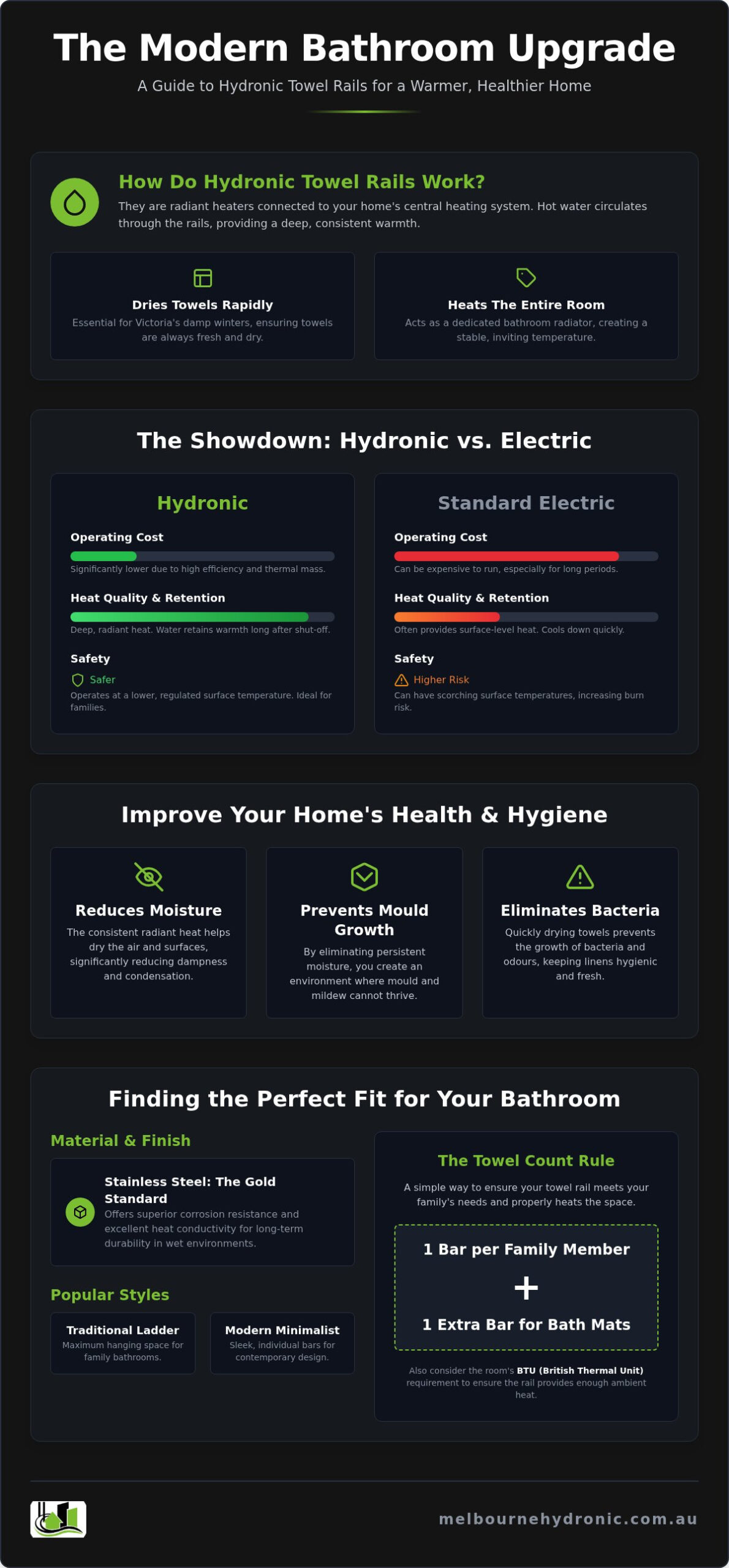
Hydronic towel rails are radiant heating units that connect directly to your home’s central heating network. Unlike basic electric versions that rely on internal wires, these systems use water as the heat transfer medium. Hot water circulates through the bars, creating a consistent and comfortable temperature that radiates outward. For a broader look at the technology and its origins, you can explore What are Hydronic Towel Rails and How Do They Work? to see how these designs have evolved into modern household essentials. In a Melbourne home, this means your bathroom benefits from the same high-efficiency heat source used for the rest of your living spaces.
The primary function of these rails is twofold. First, they dry your towels rapidly, which is essential during Victoria’s damp winter months. Second, they act as a dedicated radiator for the bathroom. By warming the air and the surfaces around them, they eliminate the need for bulky, separate heaters. This dual action ensures that your towels are always fresh while the room remains at a stable, inviting temperature.
Hydronic vs. Electric Towel Rails: The Key Differences
Operating costs are where hydronic systems truly excel for local homeowners. While electric rails are often cheaper to buy upfront, they can be expensive to run, especially if they’re left on for long periods. Hydronic rails benefit from thermal mass. Because water retains heat much longer than the air or “dry” elements found in electric models, the rails stay warm with far less energy input.
Safety is another significant advantage. Hydronic systems typically operate at a lower, more regulated surface temperature. This reduces the risk of accidental burns, making them a safer choice for families with young children. You get a deep, penetrating warmth without the scorching surface temperatures sometimes associated with high-wattage electric units.
System Integration: Part of Your Whole-Home Comfort
These rails don’t function in isolation; they’re a key component of a larger ecosystem. They connect directly to the same pipework that feeds your hydronic heating panels. A central manifold acts as the distribution hub, directing the flow of heated water to each room based on your needs.
This integration allows for precise zoning. You can control your bathroom temperature independently from your living room or bedrooms. If you want a warm bathroom ready for your 6:00 AM shower without heating the entire house, a zoned hydronic system provides that flexibility. It’s a sophisticated, engineered approach to comfort that standalone heaters can’t match. This level of control ensures you aren’t wasting energy on unused rooms while keeping your sanctuary perfectly tempered.
Choosing the Right Style for Your Melbourne Bathroom
Selecting the right hydronic towel rails involves more than just picking a design that matches your tiles. It’s a technical decision that affects the thermal efficiency of your entire bathroom. You’ll need to choose between traditional ladder styles, which offer maximum hanging space, and modern minimalist bars that suit contemporary, streamlined layouts. While aesthetics matter, the material and size you choose will determine if your towels are bone-dry by morning and if the room feels genuinely warm when you step out of the shower.
Material Durability in Wet Environments
High-grade stainless steel is the gold standard for longevity. In the humid environment of a bathroom, lower-quality metals can succumb to pinhole leaks or surface rust within just a few years. Stainless steel offers superior corrosion resistance and excellent heat conductivity. While chrome finishes are a classic choice, they can sometimes act as a slight insulator, reducing the heat output compared to a brushed or powder-coated finish. If you’re looking for a specific aesthetic, powder-coated rails in matte black or white provide a modern look without compromising the unit’s ability to radiate heat effectively. These finishes are also generally easier to clean, requiring only a quick wipe to maintain their professional appearance.
Calculating the Correct Size and Output
To ensure your rail does more than just warm a single spot, you need to understand British Thermal Units (BTU). This figure represents the heat output required to raise the temperature of your specific room volume. A standard calculation involves measuring your bathroom’s floor area and ceiling height, then accounting for heat loss through windows or external walls. Many Melbourne homeowners find that a rail sized only for their towels fails to heat the air, leaving the room feeling chilly.
We recommend the towel count rule: ensure there’s a dedicated bar for every family member’s towel, plus an additional space for bath mats. This prevents overcrowding, which blocks heat from circulating into the room. If you’re planning a new build or a major renovation, you can consult with our specialists to match a rail’s BTU output to your bathroom’s unique dimensions. Getting this calculation right ensures your hydronic towel rails work efficiently as part of your whole-home heating strategy, providing comfort without wasted energy.
Installation and System Integration in Melbourne Homes
Installing hydronic towel rails is a precise engineering task that requires more than just a basic plumbing connection. Because these units are part of a closed-loop water system, the layout and pipework must be designed by technicians who understand the hydraulic balance of your entire home. In Melbourne, we typically see two primary mounting configurations. Wall-mounted rails are the most popular for modern renovations because they clear up floor space and create a floating, minimalist look. Floor-mounted models are often selected for larger, traditional bathrooms or in situations where the wall structure cannot support the weight of a water-filled rail.
The choice between these styles often depends on your home’s subfloor. If you have a concrete slab, wall-mounting with internal pipework is standard. For homes with timber floors and crawl space access, floor-mounted rails offer a classic aesthetic and easier pipe routing. Regardless of the mounting style, the goal is to ensure the rail is positioned to maximize radiant heat flow without obstructing high-traffic areas of the bathroom.
Retrofitting Rails into Existing Melbourne Properties
Older Victorian or Edwardian homes in suburbs like Carlton or Geelong present specific challenges for retrofitting. These properties often feature solid brick internal walls or narrow wall cavities that don’t easily accommodate new pipework. Successfully integrating hydronic towel rails into these spaces requires creative routing, sometimes utilizing floor access or decorative pipe covers that match the home’s heritage character. It’s also vital to assess your existing boiler’s capacity. While a single towel rail doesn’t add a massive heating load, we always verify that your system can maintain the required pressure and flow rate to keep every room in the house comfortable.
Pairing with Energy-Efficient Heat Sources
As Victoria transitions toward more sustainable energy, many homeowners are moving away from gas. Integrating your bathroom heating with heat pump hydronic heating is a future-proof strategy that significantly reduces long-term running costs. While traditional gas boilers deliver high-temperature water quickly, modern electric heat pumps are designed for consistent, low-temperature operation.
When we pair rails with these efficient sources, we often select larger surface area designs to ensure they provide ample warmth even at lower water temperatures. This synergy between the heat source and the rail ensures your bathroom remains a warm, dry sanctuary without the high carbon footprint of older systems. By planning for these integrations today, you ensure your home remains compliant with evolving Victorian energy standards while enjoying a level of comfort that standalone electric heaters simply can’t provide.
The Health and Hygiene Benefits of Hydronic Towel Warmers
While the luxury of a warm towel is undeniable, the primary advantage of installing hydronic towel rails lies in their impact on your home’s hygiene. Bathrooms are inherently the most humid spaces in any property. When towels remain damp for hours, they become the perfect breeding ground for bacteria and fungal spores. By providing consistent, radiant heat, these units ensure that textiles dry rapidly, effectively breaking the cycle of bacterial growth that leads to that familiar, unpleasant musty smell.
Beyond the towels themselves, these rails play a vital role in maintaining the structural health of your bathroom. The radiant heat doesn’t just warm the air; it warms the surfaces it reaches. This prevents condensation from settling on cold tiles and grout, which is the leading cause of mould and mildew. Keeping these surfaces dry is a proactive way to protect your family from the respiratory issues associated with indoor fungal growth.
Combating Mould and Dampness in Victoria’s Climate
Melbourne’s winters are notorious for high humidity and persistent rain, making it nearly impossible for bathrooms to dry out naturally. Standard ventilation fans often struggle to keep up with the moisture load from multiple showers. Hydronic towel rails provide a silent, low-intensity warmth that works continuously to stabilize the room’s environment. This constant heat source ensures that even on the greyest July day, your bathroom remains a dry, hygienic space rather than a damp corner of the house.
A Healthier Choice for Sensitive Households
For families dealing with asthma or allergies, the way a room is heated matters significantly. Conventional forced-air heaters rely on fans to blow warm air around, which inevitably circulates dust, pet dander, and other allergens. Because hydronic heating operates through radiation rather than convection, it doesn’t move air or dust. This makes it an exceptionally clean method of climate control that won’t trigger respiratory sensitivities.
The psychological benefit shouldn’t be overlooked either. Stepping into a warm, fresh-smelling bathroom creates a sense of well-being that sets a positive tone for the entire day. You aren’t just avoiding a cold shock; you’re entering a space designed for health. If you’re ready to upgrade your bathroom’s air quality and comfort, contact our team for a custom design consultation. We specialize in creating systems that prioritize your family’s health through superior technical design.
Investing in Quality: The Melbourne Hydronic Difference
Choosing a heating solution for your home is a significant long-term investment. When you opt for hydronic towel rails, you’re integrating a sophisticated piece of engineering into your home’s infrastructure. It’s about precision. We’ve spent over 30 years refining our design and installation processes to ensure every system operates at peak efficiency. Our team doesn’t just deliver a product; we provide a custom-engineered solution that respects the unique architectural requirements of your property.
Your journey with us begins with a detailed assessment of your bathroom’s thermal needs. We calculate specific BTU requirements and flow rates to ensure your new rails integrate perfectly with your existing or planned system. Once installed, protecting that investment is vital. We offer comprehensive hydronic heating service in Melbourne to keep your system running cleanly and efficiently for decades. Regular maintenance prevents mineral buildup and ensures your radiant heat remains consistent and reliable.
Why Local Expertise Matters for Your Installation
Melbourne’s diverse housing stock, from heritage Victorian terraces to modern Geelong builds, requires a nuanced understanding of local plumbing standards and water pressure. As a family-owned and operated business, we take personal accountability for every project. We understand the local climate challenges because we live here too. This local expertise allows us to anticipate potential installation hurdles, such as restrictive wall cavities or subfloor access issues, before they become costly problems. You aren’t just hiring a contractor; you’re partnering with a consultant who knows how to make hydronic technology work for the Victorian lifestyle.
Next Steps: Designing Your Dream Bathroom
Ready to transform your bathroom into a warm, hygienic sanctuary? Preparing for a professional consultation is the best way to ensure your project stays on track. We recommend having a few key details ready for our initial discussion. First, consider your “towel count” based on your family’s daily needs. This helps us determine the physical size of the rails required. Second, if you’re renovating, having your floor plans or rough bathroom dimensions available allows us to calculate the necessary heat output accurately.
Finally, think about your style preferences. Whether you’re looking for a bold matte black statement piece or a subtle chrome ladder, we can help you find a design that complements your aesthetic. Once we have these details, we’ll provide a comprehensive, transparent quote tailored to your specific project. We’re here to guide you through every technical decision, ensuring your home remains a haven of comfort and health for years to come.
Transform Your Bathroom Into a Warm Sanctuary
Choosing hydronic towel rails is a strategic investment in your home’s efficiency and your family’s health. You aren’t just buying a towel warmer; you’re installing a system that eliminates dampness, prevents mould, and provides consistent radiant heat without circulating dust or allergens. This makes it the ideal choice for health-conscious households across Victoria who want to move away from inefficient, high-cost electric alternatives.
With over 30 years of industry experience, our team understands the specific technical requirements of Melbourne’s unique architectural styles. We pride ourselves on being specialists in health-focused heating, offering expert design and installation services that integrate seamlessly with your heat pump or boiler. If you’re ready to upgrade your home, Request a Professional Hydronic Towel Rail Consultation today to see how we can enhance your daily comfort.
You deserve a bathroom that feels like a private spa every morning, regardless of the weather outside. Let’s build a more comfortable, hygienic home together.
Frequently Asked Questions
Can a hydronic towel rail heat the entire bathroom?
Yes, a hydronic towel rail can heat an entire bathroom if it is sized correctly for the room’s volume. We calculate the required British Thermal Units (BTU) based on your floor area and ceiling height. In smaller ensuites, the rail is often the only heat source needed. For larger family bathrooms, we might recommend it as a secondary source to complement underfloor heating, ensuring the space remains warm and moisture-free during winter.
Do I need my boiler on all year round to use the towel rail?
You don’t need to heat your whole home just to use the rail. Most modern hydronic systems feature sophisticated zoning controls. This allows you to direct hot water only to the bathroom loop while the rest of the house remains unheated. It’s a perfect solution for those damp Melbourne mornings in spring or autumn when you want dry towels but don’t require the full radiator panels to be active in your living areas.
Are hydronic towel rails expensive to run compared to electric?
Hydronic systems are significantly more efficient than electric versions. While electric rails rely on constant power consumption to stay hot, hydronic towel rails use the heated water from your central boiler or heat pump. Water retains heat far better than air or dry elements, meaning the system doesn’t have to work as hard to maintain a stable temperature. This leads to lower running costs, especially when integrated into a whole-home energy-efficient heating strategy.
What maintenance does a hydronic towel rail require?
Maintenance is minimal but essential for long-term performance. We recommend an annual service to check the system’s water quality and pressure. This ensures the corrosion inhibitors are protecting your pipes and rails. Sometimes air can get trapped in the upper bars, which prevents them from heating up fully. A quick “bleeding” of the valve usually solves this. It’s a simple task that keeps your bathroom sanctuary operating with technical precision and total reliability.
Can I add a hydronic towel rail to an existing radiator system?
Yes, adding a rail to an existing system is a popular renovation choice. Our technicians evaluate your current pipework and boiler capacity to ensure a seamless integration. We look for the most efficient path through wall cavities or subfloors to connect the new unit. This upgrade enhances your bathroom’s hygiene and comfort without requiring a complete system overhaul. It’s a practical way to extend the benefits of radiant heat into your most humid room.
Is it possible to install a towel rail if I have underfloor heating?
It is very common to use both in a single bathroom. Underfloor heating is excellent for ambient warmth, but it isn’t designed to dry towels. By adding a towel rail, you get the best of both worlds: warm feet and dry, hygienic linens. We use a manifold system to manage the different temperature requirements, ensuring each component works at its peak efficiency to create a truly premium and moisture-free bathroom environment for Melbourne and Geelong homes.
How long does it take for a hydronic rail to warm up?
A hydronic rail usually reaches its full temperature within 20 to 30 minutes. This is slightly slower than some electric models, but the heat it provides is much deeper and stays consistent for longer. Most of our Melbourne clients use smart thermostats or timers to pre-heat the bathroom before they wake up. This ensures that your towels are perfectly warm and the room is inviting the moment you start your morning routine.
What is the best material for a towel rail in a coastal area like Geelong?
For coastal properties in Geelong, high-grade stainless steel is the only material we recommend. Salt-laden air is aggressive and can cause standard chrome finishes to peel or rust within a few years. Stainless steel is inherently corrosion-resistant and durable, making it the gold standard for longevity in seaside environments. It’s a professional choice that ensures your investment remains aesthetically pleasing and functional despite the harsh, salty winds of the Victorian coast.