
Hydronic Heating Running Costs Melbourne: 2026 Comprehensive Price Guide
Could the “budget-friendly” ducted system you rely on actually be costing you an extra A$850 in energy waste every single year? Many Melbourne families are finding that while forced-air heating seems standard, the recent 25 percent surge in Victorian gas tariffs has made these systems a liability for the household budget. You’ve likely felt the frustration of paying more each month only to deal with persistent cold spots and the constant circulation of dust that aggravates your family’s allergies.
You deserve a home that’s both whisper-quiet and cost-effective. This guide provides a factual, transparent breakdown of hydronic heating running costs Melbourne residents can expect in 2026. We compare these figures against traditional heating methods using the latest local energy data. You’ll learn how switching to a high-efficiency condensing boiler or heat pump can slash your seasonal bills by up to 35 percent, providing a dust-free, premium warmth that secures your long-term comfort without the financial surprises.
Key Takeaways
- Understand the 2026 energy landscape and why hydronic systems have shifted from a luxury addition to Melbourne’s most efficient heating standard.
- Compare the impact of Victorian gas price hikes on traditional boilers versus the long-term savings offered by modern electric heat pump technology.
- Learn how to reduce your **hydronic heating running costs Melbourne** by up to 40% through strategic zoning and eliminating the 30% energy loss common in ducted ceiling vents.
- Discover how professional insulation and window glazing choices directly influence your system’s heat demand and monthly energy consumption.
- See why a custom-designed, dust-free system provides a superior ROI and healthier living environment compared to “cheap” off-the-shelf installations.
Are Hydronic Heaters Expensive to Run in Melbourne?
As we move through 2026, the Victorian energy market has shifted toward high-efficiency electric heat pumps and condensing gas boilers. For many residents, the primary concern remains whether hydronic heating running costs Melbourne wide are manageable compared to traditional forced-air systems. While the initial installation of a premium European system represents a higher upfront investment, the operational reality tells a different story. Hydronic systems are no longer a luxury reserved for high-end architecture; they’ve become a strategic utility choice for those looking to shield themselves from rising energy prices.
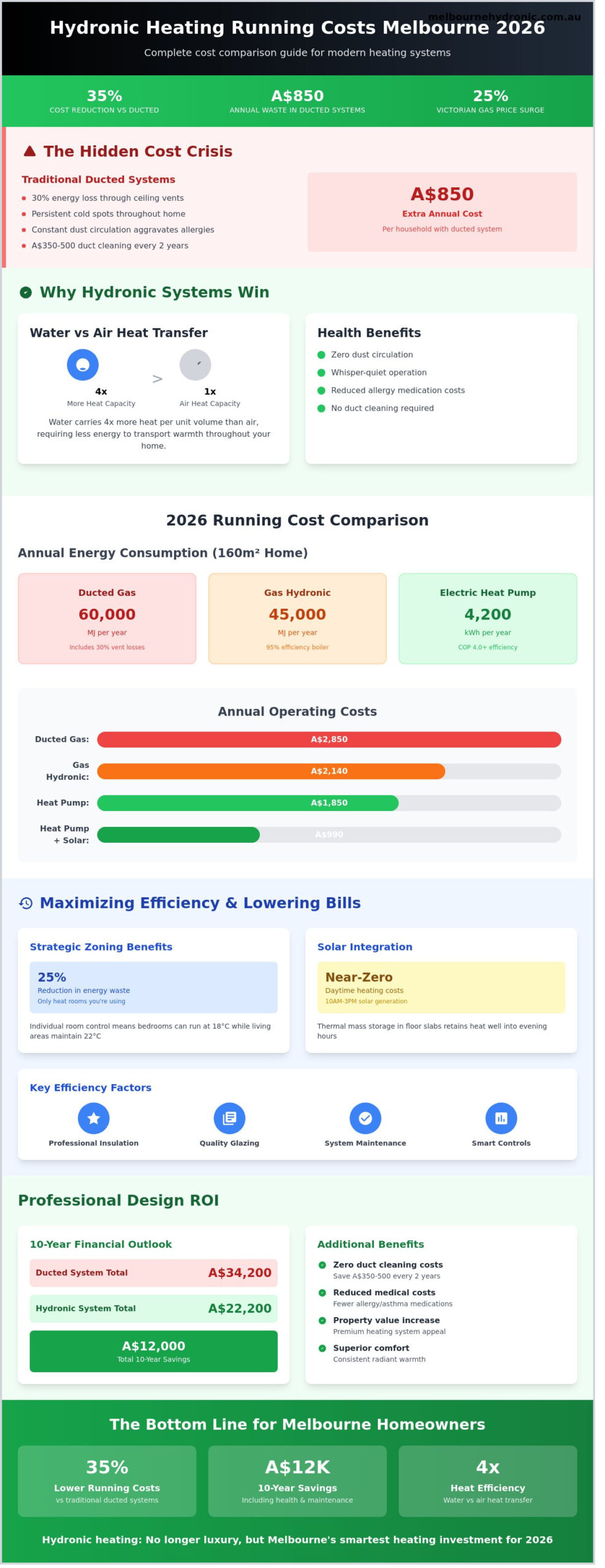
A typical 10-year financial outlook for a standard four-bedroom home in suburbs like Camberwell or Brighton shows that hydronic systems can be up to 35% more cost-effective than ducted gas heating. This efficiency stems from the system’s ability to provide constant, radiant warmth rather than the “blast and fade” cycle of air-based units. By maintaining a steady thermal mass within the home’s structure, you avoid the energy spikes required to reheat a room from scratch every time the thermostat drops.
The Efficiency of Water as a Heat Conductor
The physics behind the savings is simple. Water carries approximately 4 times more heat than air per unit of volume. In a practical Melbourne winter context, this means your heat pump or boiler doesn’t need to work nearly as hard to transport warmth into your living spaces. During those damp, 8-degree July mornings, a water-based system maintains consistent ambient warmth without the constant on-off cycling that wears down mechanical components. You aren’t just paying for fuel; you’re paying for the most efficient delivery method available in 2026.
Health Savings: The Hidden ROI of Dust-Free Heating
We often overlook the medical and maintenance costs associated with traditional heating. Standard ducted systems act as a highway for dust, pollen, and allergens. For families in the Bayside and Mornington Peninsula areas dealing with coastal allergens, the switch to hydronics often results in a measurable reduction in pharmacy bills for asthma and allergy management. You also eliminate the recurring A$350 to A$500 professional duct cleaning fees required every two years to keep air systems hygienic. With zero-maintenance radiator panels, the long-term ROI is found in both your bank account and your family’s respiratory health.
- No fan-forced air: Eliminates the circulation of microscopic allergens and dust mites.
- Silent operation: Removes the acoustic stress of rattling vents and high-velocity fans.
- Zoned control: Only heat the rooms you’re using, reducing waste by up to 25% in larger Victorian homes.
Gas Boilers vs. Electric Heat Pumps: 2026 Running Cost Comparison
For a standard 160m² Melbourne home in 2026, the annual energy consumption for hydronic heating depends heavily on your choice of fuel. A traditional gas system typically consumes between 45,000 MJ and 60,000 MJ annually. Conversely, a high-efficiency electric heat pump requires approximately 3,800 kWh to 4,800 kWh to deliver the same level of thermal comfort. With Victorian gas prices rising by 18% since 2024, the financial gap between these two technologies has widened. Modern heat pumps now routinely achieve a Coefficient of Performance (COP) of 4.0 or higher. This means for every 1 unit of electricity the system consumes, it generates 4 units of heat for your home. These efficiency gains are fundamental when calculating the hydronic heating running costs Melbourne homeowners should budget for this year.
Solar PV integration has become the “gold standard” for reducing expenses. By timing your heat pump to run during peak solar generation hours, usually between 10:00 AM and 3:00 PM, you can heat your floor slabs or radiator panels for near-zero cost. This strategy uses your home’s thermal mass as a battery, storing warmth that lasts well into the evening. Even without solar, the transition toward electrification is driven by the sheer efficiency of moving heat rather than creating it through combustion.
Modern Condensing Gas Boilers in Victoria
Condensing gas boilers remain a popular choice for Melbourne retrofits, primarily because they achieve 95% efficiency ratings. These units capture heat from exhaust gases that older systems simply vented outside. Modulating burners play a critical role here; they adjust the flame intensity to meet the exact heat demand of a 14°C spring morning, preventing the wasteful “on-off” cycling of the past. To keep your system running at peak performance, annual servicing is essential. A professional technician check-up, typically costing between A$290 and A$360, ensures the heat exchanger remains clean and prevents a projected 12% drop in fuel efficiency over time.
The Rise of Electric Heat Pump Hydronics
Electric hydronics is the fastest-growing heating segment in the local market. This shift is supported by the Victorian Government’s ongoing electrification incentives and the 2025 updates to the Gas Substitution Roadmap. When analyzing hydronic heating running costs Melbourne data, air-to-water heat pumps consistently outperform gas in long-term savings, especially in well-insulated new builds. These systems provide the same dust-free, allergen-friendly warmth that Melbourne families value, but with a significantly lower carbon footprint. You can view our premium heat pump range to understand how these units integrate with your specific floor plan and energy goals.
Hydronic Heating vs. Ducted Running Cost in Melbourne
Choosing between hydronic and ducted systems determines your monthly utility statement for the next two decades. While ducted gas heating often carries a lower upfront price tag, its operational inefficiency creates a long-term financial drain. High-powered fans in ducted units consume significant electricity to push air through a home, whereas hydronic systems use small, whisper-quiet pumps to circulate water. This fundamental difference in mechanics is why hydronic heating running costs Melbourne homeowners experience are consistently lower than forced-air alternatives.
The Ceiling Cavity Problem
Melbourne’s older housing stock in suburbs like Camberwell and Glen Iris often features uninsulated or poorly sealed roof spaces. When you pump 50°C air through flexible ducts in a freezing ceiling cavity, you lose 20% to 30% of that thermal energy before it even reaches your vents. Hydronic systems bypass this waste entirely. By using insulated copper pipes or in-slab pex piping, the heat stays contained until it reaches your radiators. Radiative heat warms objects and people directly, which is far more cost-effective than convective heat that simply rises to the ceiling and disappears.
Zoning: The Secret to Sub-100 Dollar Monthly Bills
Most ducted systems operate on a “whole-house” or large-zone basis, meaning you’re often paying to heat empty guest rooms or hallways. Hydronic systems offer surgical precision through individual radiator thermostats (TRVs). This allows for a level of control that forced-air systems can’t match. Consider these efficiency factors:
- Surgical Control: You can heat a single lounge room in a 4-bedroom Cheltenham home without activating the rest of the circuit.
- Bill Reduction: Effective zoning typically slashes monthly running costs by 40% compared to non-zoned systems.
- Smart Integration: Modern Bosch or Baxi boilers integrate with smart home apps, allowing you to schedule heating cycles that align with peak and off-peak energy rates.
For a typical 10-year period in a renovated Melbourne residence, the savings are undeniable. A standard ducted system may cost A$2,800 per year to run, while a high-efficiency hydronic setup often remains under A$1,600. Over a decade, that’s A$12,000 saved, which effectively pays back a significant portion of the initial installation investment. You aren’t just buying a heater; you’re investing in a dust-free, silent, and financially sustainable environment for your family.
Maximising Efficiency: Factors That Lower Your Monthly Bills
Your home’s thermal envelope determines how hard your boiler works. In Melbourne, where temperatures can swing 15 degrees in a single afternoon, insulation is your first line of defense. High-quality ceiling insulation (R5.0 or higher) and wall batts can reduce heat loss by up to 35%. When your home retains heat, your hydronic system enters modulation mode sooner, significantly reducing the hydronic heating running costs Melbourne homeowners face during peak winter months.
Window glazing is the next critical factor. Single-pane glass acts like a thermal hole in your wall. Upgrading to double glazing or using heavy, floor-to-ceiling pelmeted curtains prevents the cold bridge effect. This reduces the heat demand on your radiators, allowing them to operate at lower water temperatures while maintaining a steady 20°C indoors.
Thermal Mass and Melbourne Architecture
Melbourne’s diverse housing stock reacts differently to hydronic systems. Brick veneer homes have higher thermal mass than weatherboard cottages, meaning they take longer to warm up but hold heat better overnight. If you have an in-slab system, treat your concrete floor as a thermal battery. By running the system during off-peak electricity hours or when your solar array is peaking, you store energy in the slab to be released slowly throughout the day.
Coastal properties on the Mornington Peninsula require a specific approach. High salt air and wind chill mean we often place larger radiators near south-facing glass to counteract the immediate heat loss. This strategic placement ensures the thermostat doesn’t overwork the boiler trying to compensate for localized cold spots.
Maintenance: The Cost of Neglect
System hygiene is often overlooked. Over time, the water inside your pipes reacts with metal components to create black sludge or magnetite. This debris settles in the bottom of radiators and heat exchangers. Data suggests that even a small buildup of sludge can increase your energy consumption by 15% because the boiler must work harder to push heat through the blockage.
- Power Flushing: This process uses high-velocity water and cleaning chemicals to strip away internal corrosion, restoring your system to factory-spec efficiency.
- Annual Servicing: A professional check-up ensures your gas valve and pump are calibrated correctly, typically paying for itself within one season through lower bills.
- Thermostat Logic: Don’t place thermostats in north-facing rooms. Winter sun will trick the sensor into turning the whole system off, leaving the rest of your house freezing.
Maintaining your system’s health is the most effective way to protect your investment and keep your hydronic heating running costs Melbourne as low as possible.
Investing in Comfort: The ROI of a Professionally Designed System
Choosing a heating system based solely on the lowest initial quote is a mistake that often inflates long-term expenses. A “budget” installation typically skips critical engineering steps, resulting in a system that cycles too frequently or fails to distribute heat evenly. This inefficiency directly impacts hydronic heating running costs Melbourne homeowners face, often adding A$450 to A$700 to annual energy bills. We view your system as a 25-year investment. Quality components paired with precision engineering ensure the lowest possible operational overhead while providing a level of comfort that cheaper alternatives can’t match.
Melbourne buyers recognize the luxury of silent, dust-free warmth. Real estate data for 2026 indicates that homes equipped with premium hydronic systems command a price premium of A$25,000 to A$55,000 compared to properties with standard ducted air. It’s a health-conscious choice that appeals to the 2.7 million Australians living with asthma, as the lack of fans eliminates circulated allergens and dust mites.
Custom Design vs. Off-the-Shelf Solutions
Generic kits don’t account for the unique thermal mass of a Victorian terrace in Geelong or the large glass expanses of a modern Bayside build. Pipe sizing and pump speed must be calculated to match the specific hydraulic resistance of your home’s layout. We use our 30 years of local experience to ensure pumps don’t overwork, which extends equipment life by up to 35%. Our tailored approach prevents “over-specifying” systems, meaning you won’t pay for heating capacity your property doesn’t require.
- Precision Pipe Sizing: Reduces friction loss and lowers electricity consumption of the circulation pump.
- Micro-climate Calibration: Adjusting flow temperatures based on whether you’re in the humid coastal areas or the frostier outer eastern suburbs.
- Variable Speed Pumps: Automatically adjust to the demand of the system, saving up to A$120 per year in power.
Next Steps for Your Melbourne Home
The transition from gas to electric heat pumps is the most significant shift in the 2026 Victorian energy market. We start every project with a rigorous heat-load calculation, measuring every window, wall, and ceiling height to determine the exact kilowatt requirement for each room. This data-driven approach is the only way to guarantee the low hydronic heating running costs Melbourne residents expect from modern technology. We’ll guide you through the Victorian Energy Upgrades (VEU) program to ensure you access all available rebates during your transition to an all-electric home.
Ready to upgrade your home’s efficiency and comfort? Book a consultation with Melbourne’s hydronic experts to secure your precision-engineered system today.
Future-Proof Your Melbourne Home for 2026
Transitioning to a modern system is the most effective way to manage hydronic heating running costs Melbourne residents will face in 2026 and beyond. By switching from traditional gas boilers to high-efficiency electric heat pumps, you can achieve up to 400% thermal efficiency. This shift typically results in a 25% to 30% saving on annual energy bills compared to old-fashioned ducted heating systems. Beyond the financial benefits, you’re choosing a silent, dust-free environment that significantly improves indoor air quality for your entire family.
Our family-owned team in Cheltenham has spent over 30 years perfecting these installations for the unique Victorian climate. We’re specialists in high-efficiency electric heat pump integration, ensuring every A$ you invest delivers maximum comfort. A professionally designed system doesn’t just heat your floors; it provides a reliable ROI through lower maintenance and reduced carbon emissions. It’s time to stop worrying about rising utility prices and start enjoying a premium, healthy home environment today.
Get a precise running cost estimate for your home and take the first step toward a more sustainable, cozy lifestyle.
Frequently Asked Questions
Is hydronic heating cheaper than gas ducted in Melbourne?
Hydronic heating is generally 20% to 35% cheaper to run than traditional gas ducted systems in a typical Melbourne home. Ducted systems lose significant heat through leaky ceiling vents and uninsulated crawl spaces, whereas hydronic pipes deliver thermal energy directly to your living areas without air loss. By 2026, the efficiency gap has grown even wider as modern condensing boilers and heat pumps outperform older gas furnace technology. You’ll enjoy a dust-free environment while keeping your monthly energy bills lower.
How much does it cost to run hydronic heating per hour in 2026?
You can expect to pay between A$1.20 and A$2.10 per hour to heat a standard three-bedroom home in Melbourne during the 2026 winter season. These hydronic heating running costs Melbourne homeowners experience depend largely on whether the system uses a high-efficiency electric heat pump or a natural gas boiler. Heat pumps paired with a 6kW solar array often drop these hourly costs below A$0.50 during daylight hours. Maintaining a steady temperature prevents the system from working too hard, which keeps your hourly expenditure predictable.
Does hydronic heating add value to a Melbourne property?
Installing a hydronic system typically adds between 3% and 5% to a Melbourne property’s total resale value according to 2025 real estate data. Buyers increasingly prioritize healthy, allergen-friendly homes that offer silent, premium comfort without the noise of forced-air fans. It’s viewed as a luxury long-term investment rather than a basic utility. Because the hardware often lasts 25 years or more, it provides a tangible asset that justifies a higher asking price during the selling process.
Can I run hydronic heating on solar power to save on costs?
You can definitely power your hydronic system using solar energy if you choose an electric air-to-water heat pump. By 2026, over 40% of our new installations include smart controllers that sync with solar PV systems to pre-heat the home during peak sunlight hours. This strategy stores thermal energy in your floor slab or radiator water, effectively turning your home into a thermal battery. It slashes your reliance on the grid and protects you from rising energy tariffs.
How often should I service my hydronic system to keep running costs low?
We recommend a professional service every 12 to 24 months to ensure your system operates at peak efficiency. Our technicians check the pH levels of the system water and clear any sludge that might restrict flow, which can increase energy consumption by 15% if left untreated. Regular maintenance prevents component failure and ensures your running costs remain at the baseline. A well-tuned system uses less fuel to reach your desired temperature, saving you hundreds over the winter season.
Is an electric heat pump or a gas boiler cheaper to run in Victoria?
Electric heat pumps are currently about 30% cheaper to operate than gas boilers in Victoria due to their high Coefficient of Performance. While a gas boiler might achieve 95% efficiency, a modern heat pump delivers 300% to 400% efficiency by moving heat rather than creating it. With the Victorian government’s push toward electrification, gas prices have remained volatile while heat pump technology has become the gold standard for low hydronic heating running costs Melbourne wide.
What is the most energy-efficient thermostat setting for hydronics in winter?
Setting your thermostat between 18°C and 20°C offers the best balance between premium comfort and energy savings. Every degree you increase above 20°C adds approximately 10% to your total energy usage. We suggest keeping the system on a lower background setting of 15°C overnight rather than turning it off completely. This prevents the thermal mass of your home from cooling down, which requires significantly more energy to reheat the next morning.
Do radiator panels cost more to run than underfloor hydronic heating?
Radiator panels generally cost 10% to 15% more to run than underfloor systems because they require higher water temperatures to emit heat. Underfloor pipes operate efficiently at 35°C to 45°C, whereas wall-mounted panels often need water heated to 60°C. However, radiators offer faster response times, allowing you to heat specific zones only when they’re occupied. This zoning capability can actually result in lower overall bills if you don’t need to heat the entire house simultaneously.