
Energy Efficient Heating Melbourne: The 2026 Homeowner’s Guide
Victorian households saw a 22% spike in gas prices over the last 12 months, making the switch to energy efficient heating more urgent than ever for families facing four-figure utility bills. You probably agree that it’s frustrating to pay a premium for a home that still feels drafty or relies on air that triggers your child’s asthma. Traditional forced-air systems often leave cold spots in large rooms and circulate dry, dusty air that compromises your family’s health and well-being.
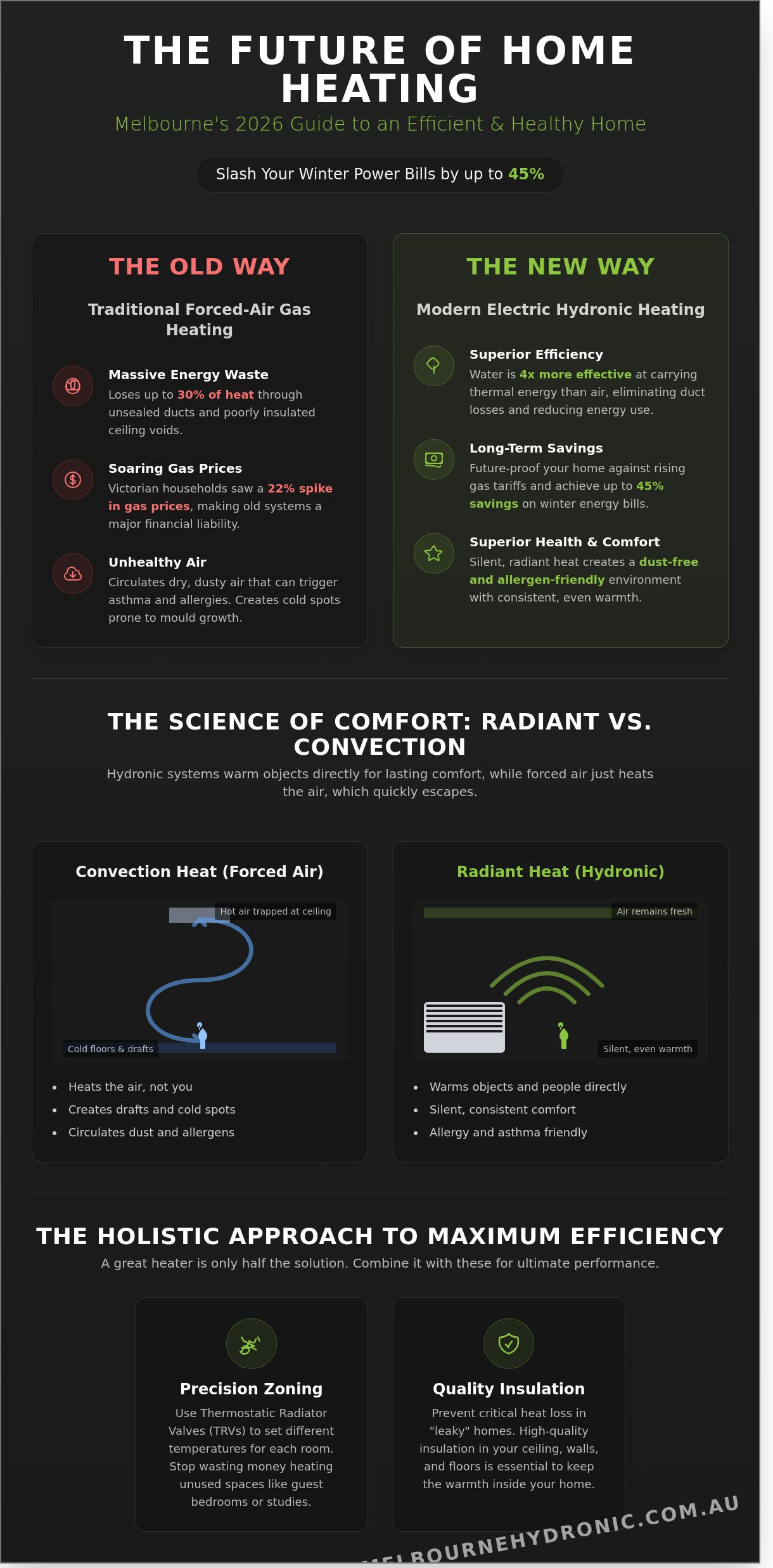
You can reclaim your comfort and slash your winter power bills by up to 45% using advanced solutions that offer silent, consistent warmth throughout your property. This 2026 guide shows you exactly how to create a healthier home designed specifically for the unique Melbourne climate. We’ll break down the most effective electric hydronic systems and heat pump technologies available today to ensure your living space remains warm, allergen-free, and fully future-proofed against rising energy costs.
Key Takeaways
- Understand how Victoria’s transition away from residential gas is reshaping the future of energy efficient heating for Melbourne homeowners in 2026.
- Discover why radiant hydronic systems provide a superior, dust-free, and allergen-friendly alternative to traditional forced-air convection heating.
- Learn how modern electric heat pumps achieve a high Coefficient of Performance (COP) by extracting “free” heat from the local Melbourne air.
- Identify why a holistic approach-combining precision zoning with high-quality insulation-is critical to preventing heat loss in “leaky” homes.
- Gain professional insights on designing a custom, sustainable system tailored specifically to Melbourne’s unique and unpredictable climate.
Why Energy Efficient Heating is Essential for Melbourne Homes in 2026
Melbourne’s weather is notoriously unpredictable. One moment it’s a sunny 20 degrees, the next it’s a damp 10. This volatility makes energy efficient heating a necessity rather than a luxury for local homeowners. In Victoria, heating accounts for 40% of the average household’s energy consumption according to data from Sustainability Victoria. Since the state government’s ban on new gas connections for homes requiring planning permits took effect on January 1, 2024, the landscape has shifted permanently. By 2026, relying on outdated technology isn’t just bad for the planet; it’s a direct hit to your monthly budget.
There’s a massive difference between a system that’s cheap to buy and one that’s cheap to run. Budget portable heaters or old electric strips might cost less at the checkout, but they’re notorious for “bill shock” during a cold July. A truly efficient system provides consistent warmth without the mechanical stress of constant cycling. As we move further into 2026, the focus for Melbourne residents has moved toward long-term value and systems that can handle our “four seasons in one day” without wasting A$100s in leaked energy.
The Rising Cost of Inefficiency in Victoria
Homeowners in 2026 face energy prices that have remained volatile over the last three years. Old ducted gas systems are now financial liabilities. These units often lose up to 30% of their heat through unsealed ducts and poorly insulated ceiling voids. You’re essentially paying to warm your roof space while your living room remains chilly. Modern hydronic solutions solve this by using water, which carries heat far more effectively than air. Understanding how heat pumps work is the first step toward a future-proof home. By extracting heat from the outside air to warm your internal water loop, these systems offer a sustainable way to bypass rising gas tariffs.
Health and Efficiency: The Hidden Connection
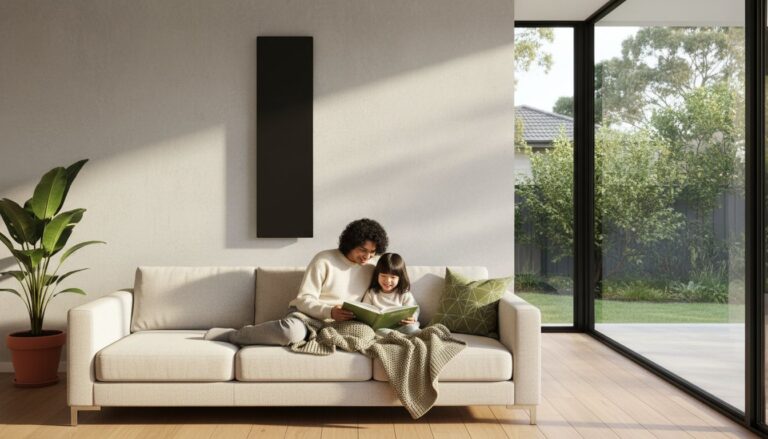
Efficiency isn’t only about your bank balance. Inefficient, forced-air systems often create cold spots where condensation thrives. This leads to mould growth in Melbourne’s damp winters, which can damage your property and your health. Hydronic systems provide radiant heat. This warms objects and people directly rather than blowing dry, dusty air around the room. It creates a dust-free and allergen-friendly environment, which is vital for the 1 in 9 Australians living with asthma. A silent, energy efficient heating system improves your sleep and overall quality of life. It’s a premium, expert solution that delivers a level of comfort that noisy, drafty systems simply can’t match.
The Science of Hydronic Systems: Melbourne’s Most Efficient Heating Method
Hydronic heating operates on a fundamental physical principle: water is a far superior conductor of heat than air. While traditional ducted systems rely on convection to push dry, dust-filled air around a room, hydronic systems utilize radiant heat. This process warms objects and people directly, similar to the way the sun feels on your skin on a winter morning. Because water is approximately 4 times more effective at carrying thermal energy than air, the system requires significantly less power to move warmth from the boiler to your living spaces. This inherent physical advantage makes it a premier choice for energy efficient heating in Victorian homes.
The efficiency of this method is backed by rigorous standards. The Australian Government notes that selecting the right energy efficient heating and cooling strategies can account for up to 40% of a household’s energy use. By using sealed copper or PEX piping to circulate hot water, hydronic systems eliminate the 15% to 30% energy loss typically associated with leaky or uninsulated ductwork. This creates a silent, allergy-friendly environment where heat stays where it belongs: at the floor and wall level, not trapped against the ceiling.
Radiator Panels: Targeted Efficiency for Every Room
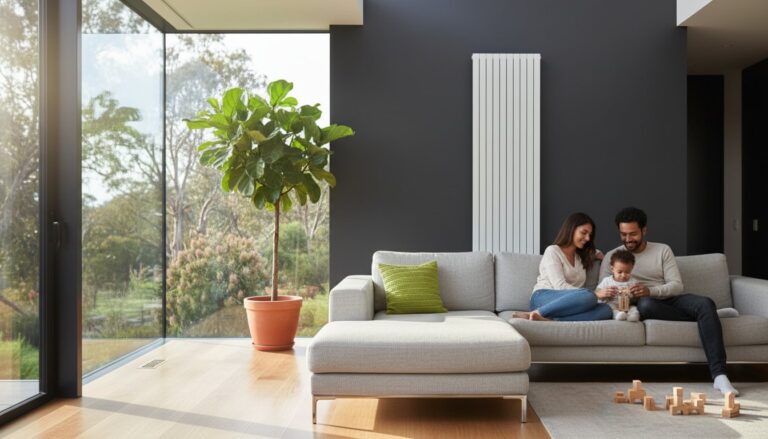
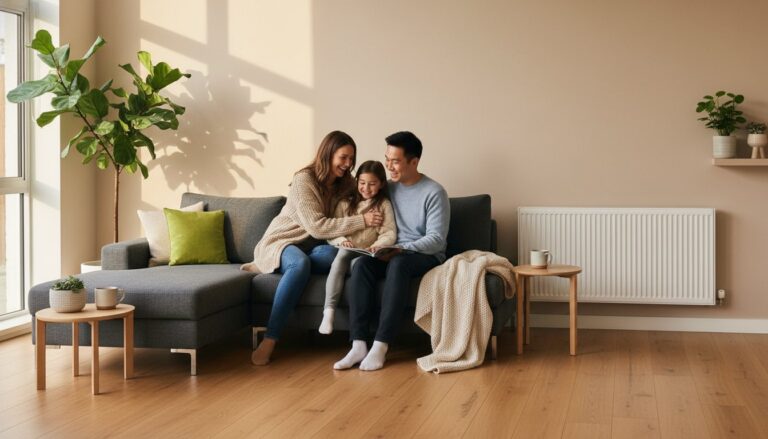
Modern European radiator panels are designed with intricate internal fins that maximize the surface area available for heat exchange. This engineering allows the panels to reach their optimal operating temperature in just 10 to 20 minutes. One of the greatest efficiency gains comes from individual room zoning. Using thermostatic radiator valves (TRVs), you can set different temperatures for each room or turn off heating entirely in unused areas. You don’t have to waste money heating a guest bedroom or a formal dining area when they aren’t in use, which can reduce running costs by 20% compared to whole-home central systems.
Hydronic Underfloor Heating: The Ultimate Thermal Battery
For high-ceiling properties in Bayside or open-plan renovations, underfloor heating acts as a massive thermal battery. By embedding pipes within a 100mm to 150mm concrete slab, the floor itself stores and slowly releases heat over several hours. This method is particularly effective for energy efficient heating because it operates at lower water temperatures, often between 35°C and 45°C, compared to the 60°C+ required for traditional radiators.
Homeowners can choose between two primary installation methods for maximum energy retention:
- In-slab heating: Best for new builds, where the pipes are tied to the reinforcement mesh before the 150mm slab is poured. It offers the highest thermal mass.
- Screed systems: Ideal for renovations, where pipes are laid on top of the structural slab and covered with a 30mm to 50mm sand and cement mix. This provides a faster response time while still maintaining excellent heat retention.
If you’re looking to upgrade your home’s comfort while lowering your carbon footprint, you can request a customized efficiency assessment to see which delivery method suits your architecture best.
Electric Heat Pumps vs. Gas Boilers: Choosing Your Efficiency Path
The choice between electricity and gas is no longer just about preference; it’s about calculating long term returns. Modern heat pumps operate using a Coefficient of Performance (COP), which measures the ratio of heat output to electrical input. A premium air-to-water heat pump often achieves a COP of 4.0. This means the system produces 4kW of thermal energy for every 1kW of electricity it consumes. By extracting “free” heat from the surrounding Melbourne air, these systems provide a level of energy efficient heating that traditional combustion simply cannot match.
When we look at the 20-year lifecycle, the financial landscape shifts. While a high-end heat pump installation might require an upfront investment of A$14,000 to A$20,000, the lower running costs insulate homeowners against volatile gas prices, which saw a 25% increase in Victoria during 2023. Gas boilers, while cheaper to install initially at roughly A$5,000 to A$8,000, rely entirely on fuel prices that are trending upward as the state transitions away from fossil fuels.
The Electric Revolution: Heat Pumps in 2026
Technological leaps mean that 2026-spec heat pumps don’t falter when the frost hits. Modern units maintain high efficiency even on sub-5°C Melbourne mornings, ensuring your home stays at a consistent 21°C without a spike in consumption. Integrating these systems with a 6.6kW or 10kW rooftop solar array allows many residents to achieve “zero-cost” heating during daylight hours. To encourage this shift, the Victorian Energy Upgrades (VEU) program provides significant financial incentives. Depending on the system being replaced, Victorian households can access rebates and certificates that often reduce the total project cost by A$3,000 to A$4,500. For a deeper look at these incentives, consult the Victorian Government’s guide to efficient home heating.
When Gas Still Makes Sense: Boiler Replacements
For heritage homes in suburbs like South Yarra or Armadale, a straight boiler upgrade is often the most logical step. Swapping a 15-year-old atmospheric boiler for a 95% efficient condensing model can slash gas bills by 30% overnight. These units capture heat from exhaust gases that older systems simply vent outside. It’s a clean, dust-free solution that works with your existing radiator network. If you’re planning for the future, we often recommend hybrid-ready configurations. These setups allow you to enjoy the high-intensity heat of gas today while ensuring the internal pipework is ready for a seamless heat pump integration in five to ten years.
Maximising Efficiency: Beyond the Heater (Insulation and Zoning)
Even the most advanced European condensing boiler struggles in a “leaky” home. Air leakage accounts for up to 25% of heat loss in older Melbourne properties, forcing systems to work harder than necessary. When we design a system, we look at the entire building envelope. Hydronic heating relies on radiant energy, which warms objects and surfaces rather than just blowing hot air that quickly escapes through gaps. This synergy means that with high quality insulation, your home retains warmth for hours after the system cycles off. It’s the difference between a system that runs constantly and one that sips energy only when required.
The principles of professional design and maintenance are key to achieving these results, no matter where you live. For example, experienced providers like RMI Heating and Air Conditioning always assess the entire home to create an effective, long-lasting solution.
To keep your home airtight this winter, start with these practical steps:
- Seal gaps around architraves and skirting boards with premium acrylic caulk to stop draughts.
- Install floor-length curtains with pelmets to create an insulating air pocket over glass.
- Check that ceiling insulation remains uncompressed, as a 50% reduction in thickness can halve its effectiveness.
Smart Controls: The Brain of an Efficient System
Modern energy efficient heating isn’t just about the hardware; it’s about precision. Wi-Fi enabled thermostats allow you to schedule cycles to avoid Melbourne’s peak electricity tariffs, which often spike between 3 PM and 9 PM. In a typical 4-bedroom family home, multi-zone control can reduce energy usage by 30% by only heating active living areas instead of the entire floor plan. Geofencing technology adds another layer of intelligence. Your system detects when your smartphone is within a 10-kilometre radius of home, triggering the heat so your living room reaches a perfect 21 degrees the moment you turn the key.
The Role of Insulation and Double Glazing
We use R-value ratings to calculate the exact kilowatt output required for your specific spaces. For a standard Melbourne renovation, we recommend a minimum R4.1 for ceilings and R2.5 for walls to prevent thermal bridging. Large glass facades are a staple of modern Victorian architecture, but they often act as “heat sinks.” While radiant heat manages this better than forced air, floor-to-ceiling windows still require a specialized approach. Trench heating is the professional answer. By installing heating units into the floor along the glass perimeter, we create a thermal curtain that blocks cold downdrafts and keeps the room’s core temperature stable without wasting energy.
Ready to optimise your home’s thermal performance? Consult with our Melbourne experts to audit your home’s efficiency before your next upgrade.
Designing Your Sustainable Future with Melbourne Hydronic Heating
Our 30-year history in Victoria has taught us that true energy efficient heating starts with a bespoke design, not a one-size-fits-all box. We’ve spent three decades refining how water-based warmth interacts with local building materials. This experience allows us to identify potential heat loss areas that newer installers might overlook. From the initial professional consultation to the precision installation of every pipe and bracket, our process is built on engineering integrity. We don’t just install heaters; we engineer comfort that lasts a generation.
Supporting Melbourne families means providing a system that respects both your health and your wallet. Hydronic systems are naturally allergy-friendly because they don’t rely on fans to move air. This eliminates the circulation of dust mites and allergens, which is a vital consideration for the 1 in 9 Australians living with asthma. The silent operation ensures your home remains a peaceful sanctuary, while the sustainable nature of the system reduces your household’s carbon footprint significantly compared to traditional gas ducted alternatives.
Custom Design for Melbourne Architecture
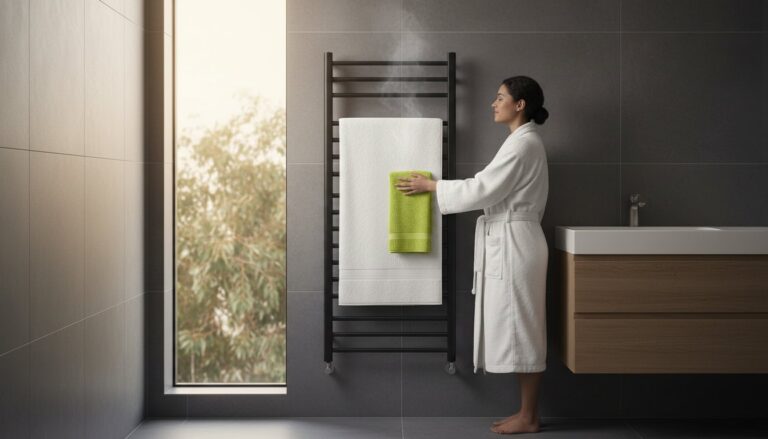
Melbourne’s architectural landscape is diverse, and your heating should reflect that. We tailor systems specifically for the high ceilings and solid brick of Victorian terraces, which require different thermal considerations than the expansive glass and insulation of modern coastal builds. We don’t guess. We use rigorous heat load calculations to determine the exact wattage required for every room. This prevents you from overpaying for capacity you’ll never use. To complete the experience, we offer a range of designer towel rails for bathrooms and fan coils for rapid response in living areas, blending high-end aesthetics with functional warmth.
The Melbourne Hydronic Heating Difference
We’ve built our reputation on a commitment to premium European components. By sourcing parts from manufacturers with proven longevity, we ensure your system outlasts cheaper alternatives by decades. However, even the best hardware requires care. Our ongoing maintenance services, including professional power flushing, are designed to remove magnetite and debris that can accumulate over time. This process is essential to preserve the 99% efficiency rating of modern condensing boilers, ensuring your running costs stay low year after year.
Our local support team provides rapid repair services across Greater Melbourne and the Mornington Peninsula, so you’re never left in the cold. Your home’s efficiency is our 30-year legacy, and we stand by every joint, panel, and pump we install. It’s time to upgrade your living standards with a system that’s as quiet as it is cost-effective.
Book your energy efficiency consultation with our Melbourne experts today and discover the difference that 30 years of local expertise makes to your home’s comfort.
Secure Your Home’s Comfort for 2026 and Beyond
Transitioning to energy efficient heating isn’t just about lowering your monthly A$300 utility bills; it’s a permanent investment in your family’s respiratory health. With Melbourne’s energy landscape rapidly shifting toward full electrification, modern air-to-water heat pump systems now deliver up to 400% efficiency compared to aging 3-star ducted units. These hydronic solutions completely eliminate the airborne dust and allergens common in forced-air systems, providing a vital sanctuary for the 1 in 9 Australians currently living with asthma.
Whether you’re planning a precision boiler replacement or a complete transition to a sustainable heat pump, the right system design can reduce your seasonal energy consumption by over 30%. We’ve spent 30+ years perfecting these silent, radiant solutions for the specific demands of the Victorian climate. You don’t have to settle for dry air and noisy fans when premium, European-engineered comfort is available right here in Melbourne.
Take the first step toward a healthier, more sustainable home today. Request a Professional Hydronic Heating Consultation to leverage our 30+ years of local experience and specialist expertise in asthma-friendly radiant heat. You deserve a home that stays warm without compromise.
Frequently Asked Questions
What is the most energy efficient way to heat a house in Melbourne?
Electric hydronic heat pumps are the most energy efficient heating solution for Melbourne homes today. These systems deliver up to 400% efficiency by moving ambient heat from the outside air rather than creating it through combustion. While traditional gas boilers operate at roughly 90% efficiency, a modern heat pump uses 1kW of electricity to produce 4kW of heat. This significantly reduces your carbon footprint and lowers long-term operational costs across our cold Victorian winters.
Is hydronic heating more efficient than split system air conditioning?
Hydronic heating is more efficient at maintaining consistent thermal comfort than split systems in large residential spaces. Air conditioners rely on convection, which causes heat to rise and dissipate quickly through 3 metre ceilings. Hydronic systems use radiant heat to warm objects and people directly. This method prevents the common “hot head, cold feet” syndrome and maintains a stable temperature with 20% less energy consumption in large open-plan living areas.
How much can I save on my bills by switching to a heat pump in 2026?
Switching to an electric heat pump can save the average Melbourne household A$800 to A$1,200 annually on energy bills by 2026. As the Victorian government phases out residential gas connections, gas prices are projected to rise by 15% annually. By 2026, a high-efficiency heat pump will pay for itself within 7 years through reduced utility costs and superior Coefficient of Performance (COP) ratings compared to gas alternatives.
Does hydronic heating work well in older Melbourne homes with high ceilings?
Hydronic heating is the gold standard for Victorian and Edwardian homes in suburbs like Carlton or Hawthorn. Forced-air systems waste energy by pushing warm air into 3.5 metre ceiling voids where it’s useless. Radiant panel radiators emit heat horizontally, warming the living zone first. This ensures your heritage home stays at a constant 20 degrees Celsius without the dust, noise, or significant heat loss associated with old ducted systems.
Are there government rebates for energy efficient heating in Victoria?
Yes, the Solar Victoria Home Heating and Cooling Upgrades program provides rebates of up to A$1,000 for eligible households. You can also access Victorian Energy Upgrades (VEU) discounts when replacing old gas heaters with high-efficiency heat pumps. These incentives can reduce your initial investment by 25%, making premium energy efficient heating more accessible for families looking to decarbonise their homes and improve indoor air quality through dust-free technology.
How often does an energy-efficient hydronic system need servicing?
You should book a professional service for your hydronic system every 2 years to maintain peak performance. Our technicians check system pressure, flush out any magnetite buildup, and inspect the heat pump or boiler components. Regular maintenance ensures the system operates at its rated 95% efficiency. Skipping service can lead to a 12% increase in running costs and may void your manufacturer’s warranty on premium European components. For any electrical components, it’s always wise to consult with certified electrical contractors, such as the team at Armour Corporation, to ensure safety and compliance.
Can I run my energy-efficient heating system off my solar panels?
You can definitely power your electric hydronic heat pump using a 6.6kW or larger solar PV system. By timing your heating cycles to run during peak daylight hours, you can offset up to 70% of your heating costs. This creates a carbon-neutral home environment. Even on overcast Melbourne days, modern heat pumps draw minimal power, allowing you to utilise your self-generated renewable energy instead of relying on the expensive power grid.
What is the lifespan of a modern electric hydronic heat pump?
A high-quality electric hydronic heat pump typically lasts between 15 and 20 years with proper care. This is nearly double the lifespan of standard reverse-cycle air conditioners, which often fail after 10 years of heavy use. Because hydronic systems have fewer moving parts and operate at lower pressures, they provide a durable, long-term investment. You’ll enjoy consistent, allergen-free warmth well into the 2040s with a single professional installation and routine maintenance.